



There is, somewhere inside Durham Book Festival, an argument against the algorithm.
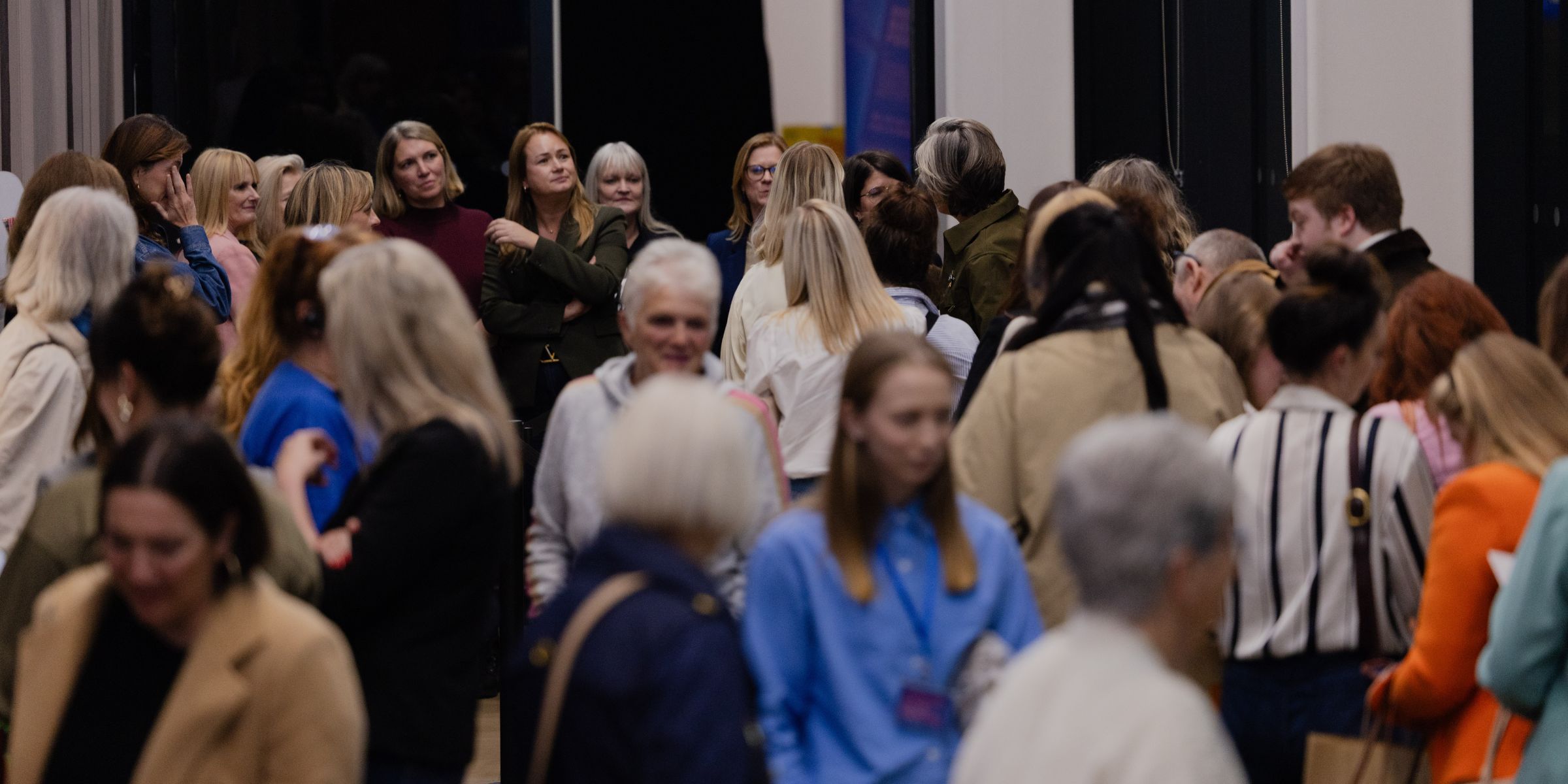
It's found in the physical act of gathering: sitting beside strangers in a theatre, listening to a writer think aloud, discovering a book because another human being cared enough to place it in your hands.
It's there in the 3,000 free copies of Lucy Foley’s The Hunting Party being distributed across libraries, hospitals and communities in County Durham, Sunderland and Newcastle.
And it runs through a programme that brings major cultural figures to the city while creating space for writers whose names audiences might not yet know.
For Festival Director Rebecca Wilkie, the idea holding all of this together is simple.
“Connection,” she says.
“Increasingly, this need for connection feels more and more urgent, as we can see what’s happening in society - as people are becoming more solitary and spending more time on their own in front of screens, and not doing things together in a communal way.
“That idea of connection underpins absolutely everything.”
.jpg)
Durham Book Festival returns from 9–11 October with a programme stretching from fiction, poetry and politics to football, food, folklore, working-class culture and video games.
Pet Shop Boys’ Neil Tennant will join former White House adviser and Durham University Chancellor Fiona Hill for the latest conversation in Forged in the North, exploring how his Newcastle upbringing shaped a career which has spent four decades observing Britain’s politics, aspirations, class codes and emotional evasions.
Internationally bestselling writer Susanna Clarke will introduce her new novella, The Bishop of Durham Attempts to Surrender the City, in the city where it is set. Christopher Eccleston is set to join a live recording of The Working Class Library podcast commemorating the legacy of Tony Harrison, a year after the poet’s death.
There are appearances from poets Hollie McNish and Michael Pedersen, alongside conversations about women’s rights, northern football, crime writing, identity and the fate of reading itself.
But Wilkie is determined that the festival shouldn't become a procession of familiar names.
“For every established writer, we like to make sure there’s a new voice in there as well that people might not have discovered yet,” she tells MagNorth.
“For every Neil Tennant or Susanna Clarke, who loads of people know about, we want to bring in those people who’ve just had their first book published this year.”
Among them are Louise Powell, Sufiyaan Salam and Shaun Wilson, whose debut novels take readers into an ex-mining community in Easington, Manchester’s Curry Mile and the life of a Cumbrian teenager.
The hope is that audiences have developed enough trust in the festival to take a chance on somebody unfamiliar.
That balance - between international reputation and emerging northern talent, between people who stayed and those who left - lies at the heart of this year’s programme.
“We always want the programme to have voices that speak directly to people in Durham and the North East,” Wilkie says.
“That might be people who are from the region originally, who don’t live here anymore but have gone off to do really interesting things.
“But I also like bringing people in from all over the world, if possible, to bring their perspectives and voices too. The ideal programme has that blend: a really strong sense of place and people who have been forged in the North, alongside all sorts of other voices.”
Wilkie understands the force of regional identity personally. She was “forged in Liverpool”, she says, and regards that identity as fundamental to the way she sees the world.
“Coming from somewhere like Liverpool has absolutely shaped how I think about people who are left behind, people who are misrepresented in the media, and people who aren’t getting their fair share of funding and support.”
The Forged in the North idea emerged through Fiona Hill, the Bishop Auckland miner’s daughter who went on to advise American presidents.
Its premise isn't merely that successful people happened to begin life in the North East. It asks what the region placed inside them - the experiences, values and ways of seeing that they carried into the wider world.
Hill’s memoir, There Is Nothing for You Here, took its title from her father’s warning that she would need to leave Bishop Auckland to build a future.
It's an instruction generations of northern young people have heard in different forms.
Wilkie heard it too.
“I certainly felt like that in the 1990s,” she says. “I wanted to work with books, and I knew that I was not going to get those opportunities. It just wasn’t going to happen.
“So I moved to London, went to university and stayed in London for many years because that was the only option I had. I really enjoyed it, but I didn’t feel like I had a choice.
“And I think it is about choices.”
New Writing North is working to build a stronger writing and publishing ecosystem in the region: one capable of giving young people the choice Wilkie felt she didn't have.
The argument isn't that nobody should leave, or that London should become culturally irrelevant. It is that departure should no longer be the price of ambition.
A region that produces writers, editors, publishers and artists should also possess the institutions, investment and employment needed to keep their skills here.
That's why a book festival matters far beyond its three days. It's not simply somewhere to promote finished books. It can be part of the machinery through which new work, new careers and new confidence get created.
.jpg)
The festival’s commemoration of Tony Harrison makes that relationship between language, class and permission explicit.
Harrison demonstrated that northern speech didn't need to be tidied, translated or disguised before it could enter serious literature. His work gave generations of writers and performers permission to use their own voices.
Wilkie recently heard Greater Manchester Mayor Andy Burnham describe reading Harrison’s poem V as a teenager as one of the experiences that helped to politicise him.
“He gave people writing in the northern vernacular permission to speak in their own accents and write in their own accents,” she says. “I don’t think that should be underestimated.
“He was a Yorkshire writer who lived for a long time in Newcastle, so he has those connections to both regions.”
Christopher Eccleston will join Richard Benson and New Writing North Chief Executive Claire Malcolm to consider Harrison’s continuing influence.
Working-class identity also runs more quietly through the wider programme, without every writer being placed inside a separate category.
That matters. Working-class culture can't become truly central if it's invited into the room only for a specially labelled conversation about class. Its writers must also be allowed to speak about fantasy, crime, nature, love, history, horror and anything else that commands their imagination.
Susanna Clarke’s appearance offers another way of seeing the region.
Her new novella takes Durham away from the customary grammar of social realism and into a landscape of magic, history and invention.
Set in 1110, it follows the Bishop of Durham on an otherworldly journey towards a New Castle on the Tyne, as he attempts to surrender his besieged city to a fairy host.
“Durham is actually in the title of the book,” Wilkie says. “It’s this more fantastical representation of the North, which is another key part of our identity - something slightly different from some of the social realism appearing elsewhere.”
This is more important than it may initially appear.
Places are diminished when they are permitted to exist in culture only as collections of problems. The North needs writing which addresses inequality, deindustrialisation and exclusion. It also needs the strange, the comic, the romantic and the supernatural. It needs to be treated not merely as a case study, but as imaginative territory.
Clarke’s Durham can be besieged by fairies. Lucy Rose’s specially commissioned story can become the foundation of a gaming jam. Sarah Hall, Naomi Booth and Romalyn Ante can explore the relationship between women and sleep through newly commissioned fiction.
A festival should reflect the world. It should also enlarge it.
%20(1).jpg)
The danger surrounding any literary festival is that it becomes a gathering for people already confident that such spaces belong to them.
Cost matters. So do transport, disability, geography and the quiet but powerful feeling that a literary event might not be “for the likes of me”.
Durham Book Festival’s approach to accessibility was reshaped by the pandemic. When the programme moved online in 2020, New Writing North heard from disabled people who had previously been unable to attend.
“People were saying, ‘Thank you so much. Please don’t stop doing things online. We’ve never been able to attend this kind of thing before,’” Wilkie recalls.
“I really heard that.”
When audiences returned to the theatre, the festival retained livestreaming and introduced live captioning across almost all of its main programme. It also committed to using accessible venues - no straightforward task in a medieval city filled with historic buildings.
The online audience isn't regarded as a lesser version of the physical one. It's another community gathering around the same conversation.
The work also travels beyond Durham city. County Durham is large, rural in places and sometimes poorly connected by public transport. Partnerships with library services allow activity to reach communities across the county rather than waiting for those communities to come to the festival.
This year’s revived Big Read extends that principle. Three thousand copies of Lucy Foley’s The Hunting Party are being distributed across the region, supported by readers in residence, workshops and community activity continuing beyond the festival weekend.
“It’s another way of connecting with people who might not want to come and see Susanna Clarke at Gala, but might want to pick up a copy of this book in their library and read it with their book group, or talk about it with their friends,” Wilkie says.
The book was selected in part because of its irresistible momentum: a gripping page-turner capable of coaxing somebody onwards after the first few pages. Foley also has her own connection to Durham, having studied English in the city.
The result should be a communal reading experience rather than a simple book giveaway.
For Wilkie, this work gives a literary festival a civic responsibility as well as a cultural one.
Durham Book Festival is primarily funded by Durham County Council, with additional support from Durham University and Arts Council England. At a time when local authority cultural funding is under profound pressure, that continuing commitment deserves recognition.
The festival's about reading for pleasure. But pleasure and public benefit don't need to be opposing ideas.
New Writing North is acutely aware of the literacy challenges facing the North East. Encouraging people to read and write can support wellbeing, confidence and literacy itself. Workshops and development programmes also create paid employment for the professional writers delivering them.
The festival becomes one visible moment within a much longer chain: a child or adult finding a book, a new writer testing work in front an audience, an established author being commissioned to create something that didn't previously exist.
The 2026 programme includes newly commissioned writing from Sarah Hall, Naomi Booth, Romalyn Ante, Lucy Rose and Jake Morris-Campbell.
Its gaming strand, developed with Durham University, asks participants to interpret Rose’s story and consider how it might become a game. It recognises that storytelling isn't retreating into one protected form. It's travelling across books, audio, screens and interactive worlds.
“This idea is not just about providing a platform for people who’ve got a book out this autumn,” Wilkie says. “It is also about creating new writing opportunities ourselves.”
Sustaining that work is increasingly difficult.
Year-round programmes need funding, organisation and the patient development of relationships. They're less visible than a headline festival weekend, but essential if the energy generated in October isn't to disappear until the following year.
Cultural infrastructure is built through repetition: the workshop that returns, the library partnership that deepens, the writer who is paid, the reader who is welcomed back.
.jpg)
It's tempting to judge a festival by the size of the names printed at the top of its programme.
Durham has plenty of those this year. Neil Tennant’s event has already sold out in person, although audiences can still join the livestream. Susanna Clarke’s rare appearance is a considerable coup. Christopher Eccleston, Fiona Hill, Hollie McNish and Lucy Foley will all bring their own audiences.
But the more meaningful test might be what happens around them.
Does somebody enter a literary venue alone and feel comfortable there?
Does an online audience feel genuinely included?
Does a reader discover Louise Powell, Sufiyaan Salam or Shaun Wilson because the festival has earned their trust?
Does a young person in the North East begin to imagine a life in writing or publishing without first imagining a train south?
And does a book reach somebody who hasn't read one for years?
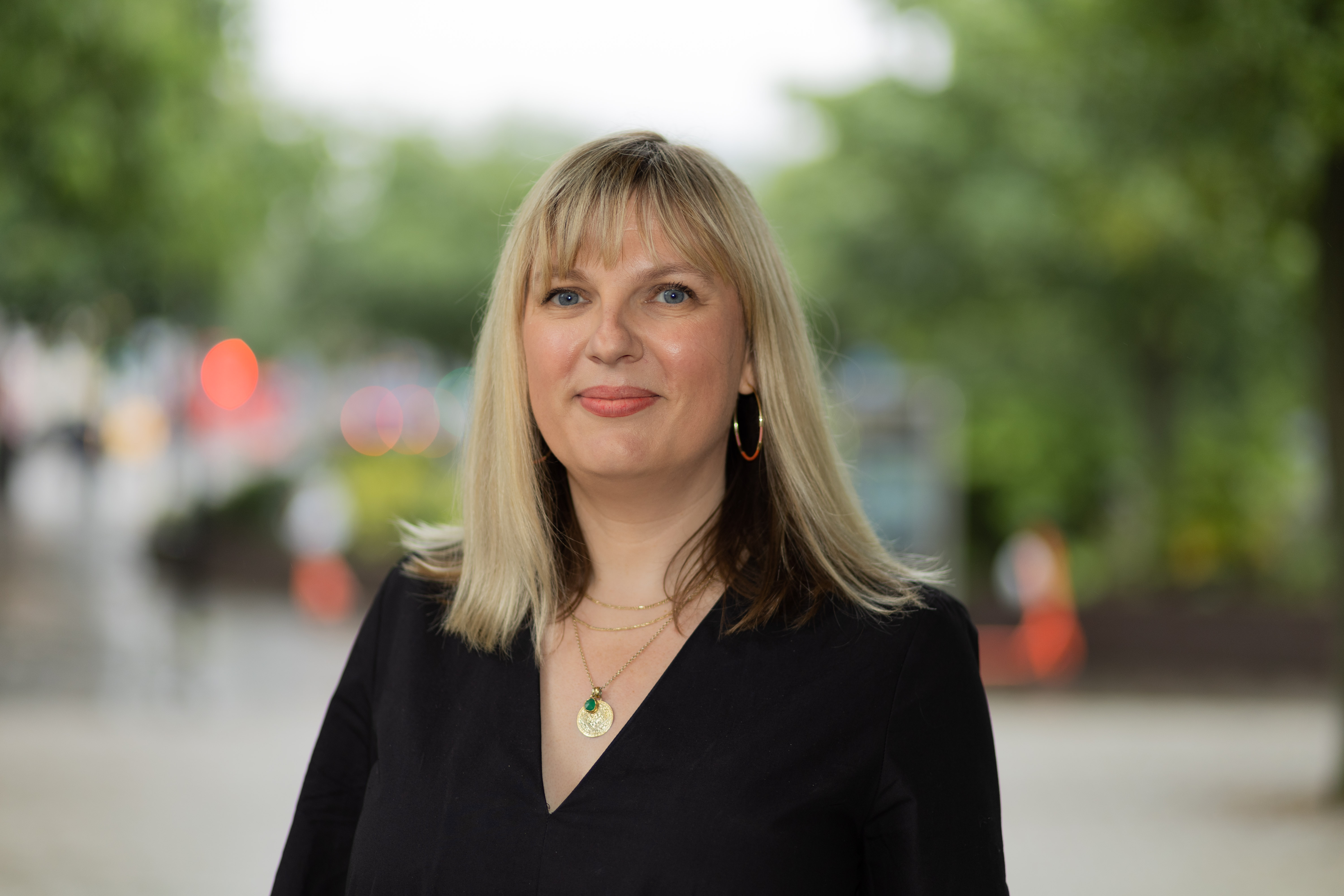
“In a world where the algorithm picks books for so many people now, if you’re coming to a festival, you’re actually getting a human to recommend you a book,” Wilkie says.
“You’re meeting the human who has written it. It personalises that - and I think that’s really important at the moment.”
A book festival can't solve isolation, regional inequality or the reading crisis on its own.
But it can bring people into the same room. It can carry that room into homes, hospitals and libraries. It can give an emerging writer the same platform as a household name. It can remind a region that its stories aren't peripheral - and make sure there are people, places and institutions here to help tell them.
Durham Book Festival isn't simply asking the North East to come and listen.
It's asking the region to recognise itself - and then to imagine what comes next.
Durham Book Festival runs from Friday 9 to Sunday 11 October 2026 at venues across Durham, with most principal events also available by livestream.
The festival is produced by New Writing North and funded primarily by Durham County Council, with support from Durham University and Arts Council England.





