



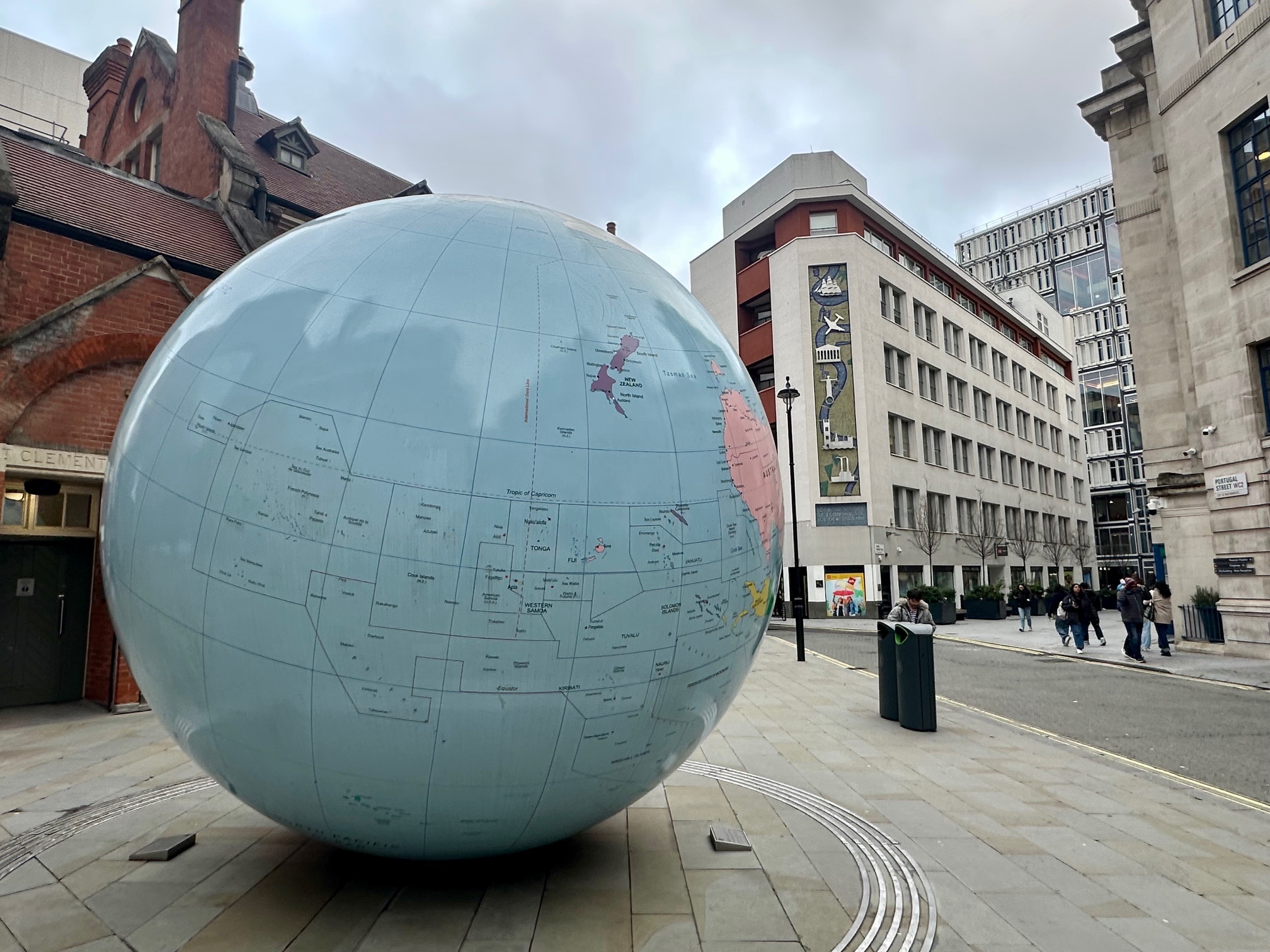
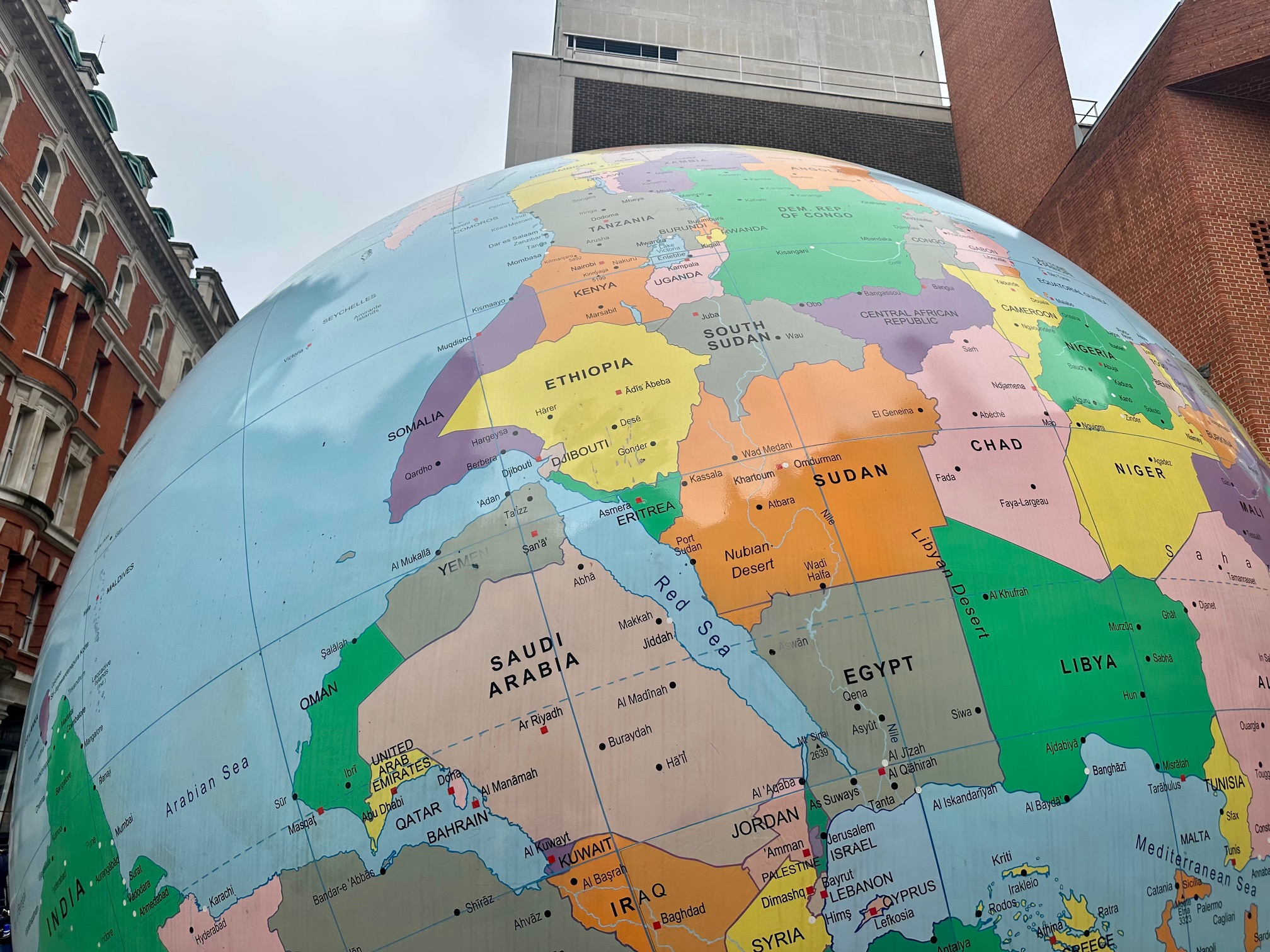
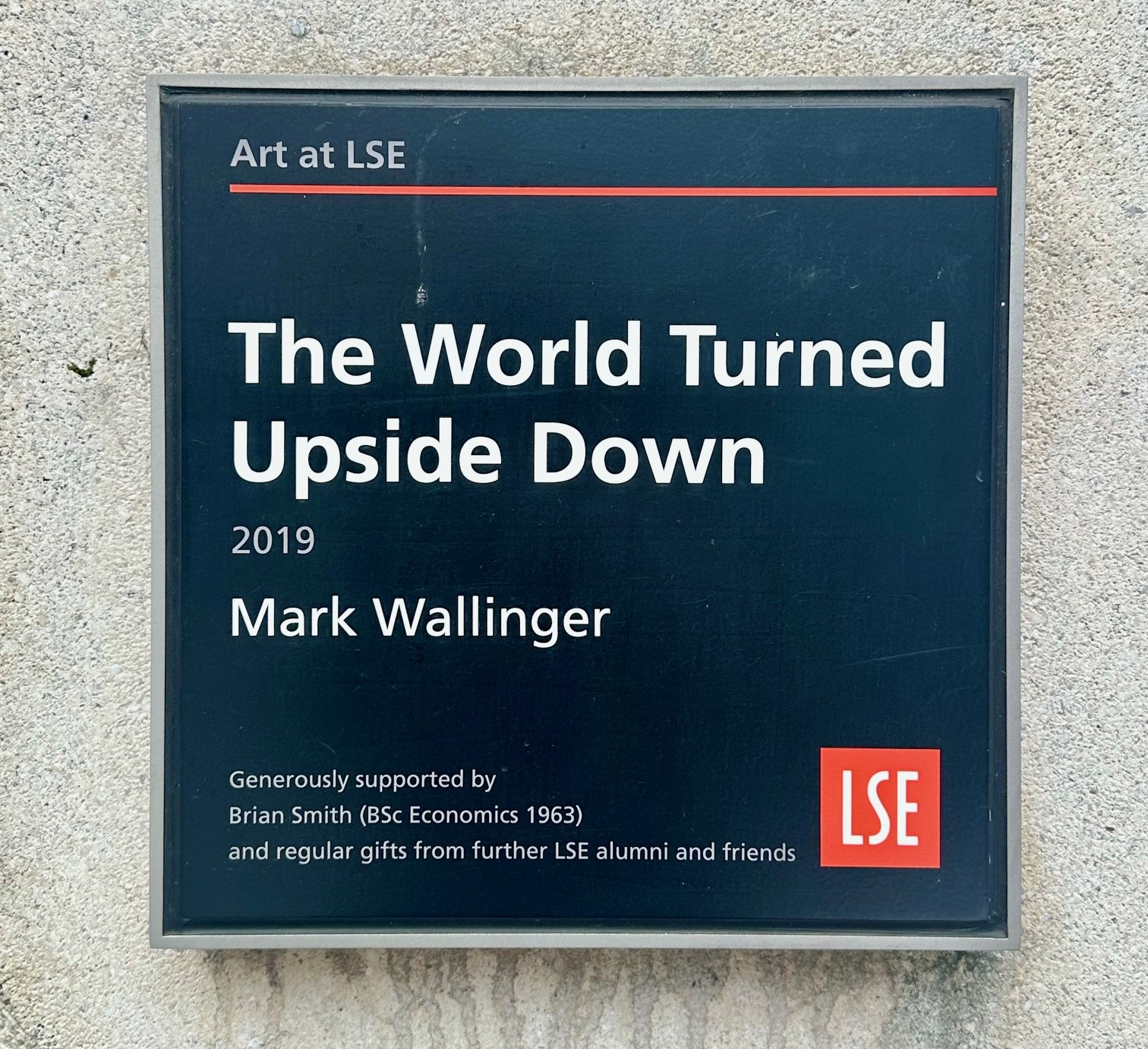
A 4-metre-high globe stands tall in the heart of the London School of Economics and Political Science’s (LSE) central London campus which I attend 5 days a week. However, it is no ordinary globe, the sculpture titled ‘the world turned upside down’ inverts the countries of the northern and southern hemisphere.
Although this geographical representation may be unfamiliar, it certainly isn’t objectively wrong; the earth is round, therefore it is accurate from any angle. But what relevance has this globe with ‘A Northerner in London’? The globe is designed to challenge preconceived biases and perspectives, to make you question, think critically and perhaps even change your own beliefs and ideas. Much like I have had to do in the process of moving from Bolton in Greater Manchester to the heart of arguably the world’s most global city and immersing myself into a university dominated by people who have quite possibly never set foot in the towns and cities that I call home.
My central London student accommodation is home to people from all over the globe, including a good friend of mine who has both Greek and Chinese heritage, but who has lived all her life in Cyprus.
When talking about the two countries we called home, as a true a politics student I somehow managed to get onto the topic of the ‘Troubles’ in Northern Ireland, which she knew very little about. After explaining the civil war and the 30 years of conflict, she drew a parallel to the political tensions in Cyprus over a fight for sovereignty between the Greeks and the Turks and how, unlike the Troubles, there is still an armed border across the island which affects her day-to-day life.
This opened my eyes to the unique and fascinating experiences of people with a vastly different upbringing to myself. Later in the term, when November came around, I was standing in front of a bonfire and a few of my friends and I recited the traditional rhyme ‘remember, remember the 5th of November. Gunpowder, treason and plot…’, yet my friend from Germany stayed silent and asked what on earth were we talking about! It immediately made sense, of course Guy Fawkes tried only to blow up the English parliament, not the German one, and so this became another example of an international friend with a different story to tell.
When reflecting on my time at university and the people I have met along the way, I realised that some of my most interesting conversations had been with those who had different opinions, beliefs and experiences to my own.
This is why diversity is so important. LSE is proud to be one of the world’s most global universities, therefore when surrounded by people with such varied backgrounds, it is easy to feel like my personal story is insignificant. However, England isn’t a monolith, and when the vast majority of domestic students are from the south, I saw value in my Northern voice.
Being from Bolton, I stick out in London. I have a different accent and am perceived perhaps to be less ‘wealthy’ or less ‘cultured’, yet it is something I take pride in. Determined to retain my northern roots, I joined the Northern society and found enjoyment comparing stories with people who only lived across the Pennines rather than across the country or even an ocean.
Together we form a Northern collective who can play a role in furthering the university’s championship of diversity and inclusion. Our lives may not be radically different to those whose journey to university is 30 minutes rather than 4 hours, yet a great deal can be learnt from the small nuances which have helped shape me into the person I am today. Whether that be the friendly ‘good morning’ as you pass a stranger on a walk (which is unheard of in London), or the more open conversations back home about class and local community. The ‘North-South divide’ exists clearly in large scale issues such as less money being spent on infrastructure and transport links in the North, or that national politics is centred in London, but it is also apparent in the subtle differences to culture and tradition.
As a Northerner living in London and attending LSE, my eyes have been widened to diversity on a scale I have never before experienced, and despite the rhetoric in today’s political landscape, I have found this to be only positive. Thinking outside the parameters of my own lived experience, whilst educating others and staying true about what matters to me, I’ve become more emphatic, adaptive, and tolerant as I navigate a new life in a city where it is very easy to feel small.





