



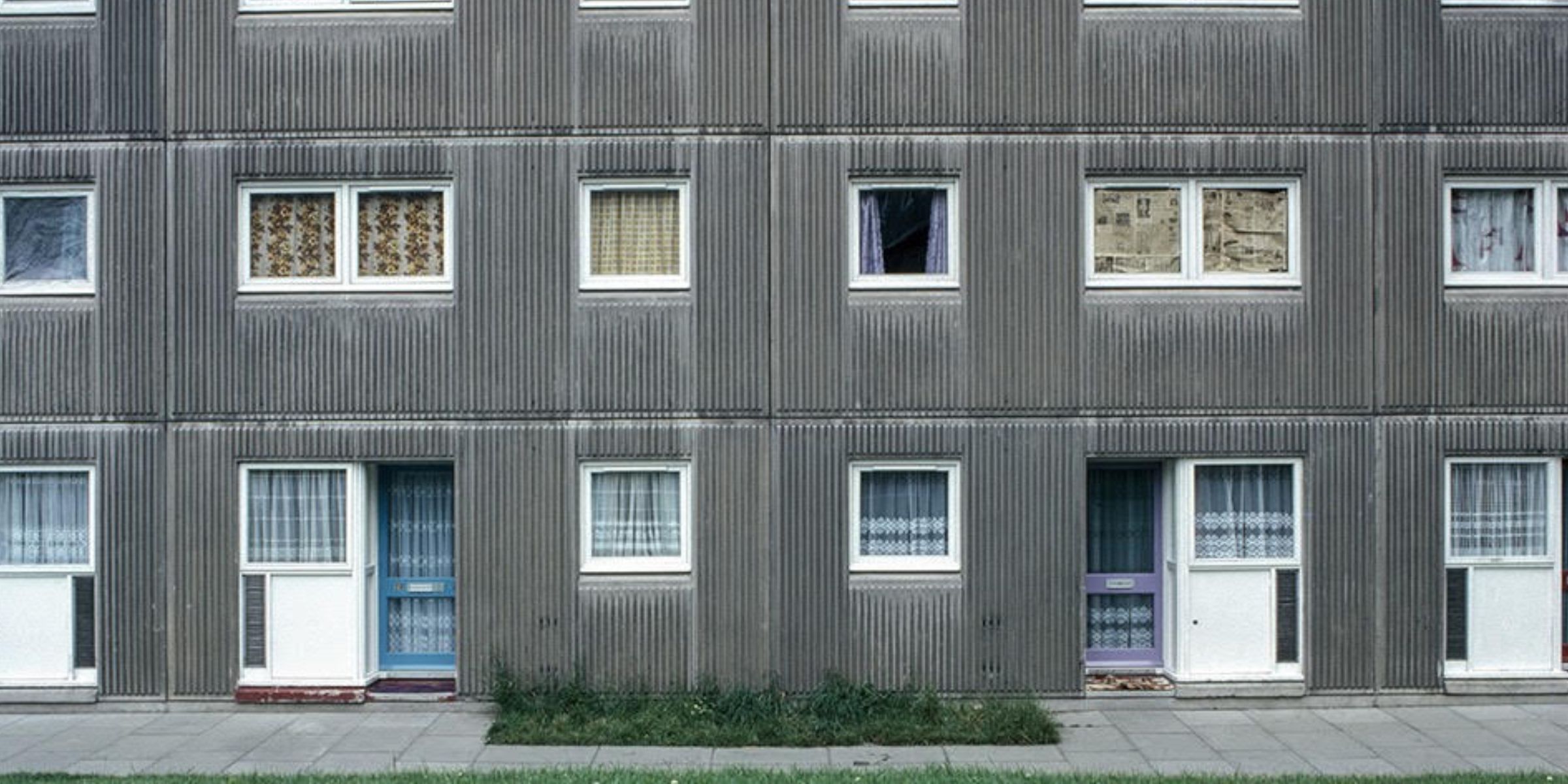
A city can acquire central heating, high-rise housing and a new road network while becoming harder for some of its residents to live in. For an older woman who once walked into town, improvement might mean a journey down from her flat, a motorway to negotiate and a longer route to the friends she used to see without thinking.
It's this distance between a plan and a life that interests Ellen Stone.
Speaking to MagNorth ahead of Under Development: What Happens When Cities Change, the photography curator returns repeatedly to the people whose daily experience can disappear beneath the language of urban progress. She wants us to consider what better housing makes possible, and what can happen when the relationships around that housing are treated as incidental.
“It’s actually thinking about what it means to a singular person’s daily life,” she says.
The exhibition brings work from the AmberSide collection into conversation with material from Four Corners in East London. At Newcastle Contemporary Art, Stone has the space to place hundreds of images alongside one another, opening a discussion about the communities that inhabit cities, the decisions that reshape them and who gets to tell the story afterwards.
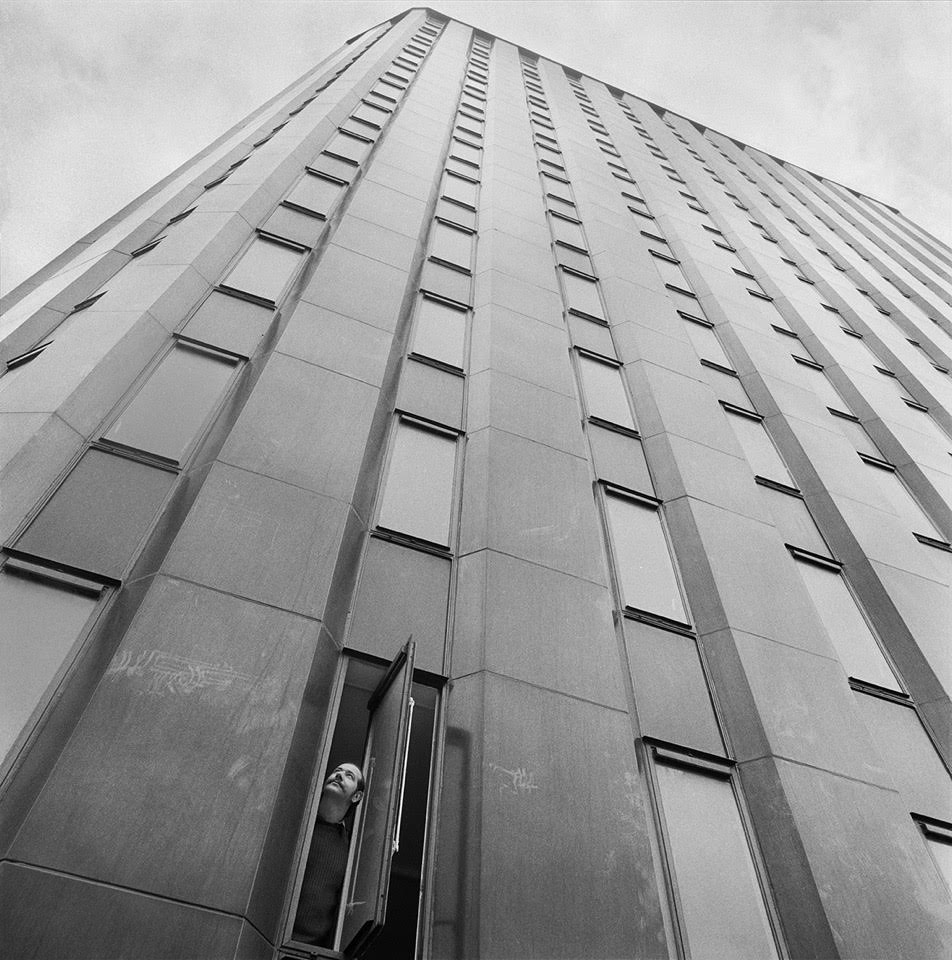
Her ambition begins close to home.
Stone grew up in the North East, and Side helped form her understanding of photography. Returning to the region after the closure of its gallery brought a particular sadness: the fear that an institution's loss might also mean losing public access to images through which people recognised their own lives.
For around two years, she's been getting to know the collection, having joined during the National Lottery Heritage Fund-supported Transforming Amber project. She describes it as an extraordinary resource whose importance is better understood within photography than beyond it.
“I would argue the most important archive of working-class photography in the country, potentially Europe,” she says.
That's a curator’s assessment, and an indication of the responsibility she feels towards it. Keeping the work safe is essential. So is keeping it in public conversation.
Stone wants the photographs to remain active in the region: displayed, encountered and discussed by people who might recognise a street they haven't seen for decades. The question is how an archive can continue to belong to the communities whose lives made it possible.
The partnership with Four Corners broadens that conversation without dissolving the North East into a generalised account of working-class Britain.
“Actually, displacement, housing, kind of the pressures on communities, that happens across the country,” Stone confirms.
Tyneside and Tower Hamlets offer histories shaped by rivers, docks, work and the profound changes that followed the decline of established industries. Their photographic traditions emerged from a period of collective activity in which documenting everyday life carried a political purpose.
Yet their differences are essential to note. East London’s Bengali and Bangladeshi communities bring particular histories of migration and belonging. The transformation associated with Canary Wharf has its own scale and character. Bringing the collections together allows each to illuminate experiences the other cannot fully describe.
For Stone, there's also value in connecting the North East with a capital from which it can feel remote. The exhibition makes space for a relationship that is easily lost when Northern cities are discussed together and London is placed in a separate category.
Within that relationship, residents must have agency.
The exhibition opens with a section called Before It All Turns to Dust. Stone explains that its title comes from a resident’s words to Jimmy Forsyth as he photographed Scotswood Road: the recognition that a place needed recording while it was still there to be seen.
There's an urgency in that appeal. A street can disappear physically and then disappear again from the public account of what a city used to be.
But Stone is careful about what comes next. The need to improve poor housing was real. Planners and councillors could be acting with a conception of public good. The failure, she argues, often lay in the next step: keeping communities together, engaging residents and ensuring people were looked after through change.
“I didn’t want it to feel like we are just talking about communities where things are happening to them,” she says.
Residents’ words accompany the photographs, and a section focuses specifically on people standing up for themselves. Stone describes images from Meadow Well concerned with defending council homes against the prospect of private ownership, and work documenting campaigning around the health effects of the Monkton Coke Works.
These are struggles over matters that ought to be basic: the security of a home, the health of a child, the ability to breathe outside. They place collective action within the history of urban change and ask visitors to see residents as participants in that history.
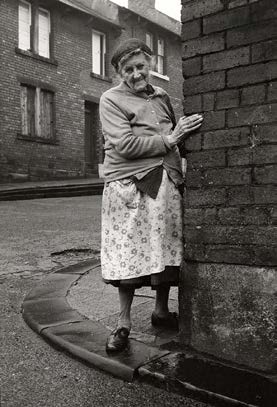
The photographic practice behind the work matters, too.
Asked what made the tradition radical, Stone’s first answer is “just being embedded in communities”. Amber’s photographers and filmmakers lived in the region and formed relationships over decades. Their work emerged from sustained attention, with all the complications that knowing a place properly brings.
“It’s not a flat story, it’s a story of multitudes,” she says.
For a curator, that can make the task harder. The material resists being reduced to a handful of convenient talking points. It is also what gives the archive its depth: lives are allowed to exceed the argument a photograph might be enlisted to make.
Stone sees that care in Sirkka-Liisa Konttinen’s Byker and Byker Revisited. The earlier photographs came from living in a neighbourhood whose demolition eventually took the photographer’s own home. Returning brought an encounter with a changed place and a different population, while the importance of home and mutual care remained.
Stone is particularly drawn to the later portraits, made in living rooms with the people and possessions residents chose to have beside them. A refugee’s story, friends with a karaoke machine, teenage girls together: the range gives shape to a community through its individual lives.
There is pleasure here, as well as difficulty. In the Bengali Photo Archive material, Stone finds the joy of photographs taken within a community - young people dressed for an evening out, the ordinary excitement of being young. Such images restore something easily flattened by grand accounts of social change: people were living, enjoying themselves and making their own memories.
The exhibition’s final movement reaches back to the construction of the Tyne Bridge and the clearance of streets in Gateshead.
Stone knew the industrial images of the bridge’s span being assembled. Looking at the streets dug up around its construction brought another history into view. The region gained an extraordinary connection; people also lost homes in the process.
For her, holding those realities together is central to the exhibition.
“Their lives are just as important as the things that we’re moving towards,” she says.
.png)
That concern reaches into her work with photographers today. Stone runs a monthly documentary photography gathering where people share projects, discuss concerns, review portfolios and help one another take their work further. She describes a growing group whose subjects and experiences range widely.
Access begins with whatever camera someone has. Stone herself uses a smartphone. The invitation is to look closely at the world around you and begin.
“Giving communities the power to document their own realities, rather than waiting for someone to come and document them for you, is radical,” she says.
The Newcastle Now project extends that invitation to young people. Stone wants to know what the city means to those whose formative years were affected by lockdown, and whose experience of its streets might differ profoundly from her own. School visits and a public brief are intended to help them make photographs; plans include a subsequent display and a small newspaper, giving their work a physical life.
“I can’t even imagine how they see the world, but I want to know. I want them to show me.”
That willingness to be shown is also part of her approach to curating Under Development. Stone is open about her politics, but wants visitors to encounter information, images and voices through which they can develop their own understanding.
For older residents, she hopes that seeing a familiar place will affirm the importance of lives rarely granted a monument. For younger visitors, the exhibition offers an awareness that a city can change, and that they have a stake in how it changes next.
“I believe people deserve to be remembered, and these communities deserve to be remembered,” she says. “And they deserve to be remembered accurately and with care.”
The care runs through her account of the work still being done by a small team: finding new audiences, supporting new photographers and making sure the region continues to be represented. An archive can offer evidence of what was lost. Through Stone’s curatorial work, it also becomes a place from which to ask what people need now, and what they should have a say in building next.
Under Development - What Happens when Cities Change
Newcastle Contemporary Art, 17 October - 28 November 2026
Header image: Killingworth Modern Housing 1980. © Lambdon Visual Aids. Courtesy of the AmberSide Trust





