



British fashion doesn't just happen in London, does it?
Its materials, labour, visual language and creative energy have always been drawn from across the country. Its designers arrive carrying regional identities, working-class histories, musical subcultures, manufacturing knowledge and ways of dressing that developed far beyond the capital.
Yet the institutions capable of transforming creative talent into a sustainable career remain heavily concentrated there.
A young designer might be educated in Newcastle, Manchester, Leeds or Liverpool, but the gravitational pull soon becomes familiar. The important introductions, editorial attention, investment and industry infrastructure appear to exist somewhere else.
This September, the British Fashion Council will attempt to loosen that geography.
Its new Fashion Britain programme is launching through more than 1,000 events across seven UK cities: Bristol, Dundee, Edinburgh, Liverpool, London, Manchester and Newcastle. The stated ambition is to decentralise British fashion, distribute opportunity and recognise the creative cultures that exist beyond London.
Newcastle’s inaugural programme will bring together BALTIC Centre for Contemporary Art, Eldon Square, Fenwick, Newcastle College, Grainger Market and Newcastle City Council, alongside designers and industry figures with strong connections to the North East.
This is a city that doesn't need an external institution to tell it that it's creative.
The big question is whether a national programme can connect that existing creativity to opportunities, relationships and resources that remain after September has ended.
Fashion's easily dismissed as spectacle: catwalks, celebrity dressing and expensive objects arriving for a season before being replaced by something new.
But an incredible industry is concealed beneath the imagery.
It contains design, textiles, photography, performance, retail, manufacturing, marketing, music, film, technology and highly specialised craft. It provides routes into the creative economy for young people whose abilities might not be recognised through more conventional academic subjects.
The North East has a distinctive claim within that story.
Barbour began in South Shields Marketplace and built an international identity around clothing developed for the practical conditions of coastal and rural life. Newcastle’s universities and colleges continue to train designers, artists and makers. The city’s nightlife, music, independent retail and street style have influenced how generations of young people construct and communicate identity.
Talent has never been the region’s problem. The difficulty is building enough infrastructure around that talent for people to remain, develop businesses and make viable creative lives in the place that shaped them.
Laura Weir, Chief Executive of the British Fashion Council, says Fashion Britain is intended to recognise and invest in talent wherever it exists.
“British fashion has always been shaped by people - their local identities, global perspectives, creative disciplines and the communities that shape culture from the ground up,” she says.
“Fashion Britain is about decentralising fashion, by creating stronger pathways for creativity, opportunity and growth in every part of the country.”
It's an important promise. Like every national promise to redistribute cultural opportunity, it must eventually be judged by what changes locally.
.jpg)
The most compelling part of Newcastle’s programme starts not with an established designer, but with around 80 students from Newcastle College.
Through a project called Future Heritage, students have been challenged by Eldon Square, Newcastle College and Fenwick to create original garments and surface textiles inspired by Newcastle’s heritage and Eldon Square’s 50th anniversary.
The winning work will be presented at Grainger Market with support from Newcastle City Council, before moving to a later display at Fenwick Newcastle. The showcase will also include a runway presentation by Jerry J.
Bringing the work into Grainger Market is significant.
Opened in 1835, the Grade I-listed market embodies a different relationship between city, commerce and public life from the controlled environment of a conventional fashion venue. It remains a working place of food, fabric, services, conversation and small independent businesses.
Placing emerging fashion there connects student work with the everyday economic life of the city rather than isolating it within an educational building or industry-only gathering.
For Newcastle College Principal Jon Ridley, the project gives students the chance to respond to a live industry brief while contributing their own ideas to the way Newcastle is represented.
“For our students, this is experiential learning at its best,” he says. “They are developing their talent, responding to an industry brief and working alongside industry partners, while contributing their own ideas and creativity to Newcastle’s place in British fashion.”
The measure of that experience shouldn't simply be the polish of the final display.
Students need useful criticism, professional contacts and a clearer understanding of how an idea becomes a product, commission, job or business. They need to see routes into fashion that extend beyond waiting to be discovered.
A temporary showcase can build confidence. A pathway must lead somewhere.
On Saturday 26 September, BALTIC Centre for Contemporary Art will host a Fashion Britain conversation bringing together Newcastle-born slow-fashion designer Genevieve Devine and Ian Bergin, Barbour’s Director of Menswear, Footwear and Accessories.
Moderated by ELLE UK’s Deputy Multiplatform Editor Chiara Wilkinson, the event will examine how the North East has influenced their creative development. It will be followed by networking intended to introduce participants to possible routes into the industry.
Devine grew up in Newcastle and began her design education at Northumbria University. Her practice is rooted in slower production, craft and a desire to rebuild meaningful fashion activity in the region.
“There is a real wealth of talent and diversity of thought that isn’t always given a voice when it comes to the discussion around British fashion,” she says.
For Devine, Fashion Britain offers an opportunity to broaden a national conversation still habitually centred on London - and to create connections capable of supporting a renewed culture of fashion and craft in the North East.
Barbour brings a different scale and history to the discussion.
The company grew from John Barbour’s South Shields business, supplying practical clothing to sailors, fishermen and dock workers. Although it's now recognised internationally, its identity remains inseparable from the North East, its weather and its traditions of manufacture and repair.
“From our beginnings in South Shields Marketplace to our continued commitment to craftsmanship and community, the region has shaped who we are as a brand,” Bergin says.
That history is useful because it complicates the idea that successful fashion has to originate in London before being distributed elsewhere. A globally recognised British brand emerged from the specific needs and knowledge of a northern coastal community.
Fashion Britain arrives at a moment when cultural organisations are becoming increasingly fluent in the language of regions, access and decentralisation.
The language matters. So does the distinction between bringing an event to a city and transferring opportunity into it.
A panel at BALTIC can create visibility. A student catwalk can provide validation. A national logo can attract people who might otherwise overlook local work. None of those things is insignificant.
But genuine decentralisation means that young designers don't always need to leave the North East to gain serious professional support. It requires commissioners, retailers, educators and investors to continue working together once the national programme has moved on.
It also requires the fashion industry to listen.
The North East shouldn't be treated merely as an audience waiting to receive metropolitan expertise. Its designers and students bring knowledge of place, class, climate, identity and material culture that can expand what British fashion believes itself to be.
That exchange has to work in both directions.
Fashion Britain is connected to the BFC’s Strategy 2030, which places access, creativity and growth at the centre of the organisation’s future. The Newcastle programme provides an early, practical test of those ambitions.
Can a student’s first industry brief become a portfolio, placement or paid opportunity?
Can a conversation between an emerging designer and an established company lead to mentorship, collaboration or investment?
Can major retailers and cultural institutions use their resources to make local creative careers more sustainable?
Can Newcastle be treated as a place where British fashion is made and shaped, rather than somewhere the industry occasionally visits?
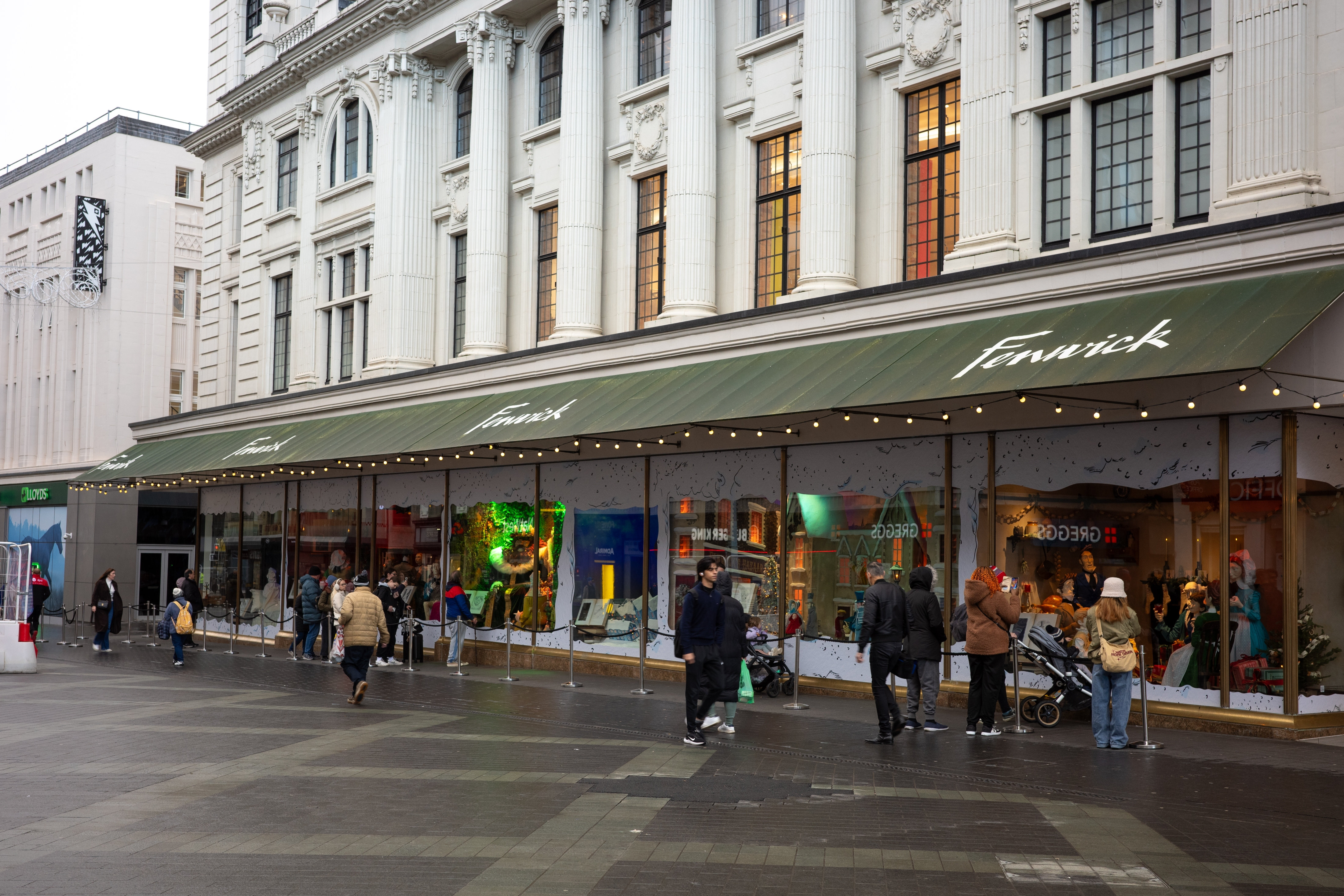
Newcastle City Council Chief Executive Pam Smith says the city is ready to become “a catwalk” during its fashion-focused programme.
That should be joyful. Fashion is one of the ways a city performs itself: on streets and dancefloors, in shops, colleges, studios and markets. It allows people to negotiate belonging, gender, heritage and aspiration through what they place on their bodies.
But Newcastle has never required permission to dress, design or create.
The value of Fashion Britain will lie in whether national recognition strengthens what's already there - and whether the attention directed towards the city reaches young people who don't yet possess money, contacts or an established name.
MagNorth hopes to travel to Newcastle in September to meet the students behind Future Heritage, see their work and ask what a national programme looks like from the beginning of a creative career.
Because the future of British fashion won't be decentralised simply by placing events on a map.
It'll be decentralised when talent can build a life wherever it emerges.
Fashion Britain takes place throughout September 2026.
Newcastle’s BFC x ELLE UK National Designer Panel will be held at BALTIC Centre for Contemporary Art on Saturday 26 September, featuring Genevieve Devine and Ian Bergin.
Further details are available from the British Fashion Council.
Header image: Niall Hodson, courtesy of the British Fashion Council





