



There is a moment, in rooms like this, when you can tell something unusual is happening.
On Monday at Sunderland's Sheepfold Stables, it arguably clicked as the day's closing film began. Young voices, Sunderland College students - confident, hesitant, searching - fill the space.
They speak about who they are. Where they come from. What they imagine for themselves. About being seen. About being heard. About not always feeling that they belong.
For a few minutes, the room - full of policymakers, cultural leaders, public servants - is completely silent. Captivated.
Because this is what the conversation is really about.
In Sunderland, where more than 15,000 children are growing up in poverty, the question is no longer simply about access to the arts.
It is about whether a child’s future is shaped by what they can imagine.
To understand why this matters here, you have to understand what Sunderland has already lost.
For generations, this was a city of shipbuilding and coal. Work was identity. Industry was infrastructure. Communities were built around both.
“And then suddenly,” says Paul Callaghan, Chair of Sunderland MAC Trust, “over a period of about 20 or 30 years, that all went.”
The disappearance was not just economic. It was cultural. A collapse of systems that had once given structure, pride and continuity to everyday life.
“So now,” he says, “our primary focus is not on recreating the past, but on shaping the future.”
That future, he argues, depends on children.
“The destiny of any place is determined by the lives of its children.”
Across the UK, the numbers tell a familiar story.
Child poverty rising. Regional inequality deepening. Access to opportunity increasingly uneven.
But there is another story running alongside it - less visible, but no less consequential.
Since 2010, GCSE entries in expressive arts subjects have fallen by 42%. The number of art teachers has dropped by more than a quarter. Many state schools no longer enter pupils for music or drama at all.
Outside school, the divide is sharper still. Lessons, trips, experiences - the building blocks of cultural confidence - are often shaped by family income.
“Talent is universal,” Callaghan tells the room. “But opportunity is not.”
When those two realities collide - rising poverty and unequal access - the effect is cumulative.
“A narrowing of horizons,” he calls it. “At exactly the moment when young people should be discovering how wide the world can be.”
For decades, culture has sat outside the core architecture of social policy.
When budgets tighten, it is often framed as enrichment - valuable, but secondary.
Sunderland is testing a different proposition.
Through a three-year, £1.5m programme called Culture Start, the city is attempting to build what it describes as a “protective framework” around children and young people living in poverty.
Not a programme in the traditional sense. Not a series of disconnected activities.
But an ecosystem.
One that treats cultural participation as part of the infrastructure that supports a child’s development - alongside education, health, housing and community life.
“Cultural participation is proven to build life skills, foster a strong sense of identity and self-worth, and improve life chances,” says Nick Malyan, Chief Executive of Sunderland Culture.
Or, more simply:
“Culture is not a luxury. It’s a foundation.”

On paper, the model is deceptively straightforward.
Activities are delivered directly into neighbourhoods - schools, youth centres, community hubs. Barriers are removed: travel, food, materials.
Schools and community organisations are supported to embed creativity into everyday provision. Young people receive bursaries to develop their own practice. Cultural organisations are trained to recognise and remove the hidden barriers that exclude families living in poverty.
But the real shift is structural.
Culture Start brings together partners from across the city - education, public health, housing, youth services, the voluntary sector - into a single, aligned system.
“It’s not just what we deliver,” Malyan says. “It’s how we deliver it…When you align partners, you reduce fragmentation, you increase reach, and most importantly, you build trust.”
This is what Sunderland calls a cultural ecosystem.
Or, as Callaghan puts it:
“Children deserve more than opportunity by accident. They deserve opportunity by design.”
But systems are not built on ideas alone. They depend on decisions - about where money goes, what gets prioritised, and what is prevented rather than managed.
For Simon Marshall, Chief Executive of Together for Children, the argument is not abstract. It is financial - and immediate.
“We spend millions and millions of pounds on children every year,” he says. “Most of that money is spent when things go wrong.”
The logic, he argues, is upside down.
“If you were designing a system from scratch, you’d invest in communities - help families be more resilient, help children be more successful. That’s where the return is.”
In Sunderland, that pressure is visible in the number of children entering care, and the strain on statutory services.
“What I’ve got to do,” he says, “is prevent those children being in positions where they ultimately end up in care.”
For Marshall, culture is not separate from that challenge - it is part of the solution.
His own experience as a headteacher shaped that belief.
“Every child in my school had access to music, trips, culture,” he says. “Because for that relatively small investment, the outcomes were much, much better.”
The challenge, he acknowledges, is not the idea - but the system around it.
“Public policy doesn’t always make it easy to shift resources upstream. You have to be bold. You have to be willing to take risks.”
What Culture Start offers, in that context, is something rare: a shared platform where those risks can be taken collectively.
That collective approach is what distinguishes Culture Start from more traditional cultural programmes.
For public health, the connection may not always be obvious - but it is increasingly recognised.
“We commission services around children’s development and mental health,” says Wendy Mitchell, Public Health Principal at Sunderland City Council. “If we don’t get that early development right, we can’t expect children to take part in the opportunities that are available to them later.”
Culture, she suggests, needs to be part of that early conversation - not an afterthought.
It also connects directly to emerging models like social prescribing, where wellbeing is understood more broadly, and where cultural activity can play a role in prevention rather than cure.
In education, the shift is equally significant.
Toni Rhodes, Chief Executive of Education Partnership North East, describes a conscious effort to move culture beyond the margins of the curriculum.
“It often sits in creative subjects,” she says. “But actually, it should sit across everything.”
Through a focus on “global skills” - including creative thinking and problem-solving - cultural approaches are being embedded across disciplines, from engineering to health.
“It shouldn’t matter what a young person studies,” she says. “They should have access to cultural activity.”
For housing providers like Gentoo, the connection is rooted in place.
“We have 55,000 people living in our homes,” says Chris Roberts, Director of Customer at Gentoo Group. “Many in some of the most deprived areas.”
For them, culture is part of building thriving communities - not just supporting individuals, but shaping aspiration, skills and future pathways.
“It’s a key enabler,” he says. “Helping people move on and aspire to other things.”
Some of the obstacles Culture Start addresses are obvious: cost, transport, access.
Others are less visible.
Through its “poverty proofing” work with Children North East, the programme has uncovered a recurring theme in conversations with families and young people.
A sense that cultural spaces are simply “not for me.”
This is not about ticket prices. It is about belonging.
“Whilst tackling poverty can feel unachievable,” says Lorna Nicoll, Operational Lead at Children North East, “we can design our way out of barriers…but only if we listen to lived experience.”
The work, she suggests, is as much about psychology as it is about provision.
Changing not just what is offered - but who feels entitled to take part.
.jpeg)
The impact of this kind of work rarely announces itself in dramatic terms.
It accumulates quietly.
At Sunderland Empire Theatre, Creative Learning Producer Sarah Marsden describes working with young people who arrive having never set foot in the building.
“By day five,” she says, “they’re performing on stage in front of 500 people.”
But the performance is not the point.
“It’s about helping young people find their place in the world…to have people really listen and genuinely care what they want to say.”
Sometimes, the change is as simple - and as profound - as this:
A young person realising that someone believes in them.
“That moment,” she says, “is transformational.”
What is happening in Sunderland is not unique in its challenges.
Across the country, policymakers are grappling with the same questions:
How do you reduce inequality that is structural, persistent and place-based?
How do you intervene early enough to change outcomes?
How do you build systems that support, rather than simply respond to children’s lives?
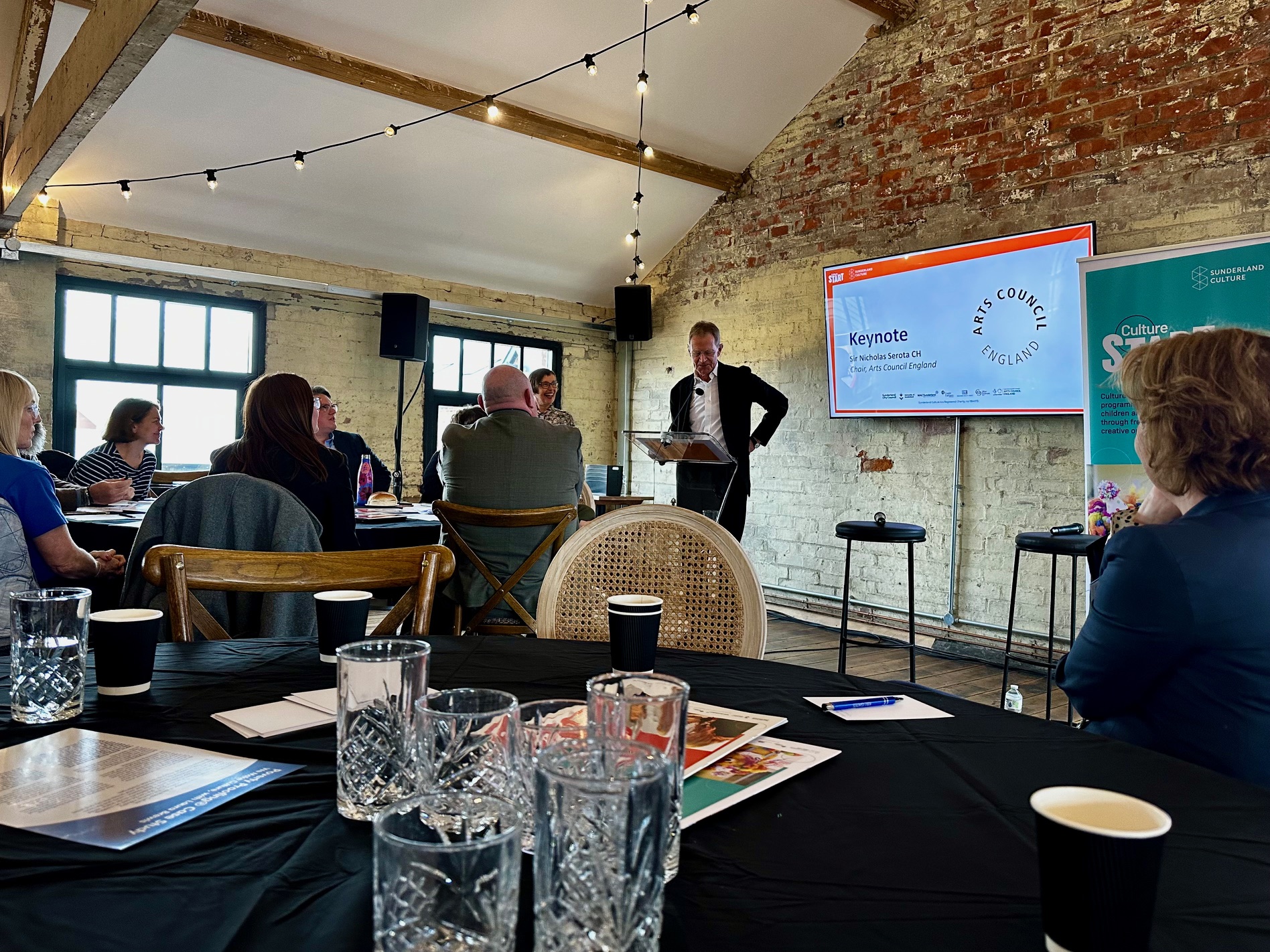
For Sir Nicholas Serota, Chair of Arts Council England, the answer begins with a reframing.
"Let me say something very simple and plainly. Giving children the opportunity to take part in creativity and culture is not a 'nice to have'. It's not enrichment, even though that word is being used quite frequently these days in relation to art and culture. It is not enrichment. It's a right. It's enshrined in the United Nations Convention on the Rights of the Child."
And yet, the UK continues to spend less on arts and culture than many of its European counterparts.
The gap between rhetoric and reality remains.
Culture Start is now entering the final year of its current funding.
By conventional standards, it is still early. A pilot. A test.
But those closest to the work are clear about what is at stake.
“We can’t fail the children and young people by stopping in a year’s time,” says programme manager Michael Barrass. “We’ve built trust…we have to keep it going.”
This is the paradox of preventative work.
Its value lies in what it avoids - in futures that do not unfold as they otherwise might have. But that makes it harder to measure, and easier to cut.
“This is not a short-term project,” Callaghan insists. “It’s a sustained city-wide commitment.”
In Sunderland, that future is still being written.
But the argument is already clear.
If opportunity is to be shared, it must be designed.
If inequality is to be reduced, it must be addressed early.
And if children are to imagine different futures, they must first be given the chance to see them.
Because when culture belongs to every child,
it is not just culture that changes.
It is what a child believes is possible.
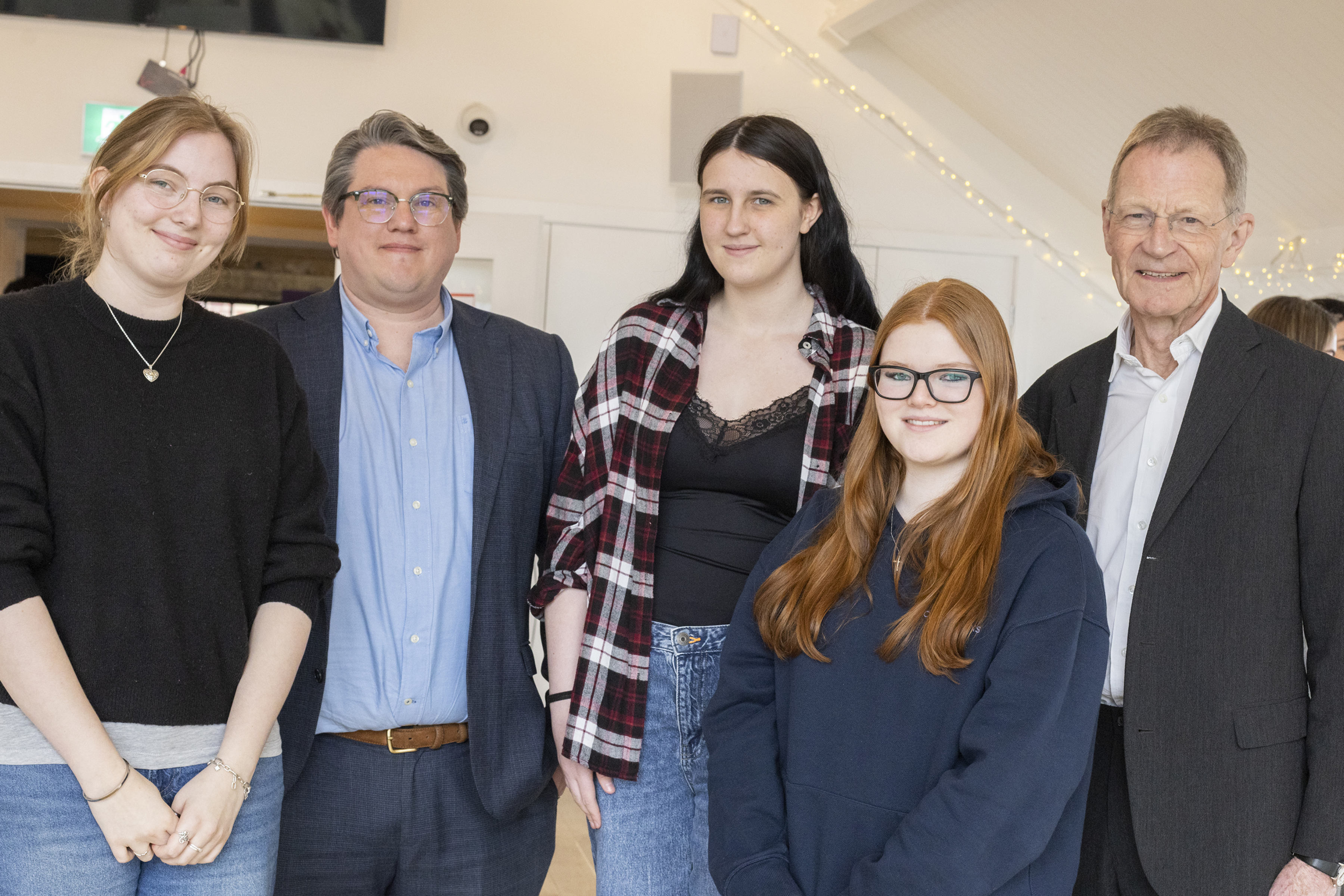
Header Image: Sunderland College film makers: Niamh Edwards (19); Chloe Wilson (17); Alisha Watson (16) with Nick Malyan (CEO of Sunderland Culture) and Sir Nicholas Serota (chair of the Arts Council). Image: Mark Savage





