



There are winter days in the North of England when the light feels thin - and the world rushes on regardless. But there’s another way to meet the season. To step outside at twilight, let your eyes adjust, and remember what the night can be when it isn’t treated like a problem to solve.
Awe. Quiet. A sense of scale. A different kind of attention.
That shift - from “night as threat” to night as habitat, health, culture and wonder - sits at the heart of the North York Moors National Park’s work on dark skies. This half-term, it becomes tangible: not just through stargazing events and night walks, but through a new wellbeing ritual arriving in the UK conversation - Dusking - together with the opening of a significant new observatory at Danby Lodge designed to make the night sky more accessible to more people.
The Dark Skies Festival is running from 13 February to 1 March 2026, showcasing the International Dark Sky Reserves of both the North York Moors and the Yorkshire Dales. It’s a celebration, yes - but it’s also a front door into a wider strategy.
Because dark skies, here, are no longer “just” tourism.
They are nature recovery.
They are lighting policy.
They are community stewardship.
They are a public conversation about safety and fear.
They are a quiet challenge to the idea that the only way to feel secure is to flood everything with glare.
And at the centre of much of this work is Mike Hawtin, the Park’s Head of Nature Recovery Projects and Dark Skies Lead Officer - practical, curious, and committed to making change feel possible.
Before we go strategic, though, we need to talk about what families, friends and curious night-walkers can actually do this half-term.
.jpg)
The Dark Skies Festival programme is broad by design. It’s not only telescope nights: it’s walking, listening, reading, cycling, photography, creativity, and - crucially - learning how to see “darkness” differently.
This year introduces UK audiences to dusking, described as an old Dutch ritual: sitting together at twilight before turning on lamps, watching the day fade into night, and letting the body move from work into rest.
Dutch author and poet Marjolijn van Heemstra will help introduce the concept to UK audiences, including a sound recording combining music and narrative - guiding people into stillness, and reframing twilight as something steady and supportive in a modern world full of light and noise.
It’s accessible. It’s simple. It’s a small act that makes the evening feel bigger.
The festival also marks the opening of the Dark Skies Station at Danby Lodge National Park Centre - a new state-of-the-art observatory facility designed as a permanent base for stargazing and public engagement.
And the details matter: it’s described as fully accessible and includes a “Discover the Universe” multi-sensory exhibition. That’s not just a feature; it’s a statement about who the night sky is for.
The Station will host stargazing evenings (including sessions run by Astro Dog) and a “Tour of the Universe” night with space scientist Neil Phillipson.
The festival also leans into the night as story.
On 17 February, Danby will host author Megan Eaves-Egenes reading from Nightfaring: In Search of the Disappearing Darkness, a travel memoir exploring our relationship with the dark - including time in the North York Moors.
Elsewhere, there are guided walks under truly dark skies (including Sutton Bank, Robin Hood’s Bay, Clay Bank and Helmsley), plus creative workshops, trails and night photography - a reminder that darkness doesn’t only belong to astronomers.
For those who want to go deeper, there are events that put the why front and centre.
York St John University’s Dr Jen Hall is bringing together dark sky experts, artists and academics for an evening exploring how everybody can help curb light pollution - and why it matters for both humans and wildlife.
There are also community case studies: stargazing at Birkdale Farm in Terrington, for example, is set to include discussion of the positive impact after the village reduced external lights to become one of the most recent Dark Sky-Friendly Communities in the Howardian Hills.
The point is this: the festival is a doorway. It’s meant to help people experience something beautiful - then leave with a new way of thinking about the night.
%20Brinton%20Darnell_hpr.jpg)
Both the North York Moors and the Yorkshire Dales were designated International Dark Sky Reserves in December 2020 - a combined designation covering a large area across the two parks.
The badge matters. But it also brings responsibility. Because light pollution doesn’t politely stop at a boundary line.
Mike puts it plainly: “Light’s a pollutant. Like nature, it knows no boundaries.”
That’s the thread running through this work: dark skies as joined-up thinking, not a bolt-on. Darkness as a commons. Something you manage carefully, like water quality or habitat corridors.
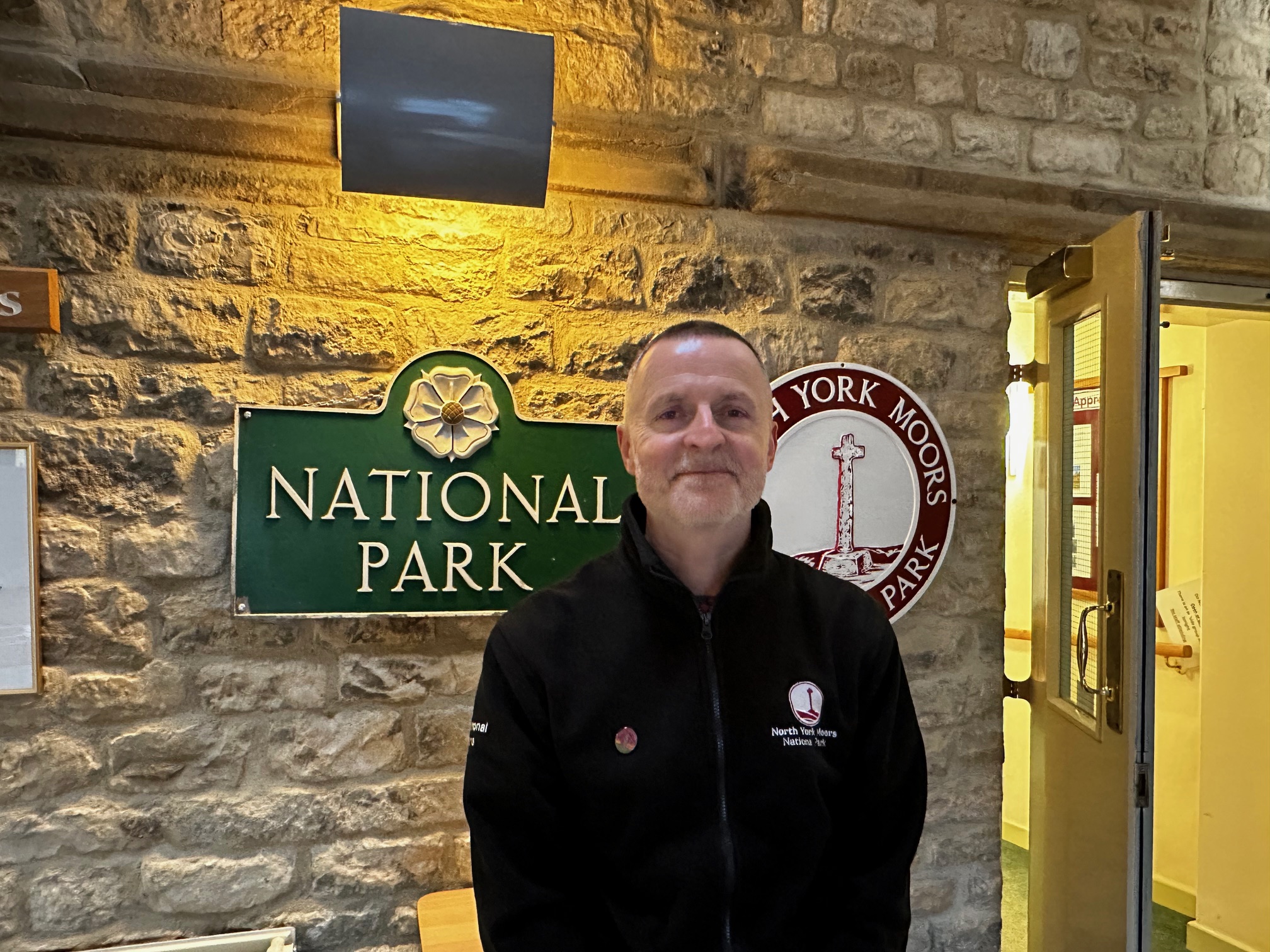
When I met Mike, what struck me was how quickly the conversation moved from the moors to the city - and from stargazing to everyday life.
York St John University is working with the Park on two levels:
Mike is clear on why research matters: “What we don’t want is just loads and loads of data and conflicting information…we need it to help us cut through to the public and help us make significant behavioural change.”
This is the Park’s approach in a sentence: evidence that leads to action, not just information.
One of the biggest obstacles, Mike says, is the misunderstanding baked into the word “dark”. People hear “dark sky friendly lighting” and assume it means switching everything off. “It’s never, ever about that. It’s about the right light, the right place, at the right time.”
This matters because the biggest concern he encounters beyond the Park boundary is predictable - and valid: safety, particularly for women walking alone at night. Mike’s argument isn’t “don’t worry”. It’s more precise: bad lighting can make you feel less safe.
Glare - floodlights, badly angled streetlights, intense blue-white LEDs - can temporarily blind you, wreck your night vision, deepen shadows, and reduce your ability to see what’s beyond the bright pool of light. “That concept of ‘just throw more light at it’ is absolutely wrong.” He isn’t arguing for darkness. He’s arguing for intelligent lighting.
Lower columns in pedestrian spaces. Targeted, shielded fittings. Warmer tones rather than blue-white glare. Control systems that respond to presence rather than burning all night “just in case”.
.jpg)
Mike is careful here, but direct. He distinguishes between:
The core mechanism is not controversial: significant exposure to light at night can interfere with our sleep-wake cycles and the body’s ability to produce melatonin, affecting sleep quality. What researchers continue to study is how strongly different kinds of exposure correlate with long-term health outcomes. Mike’s point is pragmatic: we don’t need perfect consensus to make better choices. “We’re educating people to understand why cool white light is bad, why warm white light is good - and that using light sensitively and responsibly is a good thing.”
The Park’s relationship with York St John University is important because it turns debate into something visible. Mike describes ambition for the campus to become a model site - a place where people can walk through and experience dark-sky friendly lighting that feels safe, comfortable and modern. “The key thing is showing what good looks like.”
That matters for civic leaders too. If a campus can do it - in a city centre context - it becomes harder to argue that a whole city can’t. The National Park’s support includes demonstrating options: light fittings ranging from small doorstep lights to area lighting, and tools that show how colour temperature changes perception. And it creates an accessible place for public conversation explains Mike: “It isn’t about reducing coverage…it’s targeted. It’s not in your face. It’s not up into the sky.”

Inside the National Park, Mike says resistance has been minimal once people understand what’s being proposed. What works is not preaching. It’s a demo.
The Park’s approach with farms is strikingly “human”: not a distant lighting design dropped onto a yard, but on-site trial and error with farmers choosing what works for their operation.
“We don’t go in and say ‘you want one here and two there’. We do a lighting demo. It’s a two-way process.”
That process builds something more important than compliance: it builds advocates. If a scheme isn’t right, the Park goes back and adjusts it - because the goal is long-term stewardship, not a one-off install. Mike also points out an overlooked truth: constant floodlighting can make security worse, not better. An unmanned yard lit all night becomes easy to scope out from a distance. Controls - sensors, timers, overrides - can make lighting both safer and less wasteful.
Dark skies has become part of the Park’s broader philosophy: “outreach” should mean more than encouraging people to visit. “Outreach shouldn’t mean going to talk to people to get them to come to the national park. It should be going to talk to people to show how they can deliver benefits where they live.”
That’s why the Park convened the Northern England Dark Skies Alliance, bringing together protected landscapes to share learning, tools and hard lessons. The ambition is simple: don’t let every area spend nine years making the same mistakes. “We’re not precious about it. We’re happy to share everything we’ve done - including where things haven’t gone right first time.” This is how an environmental idea becomes a regional movement.

For Mike, the festival is meant to spark collaboration and then outlast itself.
People come for stars - and leave with messages about:
And crucially: dark skies doesn’t require perfect weather.
Not every species needs a starry sky, Mike says - but many need darkness. That opens the door to events that aren’t dependent on clear skies: bat walks, owl walks, UV sessions, fungi, moths - the night as ecosystem, not just spectacle. “It doesn’t have to be a starry sky event. It can just be a dark event” he points out.
%20Andy%20Dawson%20Photography_lpr.jpg)
Over the coming weeks MagNorth will be going deeper into the Park’s strategy — including what “dark skies” means for:
Because the question beneath all this is simple: What would it mean to build a future where darkness isn’t treated as something to eliminate - but something to care for?
Header Image: Robin Hood's Bay Milky Way. (Tony Marsh)





