



Send five prints. Receive four by other makers. Leave one behind for an exhibition in Berwick-upon-Tweed.
The arrangement behind the first Jackal Print Exchange is simple enough to explain in three sentences. Its possibilities extend much further: an artist encounters work they might never otherwise have seen; a print travels from one studio to another; a local audience gets to explore a collection assembled through participation.
At Jackal, the independent art space on Hide Hill, 27 artists have taken part in an exchange stretching from Orkney to Somerset. On Sunday 11 October, its opening will be accompanied by Women and Printmaking: Voices from the North, a free talk by Professor Maria Chester exploring women’s contribution to printmaking across Scotland and North East England.
Together, the exhibition and talk are offering a unique way into the subject through both its history and its current practice. Who has shaped the images we inherit? And what helps people make, encounter and own art now?
For an art space serving Berwick and its Borders audience, those questions have a local purpose. A national cultural programme becomes useful when there is somewhere nearby to take part.
The exchange was launched in August. Each participant contributed a run of five identical prints. Four are sent to other participating artists, who receive a selection of four prints in return. Jackal retains the fifth for the exhibition.
There's no entry fee. Artists pay the postage to send their initial contribution; Jackal handles the onward exchange. Participants came through an open call and through artists already working with or supporting the space.
Phil Rowe describes the intention as creating “an independent platform for printmakers to share and express their work both in the northeast and across the UK”.
The first response has included, he says, a Japanese printmaker in Orkney and a holistic practitioner in Glastonbury. Professional practice and making pursued alongside other work both have a place in the exhibition.
“It’s been incredibly rewarding to see the submissions come in for a first time event,” Rowe says, and to see the ambition of offering “visibility and a platform to meet, discuss, and celebrate the diversity of print” becoming a reality.
Jackal hopes to make the exchange annual. For now, the first exhibition builds on earlier print shows and on Pieces of Mind, held at the space in May.
Making room for different kinds of maker is one part of the approach. Price is another. Rowe puts the average print price at £25, offering visitors the possibility of buying an original work without a large outlay.
“The affordability aspect is especially important,” he says, “allowing more people to buy what they love.”
An average isn't a promise that every work costs the same. It is, however, a concrete expression of what access can mean: a visitor might come to look, ask questions, and find something they can take home.
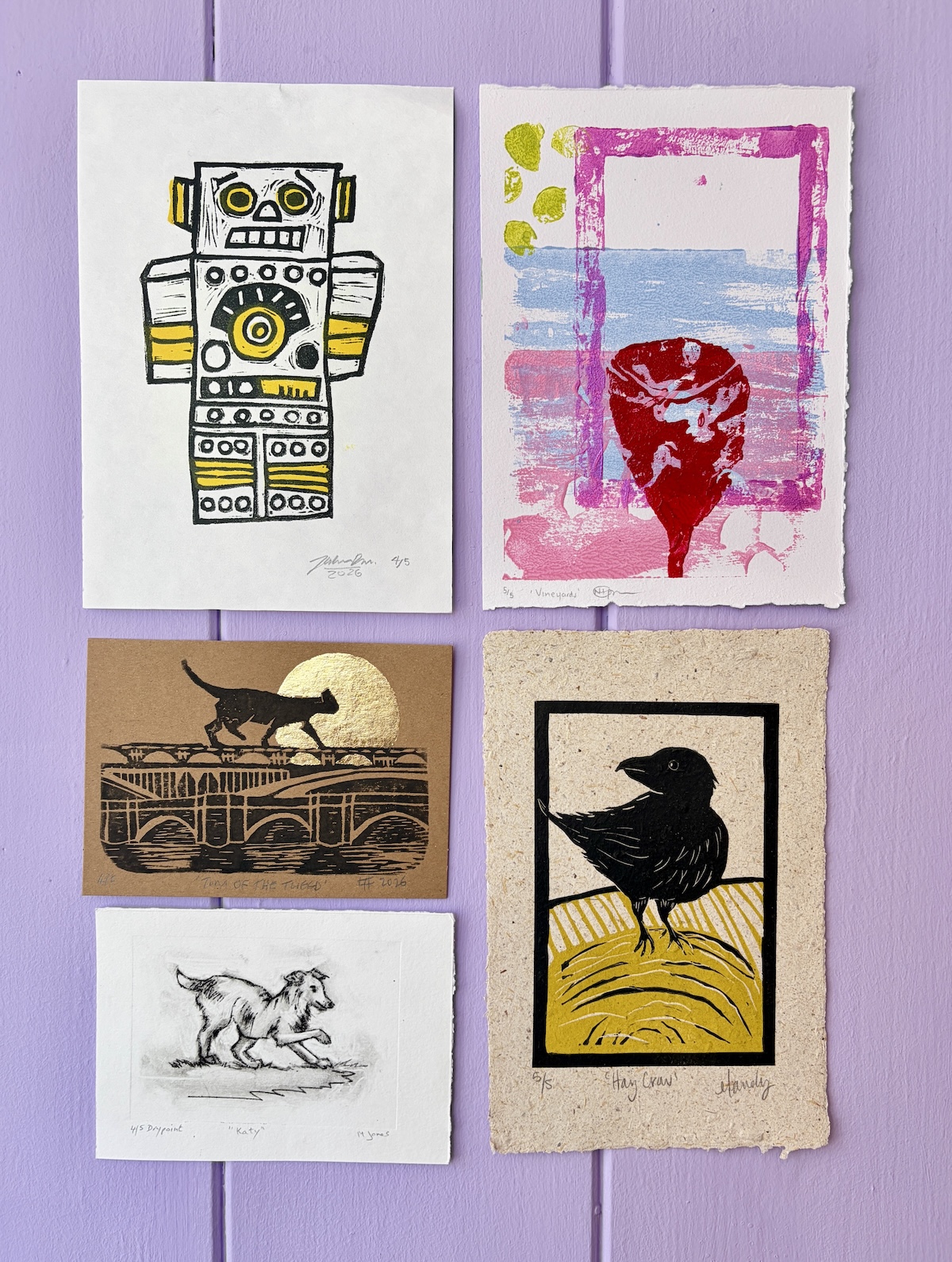
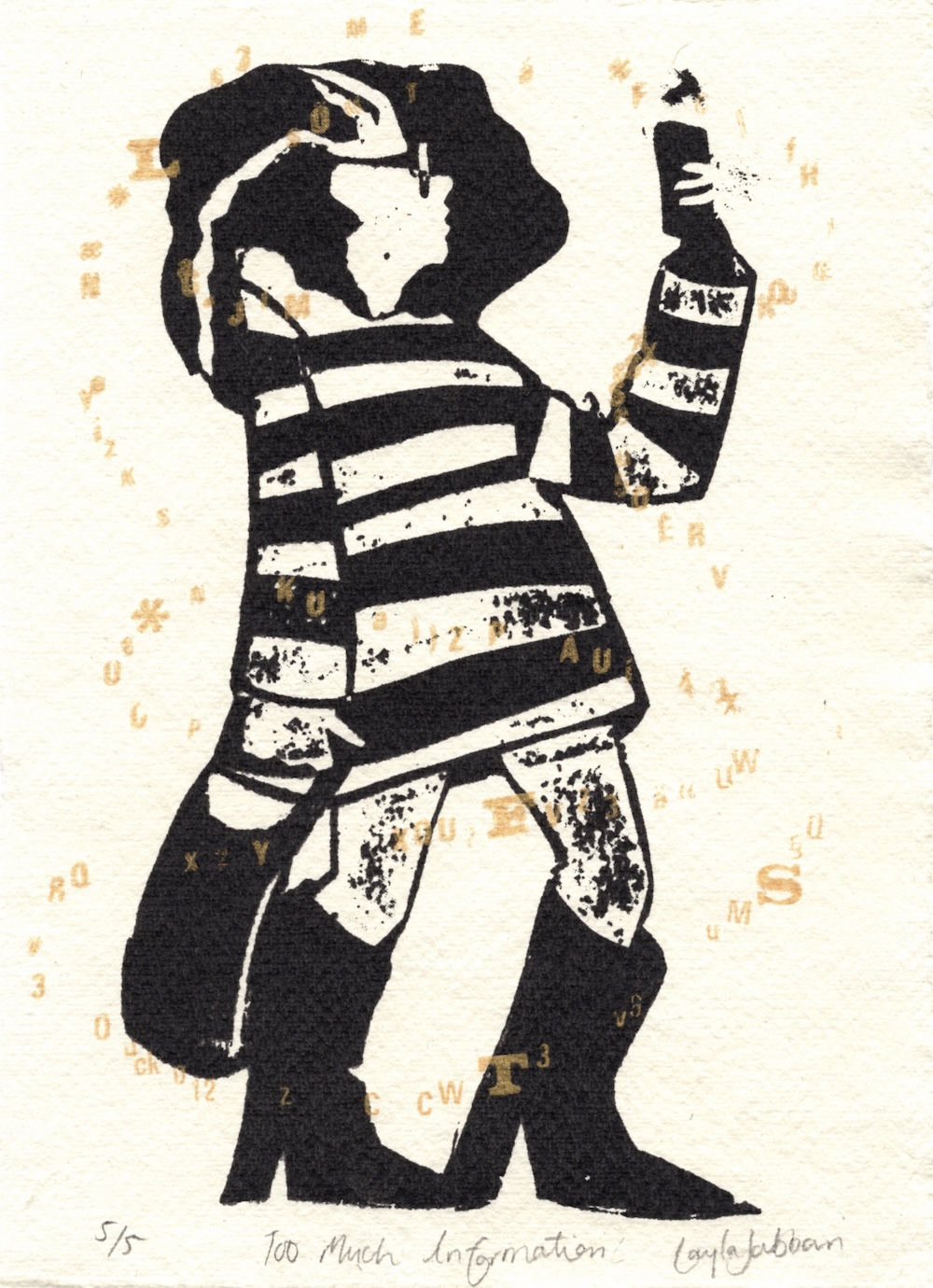
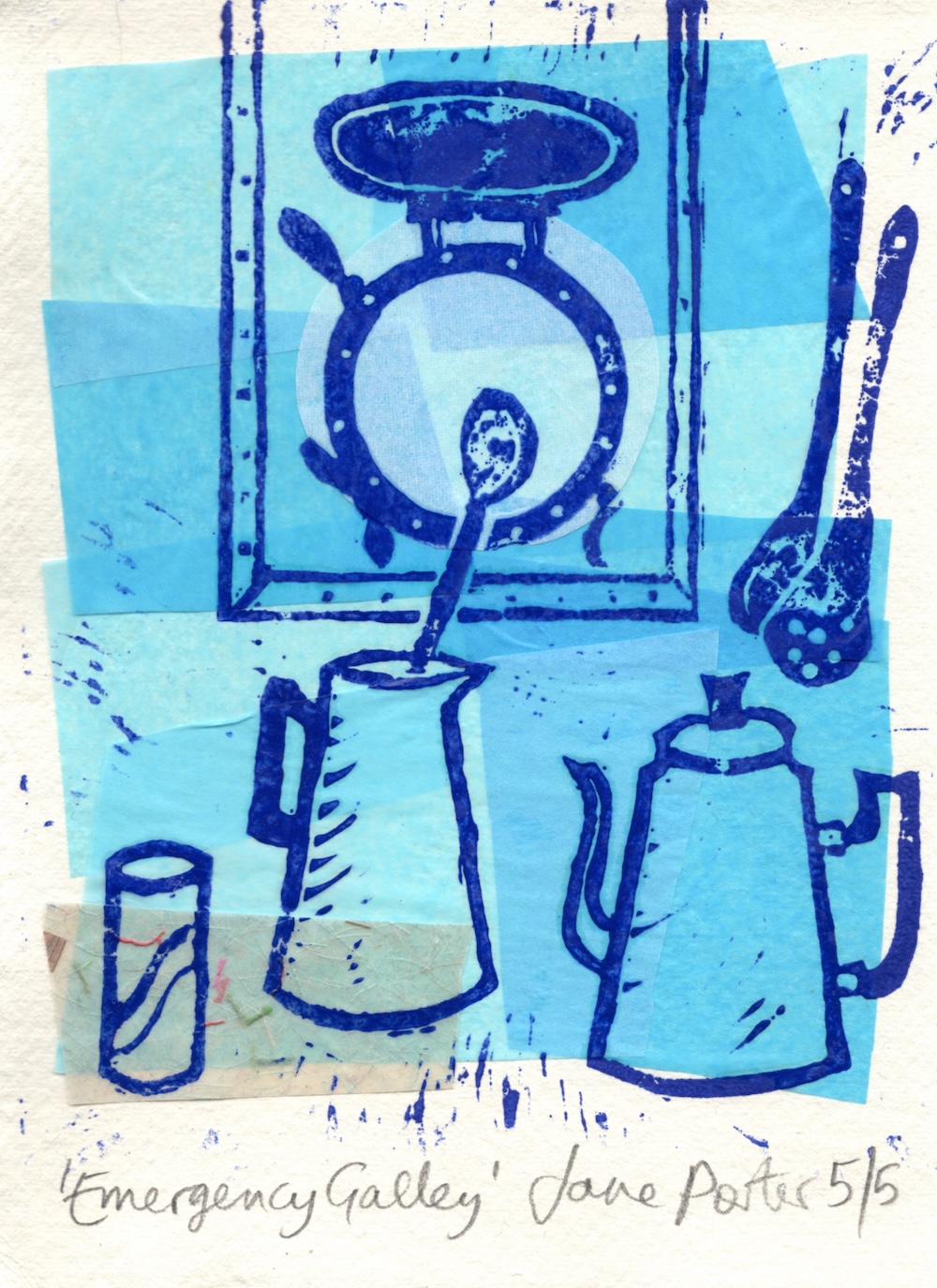
The works supplied as a glimpse of the exchange include printmaker Layla Jabbari’s screenprint Too Much Information and author and illustrator Jane Porter’s Emergency Galley, made using linocut and chine collé. Even that small pairing suggests the range available within a medium often discussed as though it were a single process.
Chester’s talk will extend that range through the work of Mabel Royds, Wilhelmina Barns-Graham, Elizabeth Blackadder, Joyce Cairns and Anne Desmet. Her examples span woodcuts, lithography, monoprints and wood engraving, alongside other print techniques.
“This talk celebrates the women whose hands shaped the printed imagination of Scotland and the Northeast,” Chester says, “artists whose craft, courage, and quiet innovation left a legacy still inked into the visual culture of the North.”
Royds offers one route into that history. Born in England, she began teaching at Edinburgh College of Art in 1911. Her colourful woodcuts include flowers, Biblical subjects and scenes of India, with a technique indebted to Japanese woodcuts. Her work places the North firmly within an international exchange of ideas and methods.
Barns-Graham offers another. Her Trust describes printmaking as an experimental medium throughout her career, with painting and printing informing one another. She worked with specialist printmakers, and her later screenprints developed through work with Carol Robertson and colleagues at Graal Press in Edinburgh. Collaboration was part of the making itself.
These women’s histories also call for precision about recognition. Blackadder was the first woman elected to both the Royal Scottish Academy and the Royal Academy. Her achievements were celebrated during her lifetime. A talk bringing her work into focus can help audiences look more closely at an established artist, as well as introduce names they've yet to encounter.
Desmet’s practice brings another connection to place. The Royal Academy describes her use of wood engraving and lino cutting to explore the changing urban landscape. Printmaking can attend to buildings and cities as readily as flowers or intimate subjects.
The historical works discussed in the talk and the contemporary prints in the exchange are distinct strands of the event. Their meeting gives visitors an opportunity to move between learning about a medium and seeing what artists are doing with it now.
Mills, Jackal’s founder and curator, sees the opening as a chance to connect local audiences with a wider conversation.
“It’s a great opportunity to bring an art history event to Berwick-upon-Tweed and connect local audiences with a wider celebration of art and its history,” Mills says.
The talk forms part of Art History Festival, organised by the Association for Art History. At Jackal, it will be followed by a Q&A, refreshments and time to explore the exhibition.
For Berwick, the exchange leaves something tangible after the afternoon is over: 27 prints gathered through an invitation to contribute, an exhibition that visitors can return to, and the beginnings of a network the organisers hope to sustain.
Four prints leave for other makers. One stays in Berwick. That's a modest arrangement with room for a great deal of connection.
Women and Printmaking: Voices from the North and the Jackal Print Exchange opening take place on Sunday 11 October 2026 at Jackal, 30 Hide Hill, Berwick-upon-Tweed, TD15 1AB.
Doors open at 1.45pm; the talk begins at 2pm and the event finishes at 4pm. Admission is free, with booking essential because places are limited.
Book HERE
The exhibition runs until 4 November 2026, open Tuesdays, Wednesdays and Thursdays, 2–6pm. Exhibition entry is free; prints are available to buy.





