



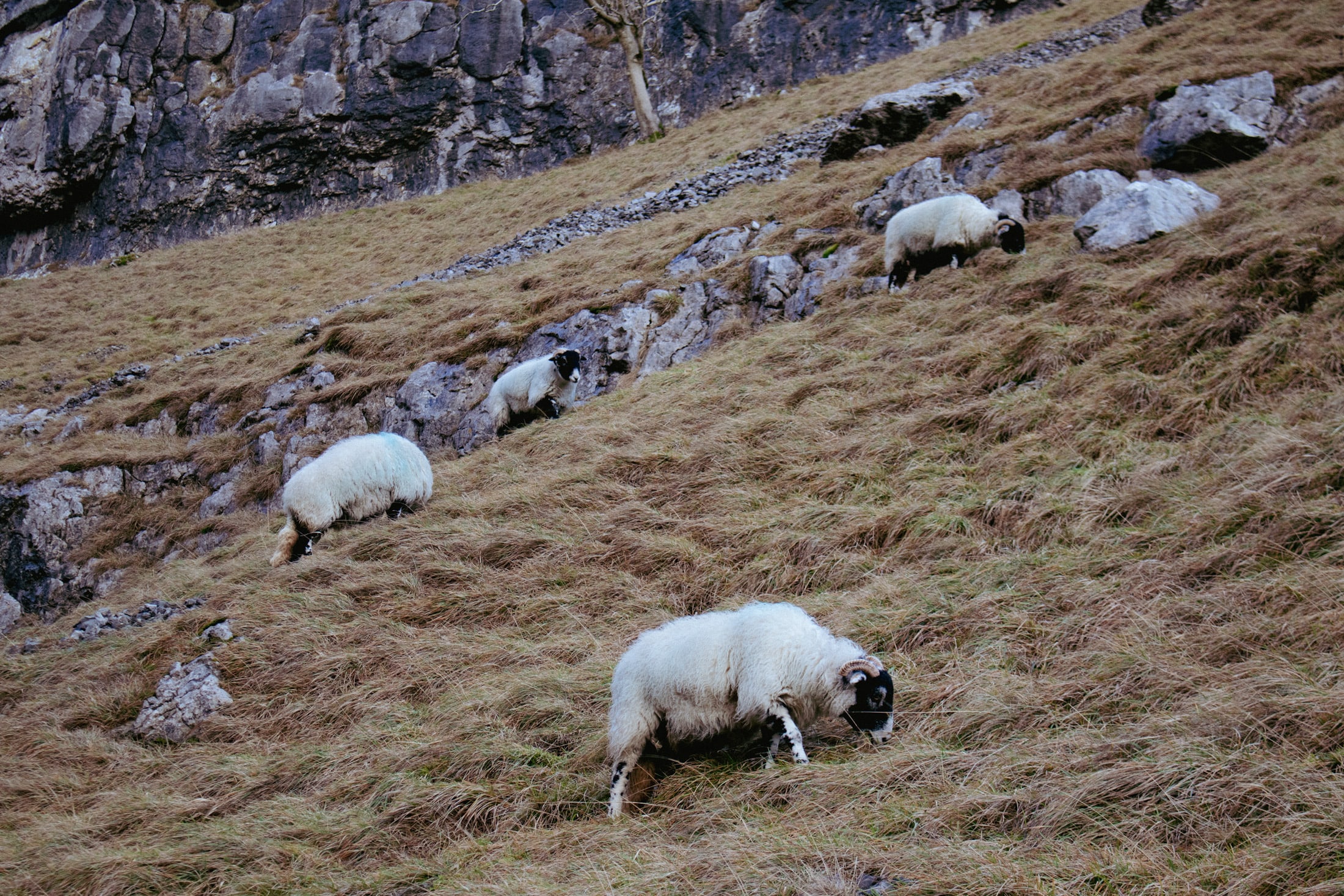
In the high, wind-cut fells and deep valleys of the Yorkshire Dales, where sheep have shaped the land for centuries, a new research project is asking a deceptively simple question: can traditional breeds grazing native upland forage help create a lower-carbon future for Britain’s hills? The Forage for CH4nge project, backed by Innovate UK, is bringing together farmers, ecologists and livestock scientists to explore how different sheep breeds and pasture types influence methane emissions in the upland environment - and what this could mean for the sustainability and resilience of upland farming.
Led by Wensleydale farmer Adrian Thornton-Berry, and delivered in partnership with the Game & Wildlife Conservation Trust (GWCT), UK Agri-Tech Centre, Scotland’s Rural College (SRUC), the National Sheep Association (NSA) and the Yorkshire Agricultural Society, the study focuses on a unique, real-world question: how do native Swaledale sheep compare with half-bred Texel-cross animals when grazing the complex mosaic of upland forages found in the Dales?
To answer this, 120 sheep - 60 of each breed - were divided into three groups and grazed on contrasting upland habitats:
Two rounds of methane testing were carried out using SRUC’s Portable Accumulation Chambers (PAC), installed on a mobile trailer at Adrian’s farm in Swinithwaite. Each sheep spent 50 minutes in a sealed pod while emissions were recorded, along with weight and body condition. Throughout the process, careful stock handling ensured animals remained calm and stress-free. After testing, they returned to their fields to graze as normal.
.jpg)
Full methane results, combined with detailed vegetation surveys, will be published in early 2026. The findings are expected to offer the most upland-specific dataset yet available on how sheep, forage and landscape interact to influence greenhouse-gas output.
Agriculture is responsible for around 12% of the UK’s total greenhouse-gas emissions, with livestock contributing roughly half of that. Methane - a by-product of natural rumen fermentation - is one of the most significant gases associated with sheep farming. Although it breaks down in the atmosphere far more quickly than carbon dioxide, it is a much more potent greenhouse gas in the short term, which is why reducing livestock methane is a cornerstone of the industry’s net-zero ambitions.
But in the uplands, the conversation is more complex. The Yorkshire Dales, like much of northern England’s hill country, is dominated by semi-natural grasslands, moorland and peatland - landscapes that support extraordinary biodiversity and store large quantities of carbon. Sheep play a central role in shaping these habitats, yet their feed quality, growth rates and management systems differ dramatically from lowland farms. Rough grazing can reduce productivity per animal, and lower-quality forage often results in higher methane emissions per unit of meat or wool produced.
This makes the Forage for CH4nge study particularly valuable: it is asking methane questions in the landscape where they matter most.
For many upland farmers, the cultural and heritage value of local sheep runs deep. The Swaledale, with its curled horns and distinctive white blaze, has been moulded by generations of Dales winters; its ability to thrive on sparse forage makes it emblematic of the region. Yet commercial pressures have driven increased use of cross-bred, fast-growing sheep that can perform well on improved grassland.
.jpg)
Farmer Adrian Thornton-Berry believes understanding how these breeds compare in a changing climate is vital. “If we can show that native sheep are better on certain native forages, that helps us farm these sensitive areas better in the future,” he says. “This project is about building a sustainable future for Britain’s uplands - farming in a way that is more profitable, more resilient, and better for habitat and climate.”
Previous research points to several themes that Forage for CH4nge will now be able to test in an upland context:
What makes this project distinctive is that it is testing these interactions directly within the upland environment - where soil depth, altitude, rainfall and traditional grazing patterns all shape what is possible.
For GWCT ecologist Ellie Raynor, the project could help chart a path forward for farmers navigating environmental and economic pressures. “By using breeds adapted to the local landscape and grazing the most appropriate forage, farmers can reduce input costs and improve productivity, while also lowering methane and enhancing biodiversity,” she explains.
The NSA agrees that data of this kind is urgently needed. Policy Manager Michael Priestley notes that the sector has committed to reaching net zero by 2040, and methane reduction will be part of that journey. “Just like any industry, you need data,” he says. “Low-methane, climate-efficient sheep are generally more profitable too. But we need real-world evidence to help farmers make informed decisions.”
And what could the findings mean for the Dales? If Forage for CH4nge identifies upland systems that combine lower emissions with strong animal performance and healthy habitats, the implications could be far-reaching:
.jpg)
Whatever the results, the project is already reshaping how scientists and policymakers think about upland emissions. Rather than applying lowland assumptions to hill farming, it acknowledges that the uplands are unique - ecologically, culturally and economically - and deserve solutions designed for their realities.
Is this a moment of opportunity for Britain's uplands? As climate targets tighten and land use debates intensify, the future of farming in upland areas like the Dales is under scrutiny. Yet with careful research and collaboration between farmers and scientists, the hills may offer more solutions than problems. By bringing together traditional knowledge, ecological insight and quantitative data, Forage for CH4nge is helping build a future in which upland farming remains both viable and environmentally responsible.
Results will emerge in early 2026. Until then, the sheep continue to graze, the seasons shift across the Dales, and a region shaped by livestock for centuries is set to understand its livestock - and its landscapes - in a new light.





