



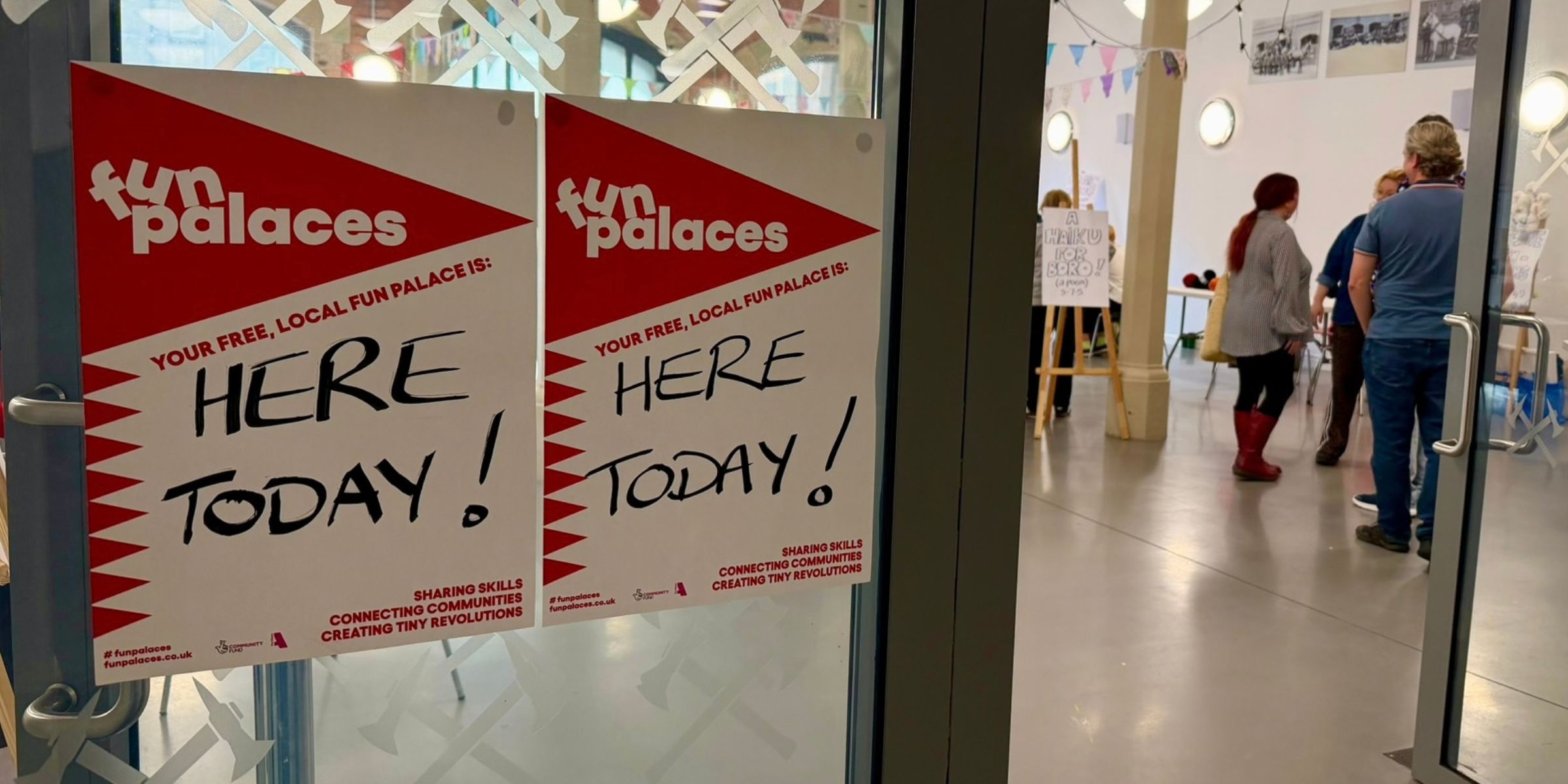
A woman who didn't usually like going out on her own came into Middlesbrough’s Fun Palace on Sunday. She stayed for two and a half hours.
Organiser Laura Lonsdale told us about her visit: the conversations, the time spent with other people, the significance of having come at all.
“That’s a real achievement,” Laura said. “She’s been brave enough to come out.”
For anyone counting attendance, this might register as one visitor. For Laura, it was a reason the day mattered.
Inside Middlesbrough Town Hall on 4 October, there were pom-poms to make, skills to share and a painting of the town that people could help create. Handmade signs introduced the activities. Bunting hung above shared tables. Behind those modest invitations lay questions that would take considerably longer than an afternoon to answer.
Who feels comfortable entering a cultural building? Whose knowledge is recognised once they get there? Who decides what happens next?
Writer and facilitator David Tuffnell, who organised the event along with Laura, had been talking about creativity, memory, ageing, loss and the way his hometown is seen from elsewhere. The word “fun” was doing a great deal of work.
“I accept that there are truths about Middlesbrough,” he told me, “but I don’t accept that they're the only truths about Middlesbrough.”
In August, a tragic incident occurred on the A66 at South Bank.
The resulting grief belongs first to the families and people who knew those killed. The seriousness of what happened requires careful reporting and accountability. It also requires care about the conclusions drawn about everyone else who lives nearby.
At MagNorth, we were troubled by the hostility directed at the place and its people in the discussion that followed. An incident can be reported without turning an entire town into a verdict. Yet a visitor arriving with only that picture would have been poorly equipped to understand the people we met on Sunday. Thankfully, many local people rejected the simplistic narrative being shared.
The contrast on Sunday was in the work of the room: neighbours spending time together, sharing knowledge and noticing potential in people who might otherwise remain strangers. That work was taking place in a town still living with difficult realities. David and Laura’s longer practice shows that it had roots well before this summer.
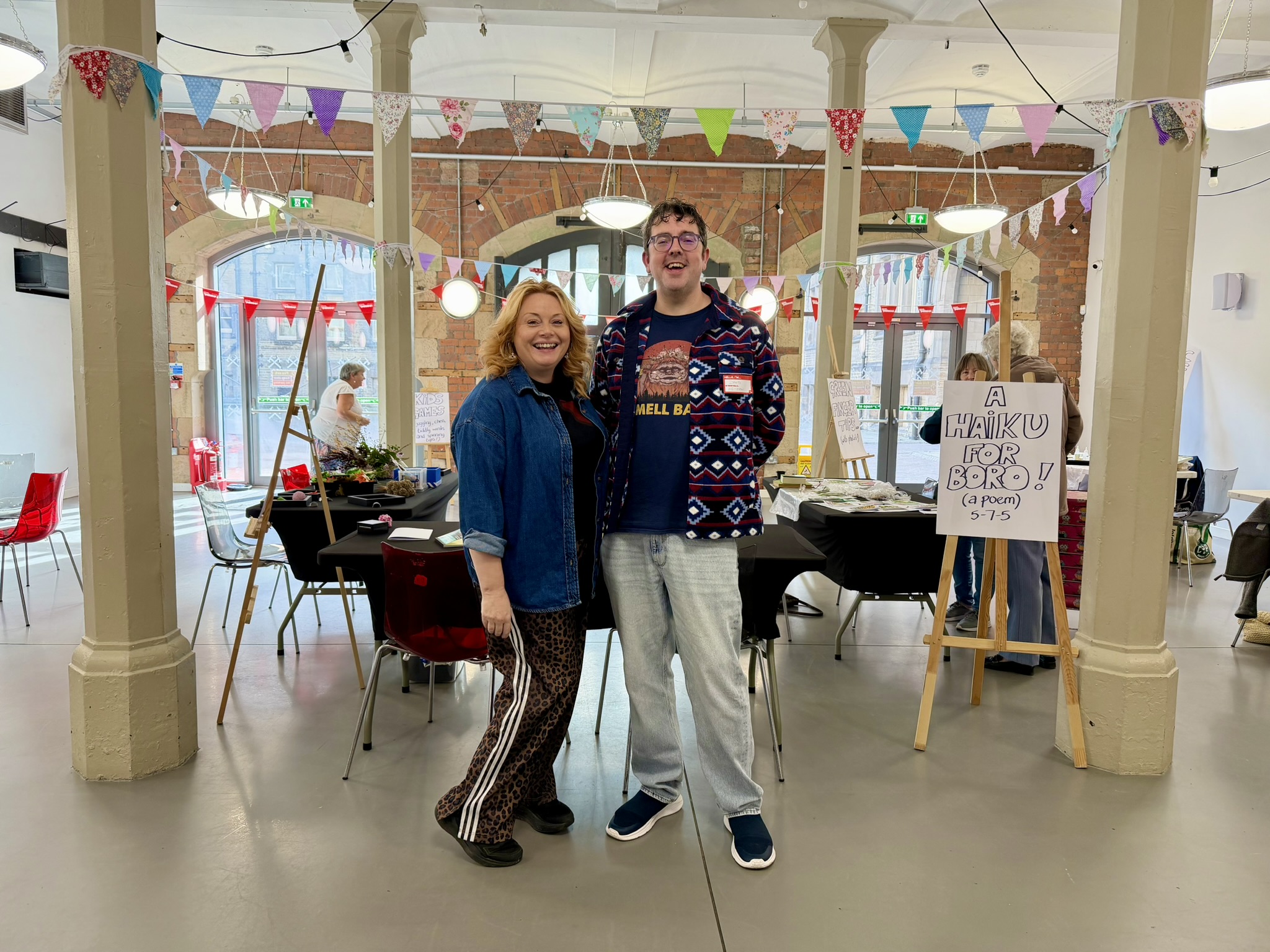
Fun Palaces director Amie Taylor describes a Fun Palace as “a free to visit, local event made by a community for their community”. The movement brings people together to exchange skills and discover what their neighbours know.
Its two guiding sayings are “Everyone an artist, everyone a scientist” and “We believe in the genius in everyone”. They express a belief in potential, and in the opportunities people need to realise it.
There's no requirement for a polished production or a crowded programme. Four people sharing something for an hour can make a Fun Palace. Amie welcomes the small, scrappy versions assembled from whatever people have to hand.
Her own experience began with making Brockwell Lido Fun Palaces between 2014 and 2016. She learnt shadow puppetry alongside other people, met scientists through the activities they brought and made friendships that have endured. She also learnt the practical business of insurance and risk assessments.
The pleasure, she remembers, included the meetings beforehand, when people worked out together what they could do.
“All you need is a space and a skill to share,” she writes. That could mean teaching a few words of a language, starting a poetry session or showing somebody a magic trick.
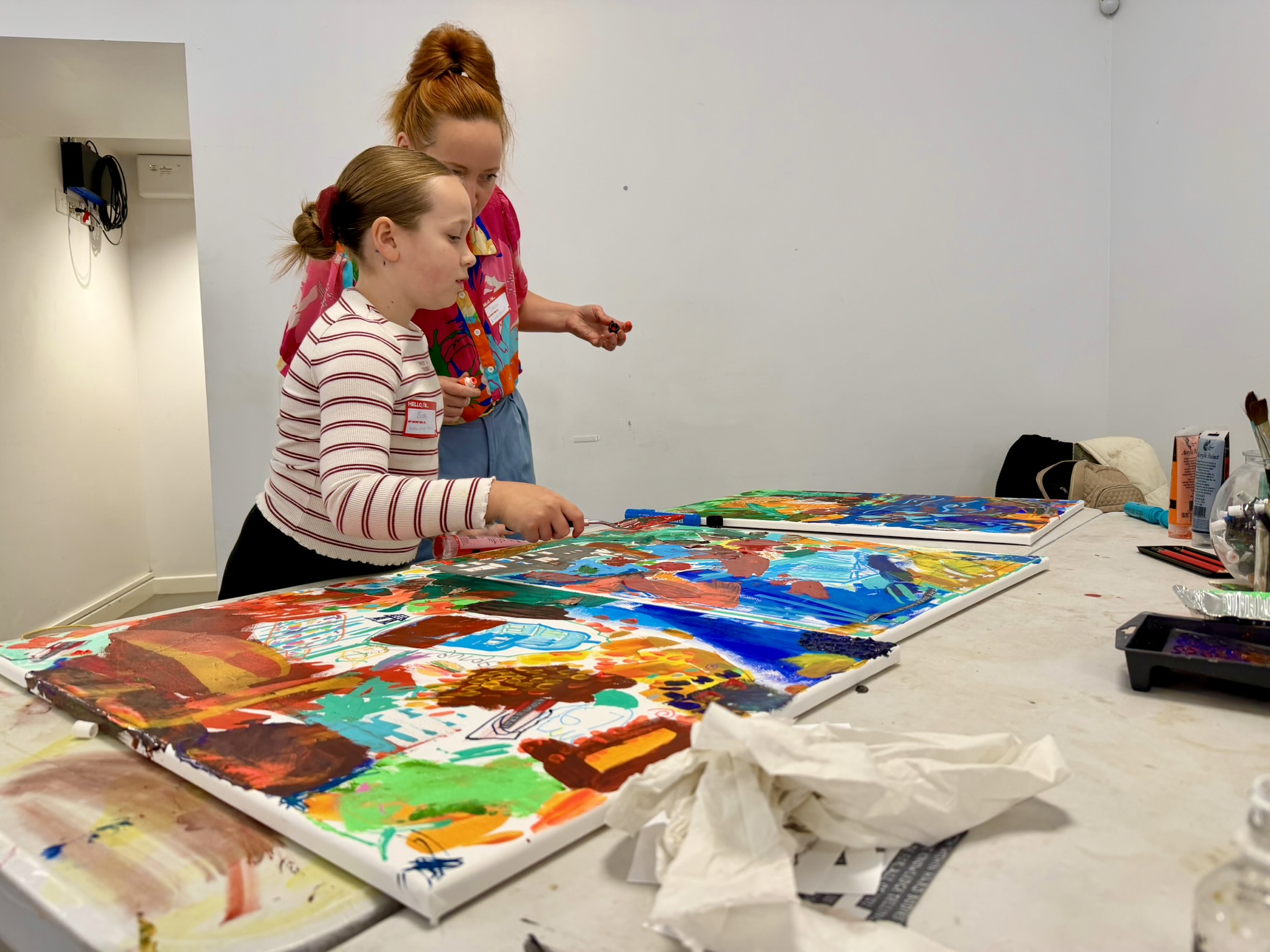
In Middlesbrough, Sarah was inviting people to contribute to the Tees Triptych. A handmade sign described it as “a trio of paintings made by a community”.
She teaches singing, acting and dancing, and had brought that interest in creativity into a different medium.
She wanted some Middlesbrough buildings in the picture, but there was room for people to paint a garden, a favourite place or an alley. The importance of a place didn't depend on its appearance in a visitor guide. It could matter because it mattered to the person holding the brush.
Kids could paint across the work, too.
“You can paint anywhere on this and just enjoy yourself,” Sarah said.
Across three panels, people could contribute their own versions of the town. Sarah supplied a starting point and left space for what others might bring.
A free event removes the price of a ticket. It doesn't remove every obstacle to taking part.
Amie calls one of those obstacles “threshold anxiety”: the feeling that a building or place might not be for you, making the act of walking inside difficult.
She sees an understanding of this in theatre pioneer Joan Littlewood’s original vision for a Fun Palace in the 1960s. Its proposed openness challenged the formal rituals of entering a cultural venue. Today’s events, Amie says, have the potential to change how communities use and regard the spaces around them.
Laura’s account of the woman who stayed for the afternoon gives that argument a human scale. Nobody could know, simply from watching her enter, what coming alone had required.
David approaches invitations with a similar care. Earlier in the week, he had met a woman who began reciting a poem while they talked. He was struck by her cheekiness and mischief, and encouraged her to join the group he and Laura run on Tuesdays.
She came to the Fun Palace on Sunday and spent an hour there. As she left, he said he hoped to see her on Tuesday, too.
The invitation was an expression of interest in what she might bring. It also left the decision with her.
“Just know we’re here,” David said, describing his approach. “And if you want to, that’s great.”
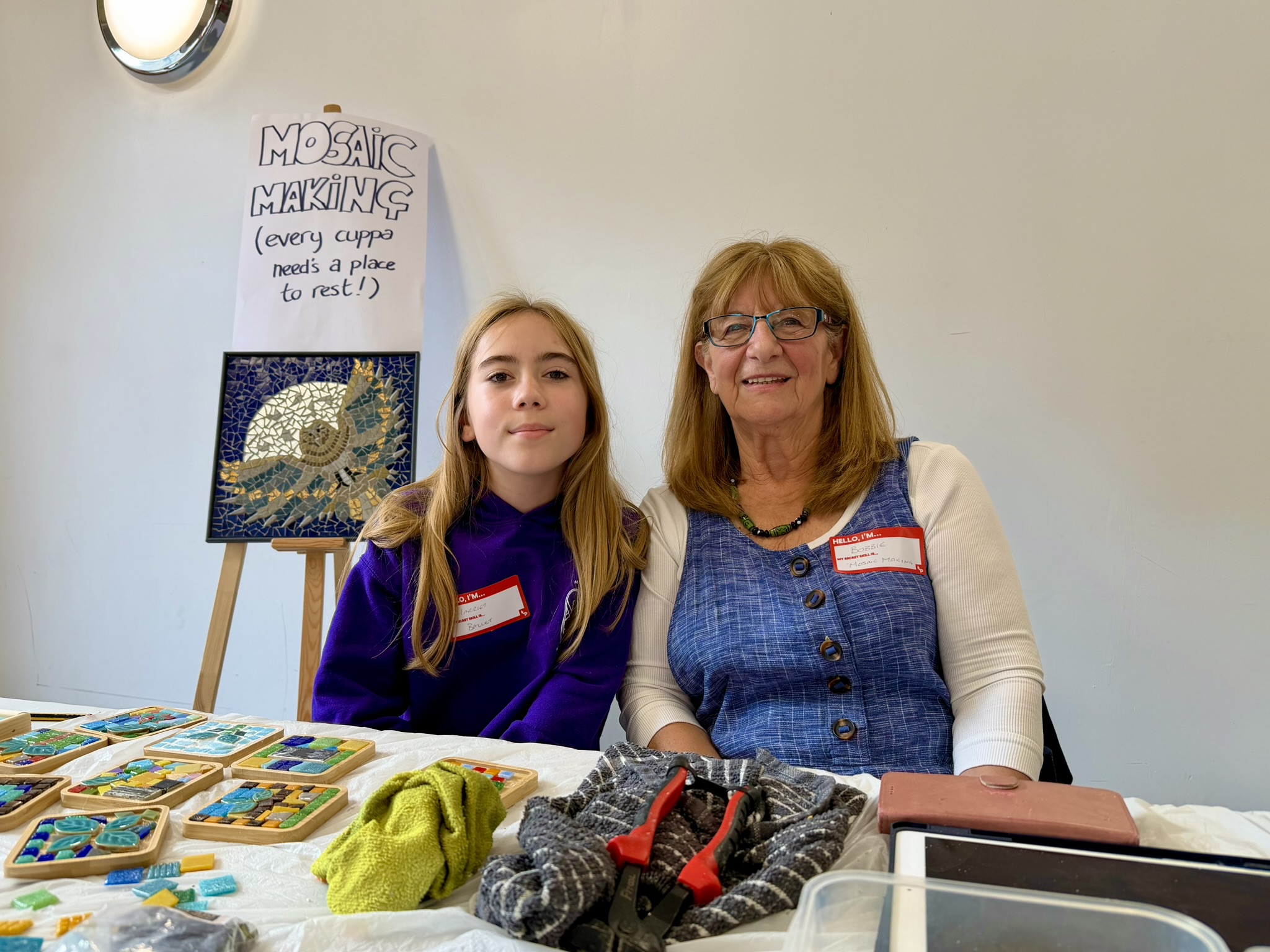
David and Laura founded LESS IS MORE productions in 2009. Their work has included new writing, performances and community theatre. David has also worked in arts development for the council, alongside his practice as an actor, director and writer.
The Tuesday group began with a question: what if Juliet was 74?
What would Shakespeare’s words mean when spoken by someone with that much experience of living? What might happen if local voices could inhabit them without having to adopt an idea of how Shakespeare was supposed to sound?
For three months, the group worked with monologues and scenes, pulling them apart and imagining them differently. When David and Laura asked what people had enjoyed, the answer was learning together. That included learning with facilitators who didn't pretend to know everything.
The participants then started choosing what they wanted to do next. David describes short films, responses to Shakespeare and a pantomime written by the group. People could contribute through performing, writing, hair or make-up. The work made room for different kinds of experience.
Among those involved, he says, are people living with dementia, carers and people who have experienced bereavement. Their lives can make attendance complicated. The group leaves room for that, too: if somebody needs time away, they can return whenever they're ready.
David wants those allocating funding to recognise what develops through sustained contact. People gain confidence and begin leading things themselves. Their potential is easy to underestimate when age, health or somebody else’s assumptions become the first thing anyone sees.
“We all just want a bit of joy in life, don’t we?” he said.
That joy depends on time, attention and skilled work. A free afternoon still needs people able to organise it, welcome others and sustain the relationships that follow.
For David, the connection to Fun Palaces has a particularly local history. He and Laura invited the organisation to contribute to a workshop exploring class and theatre at Ormesby Hall.
The hall was a base for Joan Littlewood’s Theatre Workshop, whose members lived and worked there for around eighteen months. Ruth Pennyman, herself a poet and playwright, had encouraged local drama and theatrical productions. This history places Middlesbrough within the development of modern British theatre, and David wants young people from the area to know it.
The connection also offers a way of thinking about the present. Creative life is already happening in communities, sometimes without the language that cultural organisations use to describe it.
Amie’s account of “cultural democracy” begins there.
“Ultimately it means reshaping what counts as culture, who gets to make it, where it happens and who gets to join in,” she writes.
Homemade birthday cards, knowledge of plants, knitting, nail art and a formidable memory for EastEnders can all belong within that understanding. Their value includes what people know, make and share in their everyday lives.
“When a neighbour leads something in a room; especially someone who may not usually get to lead, it shifts who’s making the decisions around what culture is, and what matters,” Amie says. “And it shifts how we see each other as neighbours.”
That exchange happened among the Makers in Middlesbrough, too. Laura described people trying one another’s activities and spreading knowledge within the group. For a future event, she would like younger people to share their skills with the older generation, extending the learning in both directions.
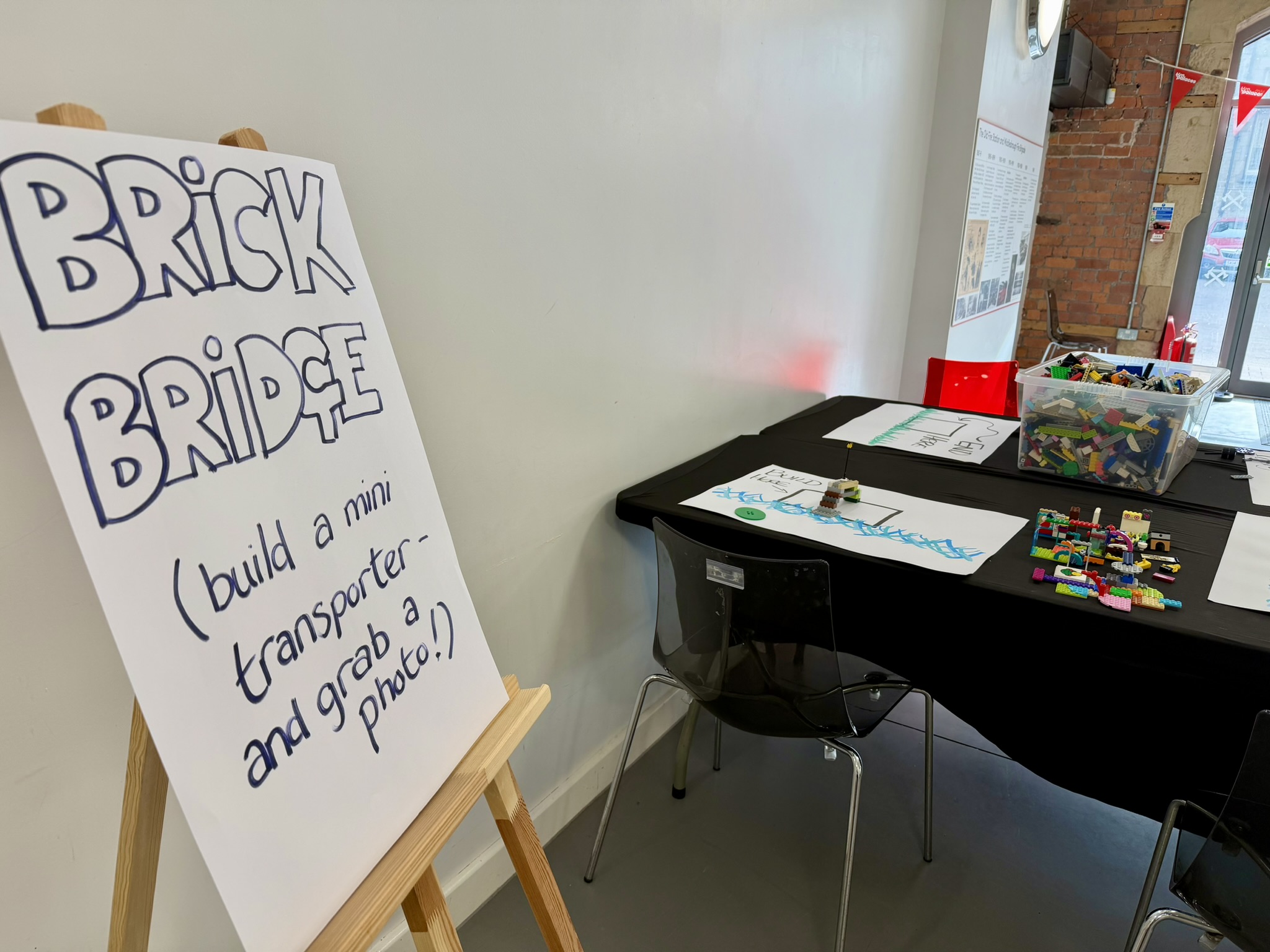
Fun Palaces executive producer Orla Nicholls arrived in Middlesbrough after a weekend visiting events in Birmingham and Wales. A small, part-time team supports Makers across the UK, and the weekend gives its staff the chance to join in with the work people have created.
In Wales, Orla had encountered an activity called “Make a Granny Giggle”. Elders and children had been brought together to help create the event. A granny sat in a chair, joke books were available, and visitors tried to make her laugh.
It was one of the examples that stayed with her: an invitation simple enough to understand immediately, with room for a real exchange between people.
Orla stresses the difference between organising something for a community to consume and supporting people to bring their own ideas and share their skills with neighbours.
“It’s just moments of joy,” she said.
She made a Fun Palace in Luton in the movement’s first weekend in 2014, having seen co-founder Stella Duffy write about it online. Getting friends and other local people together eventually led to the job she now describes as her dream role.
The work continues beyond October. There are workshops online and around the UK, helping people develop ideas and find ways to work together. Amie describes a six-month follow-up survey and continuing relationships with Makers, listening to what happens after the weekend.
She also has practical suggestions for institutions: accessible small grants, free space and a willingness to listen. Her challenge to venues is to hand over to their communities for the weekend and learn from how people choose to use the building.
“Make it a genuine offer,” she confirms.
Community cohesion can sound like a condition a town either possesses or lacks. These conversations suggest something more practical: relationships that people have opportunities to build, and choices about whose contribution is taken seriously.
Laura’s visitor found a reason to cross a threshold and stay. David’s group found reasons to return, then began deciding what to create. Sarah’s painting let people place their own experience within a shared picture. In each case, participation meant having something to contribute as well as something to receive.
The longer-term example matters most. An afternoon offers contact; a group that meets again offers the possibility of becoming known. David describes a place where a person can be absent without losing their welcome, and where facilitators can acknowledge what they do not know.
Those choices can make belonging less dependent on confidence, uninterrupted attendance or being able to perform competence from the outset.
He also describes using drama to explore a character’s history, circumstances and possible choices. Looking at Hamlet together can prompt someone to reconsider a first judgment.
“We’re humans, we’re meant to learn and grow,” he says.
The connection to everyday life is his: thinking about what a character's experienced can encourage questions about the experiences of people around us.
These are plausible ways of strengthening understanding. Our visit can't establish that the event reached every part of Middlesbrough, bridged particular social divisions or changed anyone’s behaviour afterwards. What it offers is a view of how people create opportunities for contact, learning and shared responsibility - and accounts of relationships that have already endured.
That raises a serious question for cultural policy. How much attention goes to creating places where people can meet repeatedly, contribute without being judged and exercise some authority over what happens?
Free entry helps. Accessible buildings, capable facilitators and sustained resources help turn that invitation into something dependable. Middlesbrough has all that.
Amie’s request for small grants and available space gives councils and venues something concrete to act on. Community-led work still needs support; celebrating its ingenuity shouldn't become a reason to leave its Makers carrying the cost.
Making pom-poms on Sunday took David back to doing the same thing with his nana. She died many years ago. A remembered skill connected a person from his past with someone sitting beside him in the present.
The moment brought affection and sadness into the same activity. It helps explain why his conversation about creativity reaches well beyond entertainment.
David speaks about the grief and loss he feels the region - and the wider North - carries through changes to its industries and identity. He's careful about what he can claim for other people.
When painful experiences enter a room, he says, a facilitator has to consider everyone there. Somebody may need to speak; somebody else may find that conversation difficult. Sometimes there is room to talk together. Sometimes it belongs in a quieter conversation afterwards.
When we ask about the summer, David first makes clear that he has no personal knowledge of those involved. His reflection on regional loss is a personal interpretation, not an explanation for the collision or a claim about the bereaved.
“Truly, it’s got to be from their voices out,” he says of people directly affected.
He resists the temptation for an artist to rush towards a story simply because it appears powerful. Understanding, and making work sensitively, take time.
That restraint is part of the community perspective, too. People need to retain authority over painful experiences as well as over the culture they want to make together.
It sits alongside David’s resistance to a narrow national picture of Middlesbrough. Returning after years in London changed how he looked at home.
“I came back home and I started looking up,” he told me. He spoke a lot of important words while we sat together, but this statement clinched it for me.
He noticed buildings, details and the landscape around the town. He talks about the hills visible from a familiar road, the coast within reach and the people creating things where they live. He recognises Middlesbrough’s problems, and also sees people trying to solve them.
At the Fun Palace, these other truths were available through conversation. Laura’s visitor had found reasons to stay. Sarah was making room for somebody else’s favourite place in a picture of the town. David was hoping a woman with a poem and a mischievous streak would come back on Tuesday.
An afternoon won't tell us what will happen to each of those connections. But it can show us how they start: with space, a skill, a welcome, and enough interest in another person to ask what they might bring.
After a summer in which Teesside’s public image was shaped by loss and anger, these encounters deserve attention in their own right. As does the work nationally of the incredible Fun Palaces movement.
They reveal people doing the patient work of keeping a community open to itself - and invite the institutions around them to help that work endure.





