



.jpg)
For many families, the moment after GCSEs feels like a fork in the road.
A Levels. Apprenticeships. Something else - but what, exactly? And what keeps doors open, keeps young people safe, and leads somewhere real?
In York, one family found their answer almost by accident.
At 17, Cynthia Lakos is studying Construction: Design, Surveying & Planning at York College. Today, she’s finishing a major project - designing a new learning centre - juggling design work, project management and planning.
“I’m nearly done with it,” she says. “I’m hoping it actually goes into construction - because I think mine’s really good.”
It’s the kind of sentence that quietly resets expectations of what post-16 education can look like.
.jpeg)
Like many students, Cynthia assumed there were only a couple of real options after school.
“When I first picked my GCSEs, I was going for A Levels,” she says. “That’s all I really knew of.”
She attended Archbishop Holgate's School in York, where she studied graphic design and quickly stood out. One of her GCSE projects was selected as a top example of coursework and displayed for A-level students the following year. Architecture seemed like the obvious next step.
Then came an open evening at York College.
“I didn’t really know about T Levels,” she admits. “But the first thing I looked at was this one - and that was the only thing I applied for.”
T Levels are still unfamiliar to many families. They are two-year technical programmes, equivalent to three A Levels, with UCAS tariff points and progression routes into university, apprenticeships or skilled employment. A defining feature is a minimum 45-day supervised industry placement, designed to connect learning directly to real workplaces.
For Cynthia, that blend made sense almost immediately.
“I’m studying Design, Surveying and Planning - it’s really broad, and that’s what I like about it.”
That breadth mattered. Cynthia arrived convinced she wanted to be an architect. Halfway through, she realised something else suited her better.
“I’ve gone more towards project management,” she says. “I like to talk with people. I like to get out there…I like to boss people around.”
Behind the humour is something important: the freedom to explore, adjust and gain confidence without feeling locked into a single path too early.
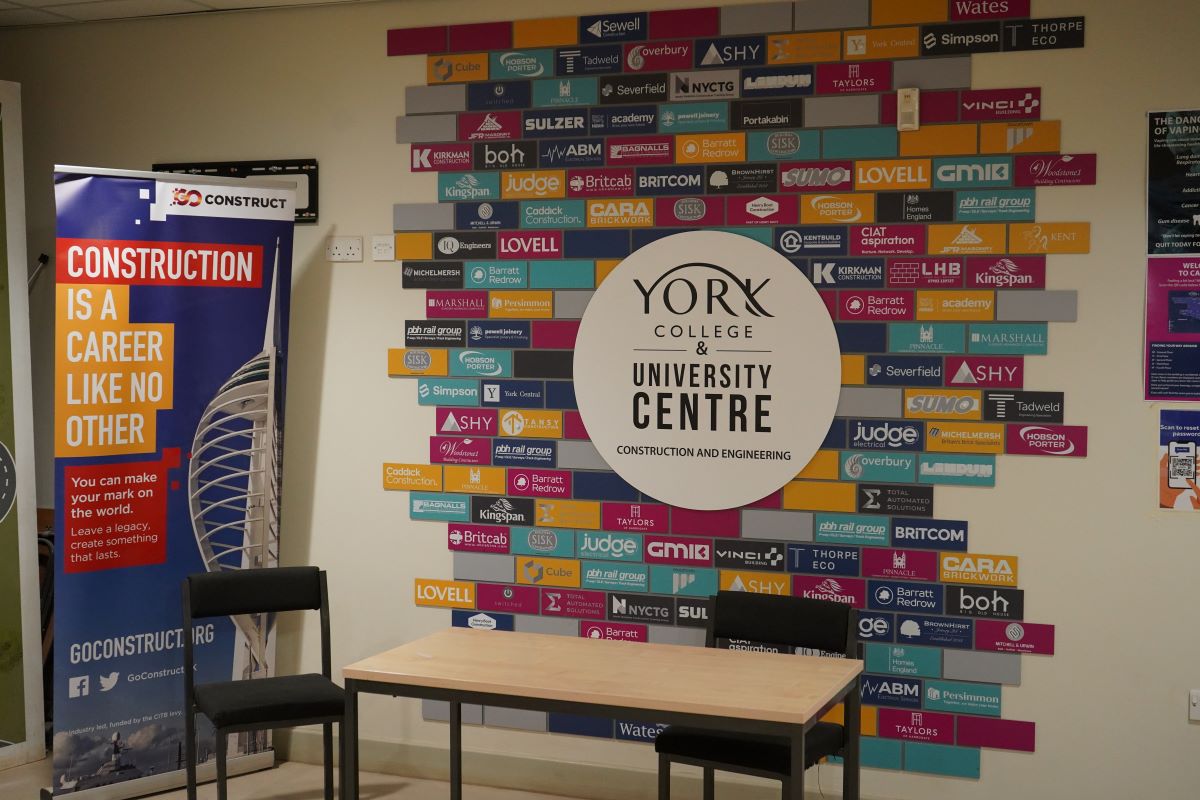
One common assumption is that T Levels are mostly practical, or mostly on site. In reality, Cynthia’s week is structured and theory-led.
“It’s about 85% classroom work,” she explains. “The rest is on site.”
In her first year, one day a week was spent on placement. In her second year, that increased to two days. The rest of the time was focused on theory, systems, safety, and professional practice - all assessed through exams and employer-set projects.
That balance mattered at home.
Construction is familiar territory for Cynthia’s family. Her dad works in the industry, as do many of the men around her.
“I thought, you know what - I’m going to be the first woman in my family to go into construction.”
Her parents were supportive, but thoughtful.
“My mum didn’t quite like the idea of me maybe being a bricklayer and that being my only choice,” Cynthia says. “But she loved the fact that I’d still be studying in a classroom, getting a proper qualification, and going on site in a safe, prepared way.”
Her dad saw something else.
“He was all for the fact that I could go on site and learn things the way he did.”
Between them, they recognised what many parents are looking for: structure and opportunity - without closing doors.
Cynthia completed her industry placement with Wates, one of the UK’s major construction and development companies. Seeing how classroom learning translated onto a live site changed her perspective.
“It really opened up apprenticeships for me,” she says. “Putting what you’ve learned into an actual building site - that changes everything.”
Wates has since offered her a degree apprenticeship - allowing her to earn, study and progress professionally at the same time. She plans to take a gap year first.
“I want to travel while I’m young.”
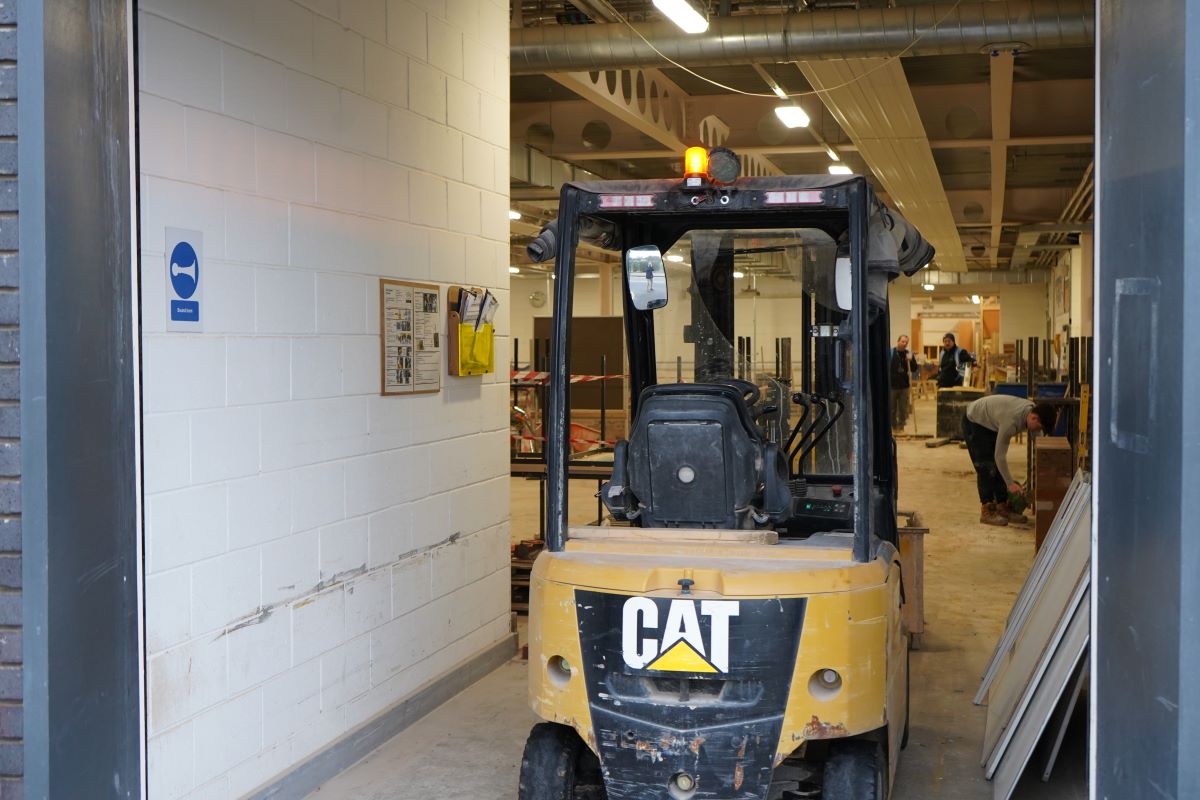
There’s one detail Cynthia mentions almost in passing.
“There are about 40 of us on the course,” she says. “In my group it’s me and a bunch of lads. In the other group, there’s one other girl and a bunch of lads.”
Two girls. Out of forty.
Nationally, only 15% of the construction workforce is female. Cynthia is clear-eyed about what stepping into that space means.
“We were told the industry needs around 300,000 new entrants,” she says. “It’s an honour to go into something where you know you’re needed - and where you know you’re going to make an impact.”
The urgency behind routes like Cynthia’s was underlined only yesterday in Parliament, where skills shortages and pathways into construction were raised during Prime Minister’s Questions. The discussion reflects a growing national concern: how to build a workforce for the future - and how to make sure young people across the country can access those opportunities.
Across England, T Levels are expanding rapidly. More than 25,000 learners started T Levels in 2024–25, a 59% increase on the previous year. Outcomes are strong: over 91% achieve a Pass or above, and more than 96% complete their industry placement.
In the North, uptake is growing - particularly in the North West - but awareness remains uneven. Cynthia’s story highlights a quieter truth: many young people who would thrive on these routes simply don’t hear about them early enough.
Perhaps the most telling thing Cynthia says is also the simplest.
“I didn’t really know about T Levels.”
She’s confident, thriving, and already stepping towards a skilled career - and she almost missed this route entirely.
Between policy debates in Westminster and real conversations around kitchen tables, there’s still a gap. Cynthia’s story doesn’t claim T Levels are right for everyone. It simply shows what they can look like in real life - for one young person, and one family, who found clarity where they expected compromise.
And sometimes, that’s exactly what parents need to see.
Skills for Life is a Department for Education campaign that helps people of all ages develop the practical skills, training and qualifications they need to progress in work, education, or a new career. To find out more about apprenticeships and skilled training pathways, visit: skillsforcareers.education.gov.uk





