



It does seem like an eternity since we were talking about anything other than Christmas; but following an extraordinary 11th edition of The Leeds Palestinian Film Festival across November and December (2025) – with record-breaking audiences and sold-out screenings – it’s clear that appetite for Palestinian cinema in the North of England is growing fast.
Unprecedented demand from festival goers saw Hyde Park Picture House add extra screenings mid-festival for Palestine 36,a documentary now shortlisted for the Academy Award for Best Documentary Feature. The decision to extend the run was a rare move for the historic cinema and reflected the speed at which tickets disappeared – often within hours of release.
In total, seven of the festival’s thirteen events sold out completely, with a further three close to capacity. For a volunteer-run festival rooted in community organising, the scale of the response marked a new high point.
Palestine 36 was introduced to a packed auditorium by Professor Paul Rogers, Emeritus Professor of Peace Studies at the University of Bradford, who spoke of the wider significance of the moment: “Presenting Palestine 36 to a capacity crowd at Hyde Park Picture House, a film now shortlisted for an Oscar, demonstrated the hunger for historical narratives that challenge mainstream framings of the region,” he said. “The turnout showed these stories resonate far beyond academic circles.”
In 2025, the programme also benefited from a strengthened partnership with Leeds International Film Festival (LIFF), adding institutional weight and visibility. Chris Fell, Festival Director at LIFF, described the collaboration as a natural fit: “We were delighted to partner with Leeds Palestinian Film Festival for the screening of Yalla Parkour. The enthusiasm from the audience continues to highlight the strong demand in Leeds for new and urgent narratives on the big screen.”
The festival’s curatorial instincts were further vindicated when The Voice of Hind Rajab sold out ahead of its screening before going on to win the Audience Award for Best Fiction Feature at LIFF. The 2025 programme also featured five UK premieres, reinforcing Leeds’ growing role as a northern hub for politically urgent and internationally significant cinema.
For Festival Co-Director Frances Bernstein, the response spoke both to artistic quality and to public feeling. “Leeds audiences turned up in force,” she said. “We presented challenging, artistically excellent work, and people responded. In particular, we saw huge empathy and hunger to know more about Gaza.”
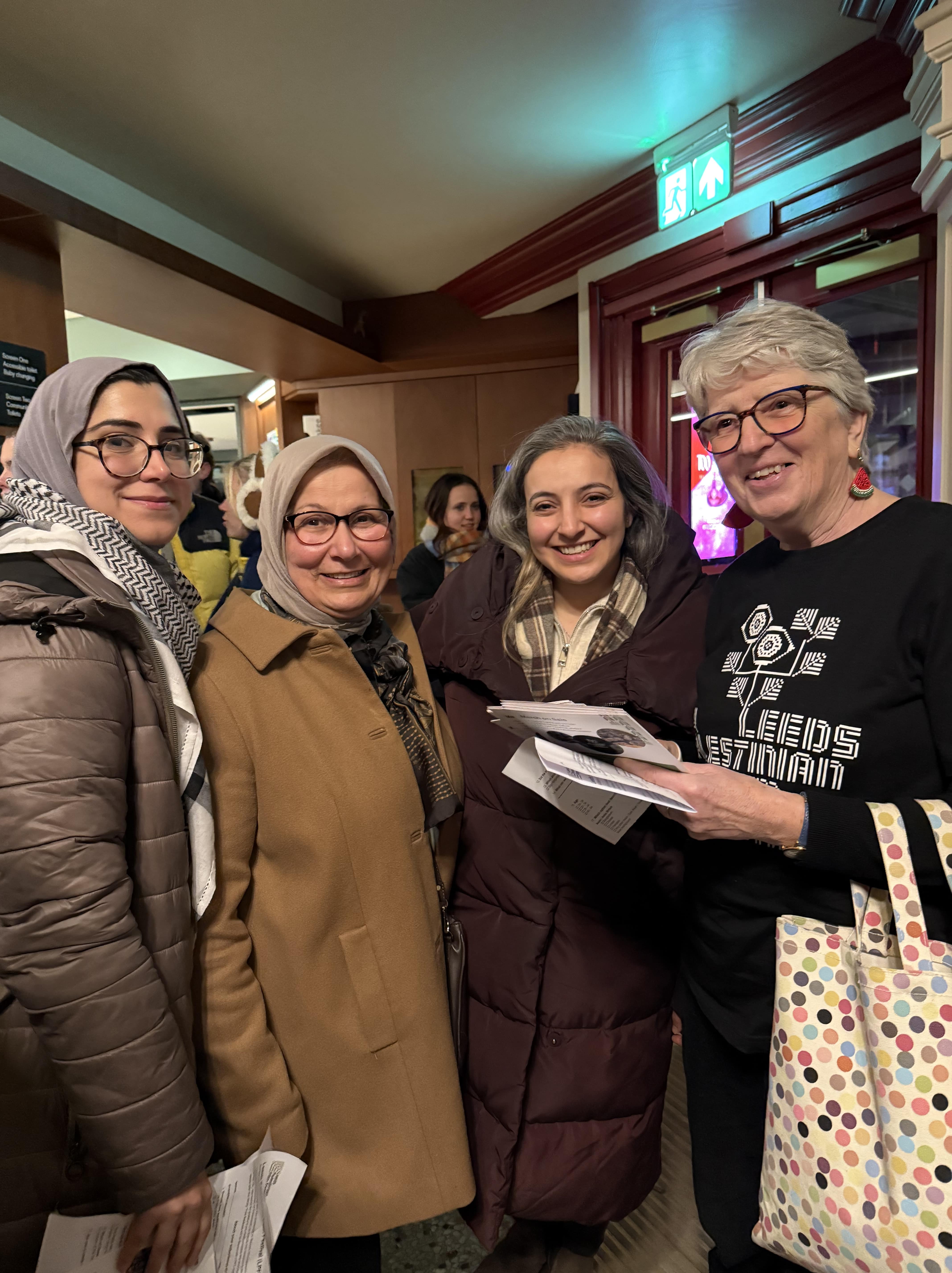
Founded in 2015 with just six films and a shoestring budget, the Leeds Palestinian Film Festival has steadily grown into a fixture of the city’s cultural calendar. From early International Women’s Day events spotlighting Palestinian women’s voices, to near-capacity screenings for almost 900 people in 2019, the festival has evolved through physical, hybrid, and fully online formats – most notably during the pandemic.
Its 10th anniversary in 2024 marked another turning point, with a major programme titled Ten Years, One Vision: Culture as Resistance, featuring 17 films and cultural events, including a special series on Gaza.

At the heart of the festival is a clear mission: to tell the stories of Palestine as widely, accessibly, and powerfully as possible, and to amplify Palestinian voices through film, art, and conversation. That mission is carried forward by a not-for-profit Community Interest Company run entirely by volunteers, supported by a board of eight directors and a broad network of partners across Leeds and beyond.
With planning already underway for the 12th edition in November 2026, the LPFF team are now exploring expanded venue capacity – an indication that what began as a small grassroots project has become an essential part of the region’s cultural landscape.
For Leeds audiences, the message to take forward from 2025 is unmistakable: These stories matter, and people are showing up to hear them.





