



History remembers Peterloo. It remembers the crowd gathered at St Peter’s Field, the cavalry riding into a peaceful demand for political reform and the violence that followed. It records a massacre which took place in Manchester on 16 August 1819, leaving 18 people dead and hundreds more injured.
But what did survival mean the following morning?
William Cheatham was a Lancashire weaver who stood among the thousands that day. When mounted soldiers entered the crowd, a cavalry sabre struck him across the neck, cutting through his hat and leaving a severe wound.
Cheatham lived. He then began a long pursuit of justice through the courts and Parliament.
More than two centuries later, his story has been reconstructed through newspaper archives and family-history records, returning an individual life to an event often described through crowds, casualty figures and political consequences.
On Saturday 19 September, Cheatham’s experience will be among the stories explored at the People’s History Museum in Manchester during a free day dedicated to the ordinary folk behind some of Britain’s most important struggles for democracy.
Findmypast Live X PHM brings genealogists and museum specialists together in the museum’s Edwardian Engine Hall for Heritage Open Days. Visitors will be able to investigate their own family histories while discovering how census records, newspapers, parish registers and museum collections can recover people who slipped from the established account.
The timing is particularly appropriate. The theme of this year’s Heritage Open Days is Everyday Histories: the understanding that national change is rarely achieved only by the leaders whose names survive.
“The story of democracy is often told through legislation, political leaders and landmark events,” says Lee Wilkinson, managing director at Findmypast.
“What this research shows is that those moments were made possible by thousands of ordinary people whose names are rarely remembered.”

Cheatham’s story is central to the newly launched podcast series A Family History Of Peterloo: Britain’s Forgotten Massacre, presented by Findmypast genealogist Jen Baldwin with historian David Olusoga.
The research places one working man inside the wider political forces of the early 19th century.
Manchester was being transformed by industrialisation, but the people creating its wealth possessed little political power. Skilled handloom weavers were often literate, politically aware and closely connected to the radical movement.
Cheatham wasn't simply an anonymous figure caught accidentally within a famous crowd. His presence at St Peter’s Field, and his refusal to abandon the search for redress afterwards, formed part of a wider working-class demand to be represented.
The objects associated with Peterloo tell part of that history. The People’s History Museum holds sabres, a walking cane, a medal and a newly acquired commemorative jug. But objects acquire their greatest force when the people who carried, made, used or suffered beneath them can be identified.
During two talks, Baldwin will be joined by the museum’s head of collections and engagement, Jenny Mabbott, and collections manager Eleanor Whitehead to explain how Cheatham’s life was reconstructed and how the museum’s collections contributed to the research.
The sessions will also show visitors how similar methods might illuminate their own family histories.
Not every search will reveal an ancestor standing inside a moment of national significance. Most family records disclose lives built through work, migration, marriage, care, worship, hardship and ordinary decisions.
That doesn't make them less historical.
Another of the day’s stories begins with one of the People’s History Museum’s most significant objects.
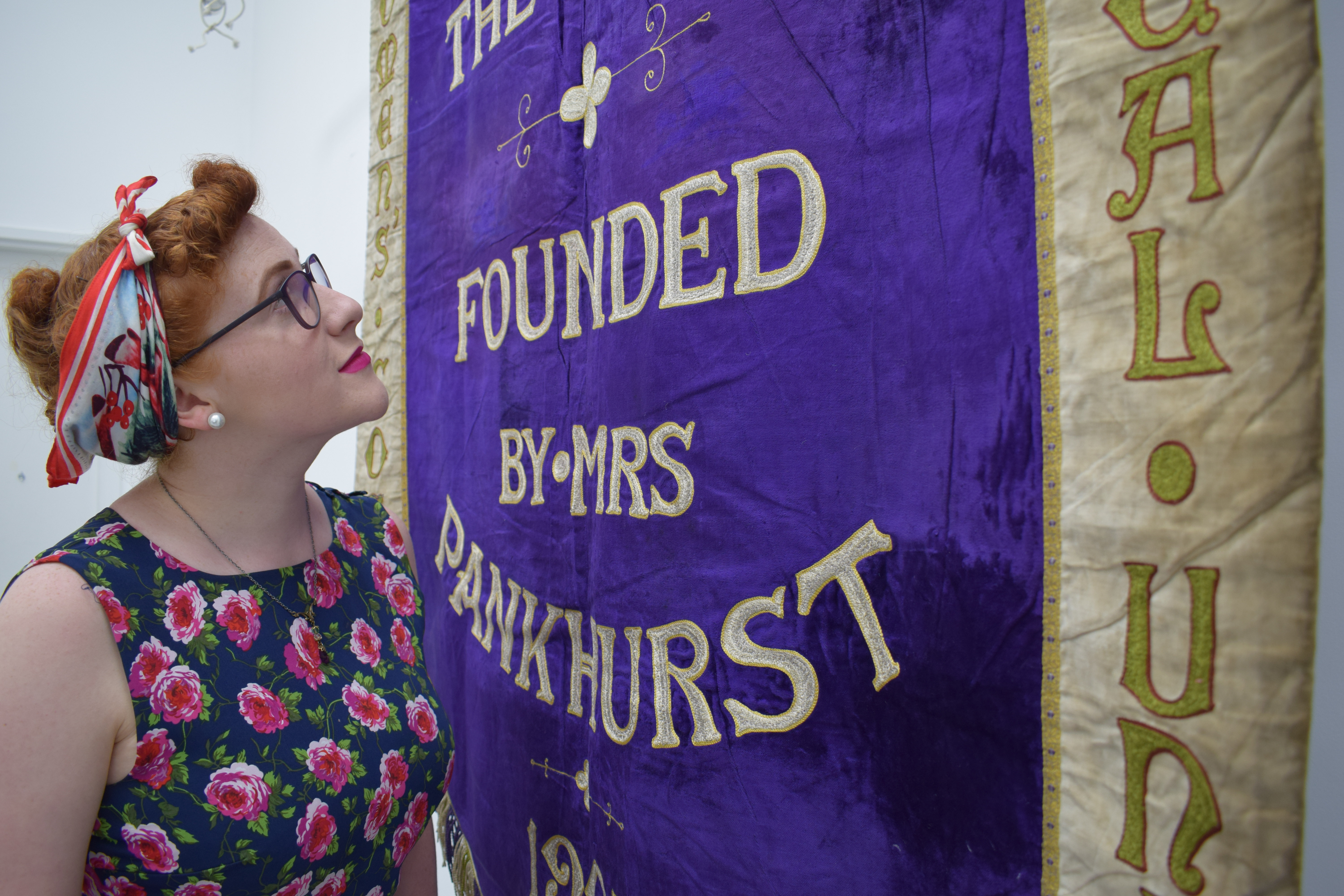
The Manchester Women’s Social and Political Union banner was created in 1908. Worked in purple, white and green, it carries the declaration “First in the Fight” - a reminder that the organisation led by Emmeline Pankhurst had been founded in Manchester in 1903, before its headquarters moved to London.
The banner was first unfurled in Stevenson Square on 20 June 1908 by Rachel Scott, the WSPU’s first secretary. The following day, it was carried at the vast Women’s Sunday rally in London’s Hyde Park.
Of the hundreds of banners present at that demonstration, it is one of the few known to survive.
Its large political message is immediately legible. The lives of the women connected to its making and preservation have been considerably harder to recover.
Research has connected the banner with Elizabeth Ellen Chatterton, an embroiderer and factory worker from Salford. Family history holds that she helped make the banner while working in connection with Thomas Brown & Son, the Manchester company responsible for its production.
The firm ordinarily made church furnishings, which explains the banner’s ecclesiastical qualities: rich embroidery, formal lettering and the sense of an object created for procession and ceremony.
The surviving records don't allow every part of Chatterton’s role to be proved conclusively. The uncertainty is important. Family history isn't the manufacture of a comforting narrative from incomplete evidence; it's a process of following records, testing inherited stories and being honest about what remains unknown.
What can be traced is the banner’s extraordinary later life.
It was cared for by Chatterton and her family before eventually moving to Leeds. After disappearing during a house clearance in the early 2000s, it resurfaced at auction and was acquired by the People’s History Museum following a public fundraising campaign.
When members of Chatterton’s family were reunited with it in the museum’s conservation studio, an artefact of national political history became a family object once again.
A programme led by social historian Helen Antrobus, Baldwin and Mabbott will explore the women associated with the banner, the communities they represented and the records through which their experiences can be recovered.
The research also considers the 1911 census boycott, when suffragettes deliberately refused to be counted under the argument: “No vote, no census.”
The census is one of genealogy’s most important sources. An absence within it can therefore become evidence of political action.
Genealogy is sometimes presented as a hunt for famous or socially elevated ancestors. The more significant discovery might be the opposite: understanding how an apparently ordinary life intersected with work, migration, protest and social change.
A name in a census can disclose who shared a home and how they earned a living. A parish register can reveal movement between communities. A newspaper report might recover a workplace dispute, court appearance, public meeting or act of political participation that survived nowhere else.
These fragments allow history to be viewed from the ground.
Cheatham’s wound reveals the physical violence faced by working people demanding representation. His subsequent legal struggle shows that Peterloo didn't end when the crowd dispersed.
Chatterton’s connection to the suffragette banner directs attention away from the celebrated leaders of the movement and towards the skilled labour through which its public identity was produced. Somebody designed its lettering. Somebody selected and cut its fabric. Somebody embroidered it, carried it, stored it and ensured - sometimes unintentionally - that it remained available to the future.
Political movements depend upon those forms of work.
“Through newspapers, census records and family-history documents, we’ve been able to uncover the lives behind the movements,” Wilkinson says.
“These are exactly the kinds of stories that Everyday Histories is designed to celebrate.”
Alongside the Peterloo and suffrage sessions, Baldwin will lead introductory talks explaining how local history can unlock family stories.
Place offers a practical beginning.
Knowing the street, parish, factory, mine, mill, dockyard or neighbourhood where an ancestor lived can narrow a search. It can also make the resulting information meaningful. An occupation listed on a census becomes clearer when placed inside the economy of a particular northern town. A move between addresses can reflect marriage or aspiration, but also clearance, unemployment, industrial expansion or migration.
Throughout the day, visitors will have free access to Findmypast’s digitised records and newspaper collections, with genealogists available to help begin or develop their research.
The museum’s galleries provide a wider context, connecting family lives to the creation of the NHS, the co-operative movement, football, music, LGBTQIA+ equality, industrial action and campaigns for political rights.
Rare archive material selected around the Everyday Histories theme will also be available, while the exhibition On the Line: 100 Years of Strikes & Solidarity examines the people and communities behind a century of collective action.
A family tree might begin with names and dates. At the People’s History Museum, the invitation is to ask a larger question: what was happening around those lives - and what part did they play in making the world that followed?
History doesn't belong solely to the people placed on monuments.
Sometimes it waits in a newspaper column, an empty line on a census or the stitches holding a banner together.
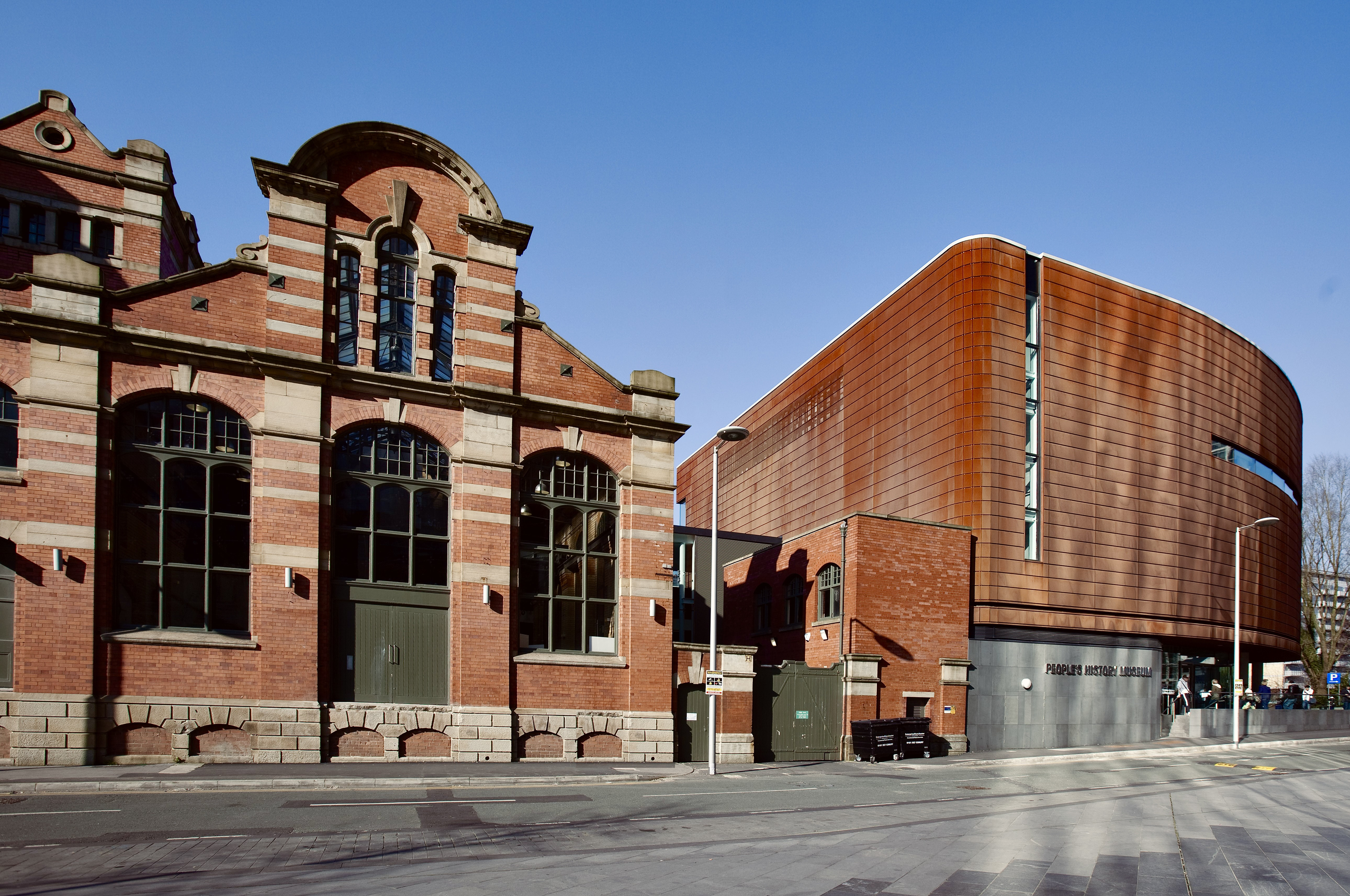
Findmypast Live X PHM
Saturday 19 September 2026, 10.00am–5.00pm
People’s History Museum, Manchester
The event and museum admission are free. Booking is preferred, while places for individual talks are available on a first-come, first-served basis.
Two sessions include British Sign Language interpretation. Visitors with other access requirements can contact access@phm.org.uk or call 0161 838 9190.
Full programme and booking details are available from the People’s History Museum.
Header image: Dan Edmonds, People's History Museum PhD Researcher. (People's History Museum)





