



.jpg)
On a spring day in Leeds, someone will push open the door of Brudenell Social Club, quite possibly expecting the usual things: sticky carpets, a slightly tired bar, posters for bands they’ve never heard of and the faint smell of last night’s lager still lingering in the air.
Instead, they’ll find an art exhibition.
There will be paintings of council estates and seaside cafés, kids kicking footballs against brick walls, teenagers standing around bus shelters in clothes that were meant to look expensive but definitely weren’t.
Later that evening, the same room will fill up with people again - this time for a gig.
And the artist whose work hangs on the walls will step onto the stage with a ukulele.
Because for much beloved Sheffield artist Pete McKee, art and music have never really been separate things. “I’ve always treated my artwork like I was in a band,” he tells us. “My paintings are my songs and my exhibitions are my albums.”
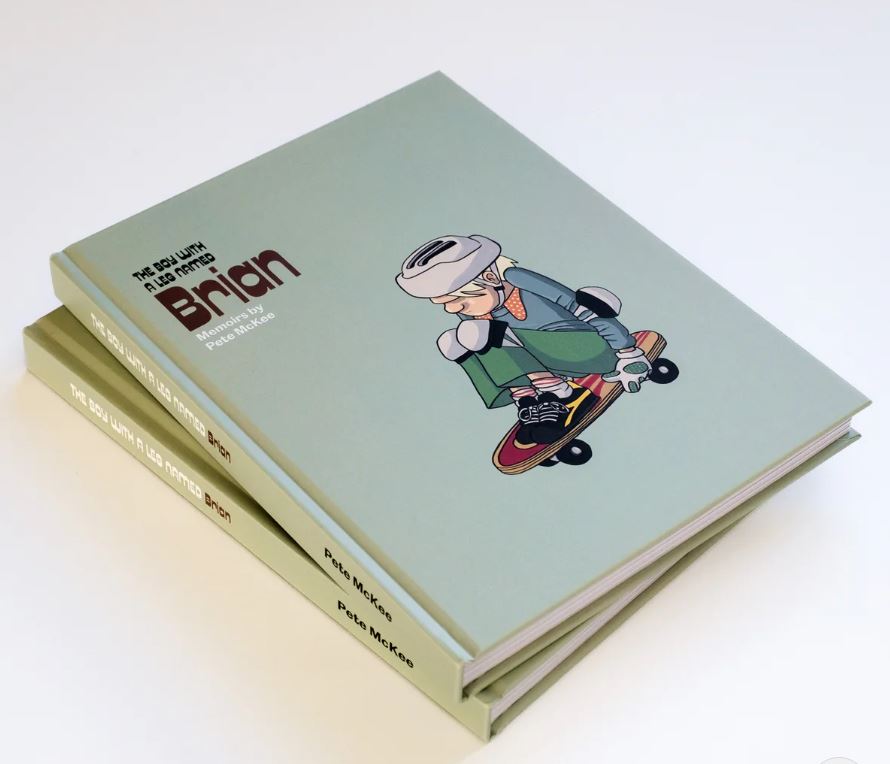
The tour brings his hugely successful exhibition The Boy With a Leg Named Brian into the very spaces where so many cultural stories begin: small independent music venues.
During the day, the exhibition is free. At night, there’s a gig. It’s part art show, part cultural celebration - and entirely Pete McKee.
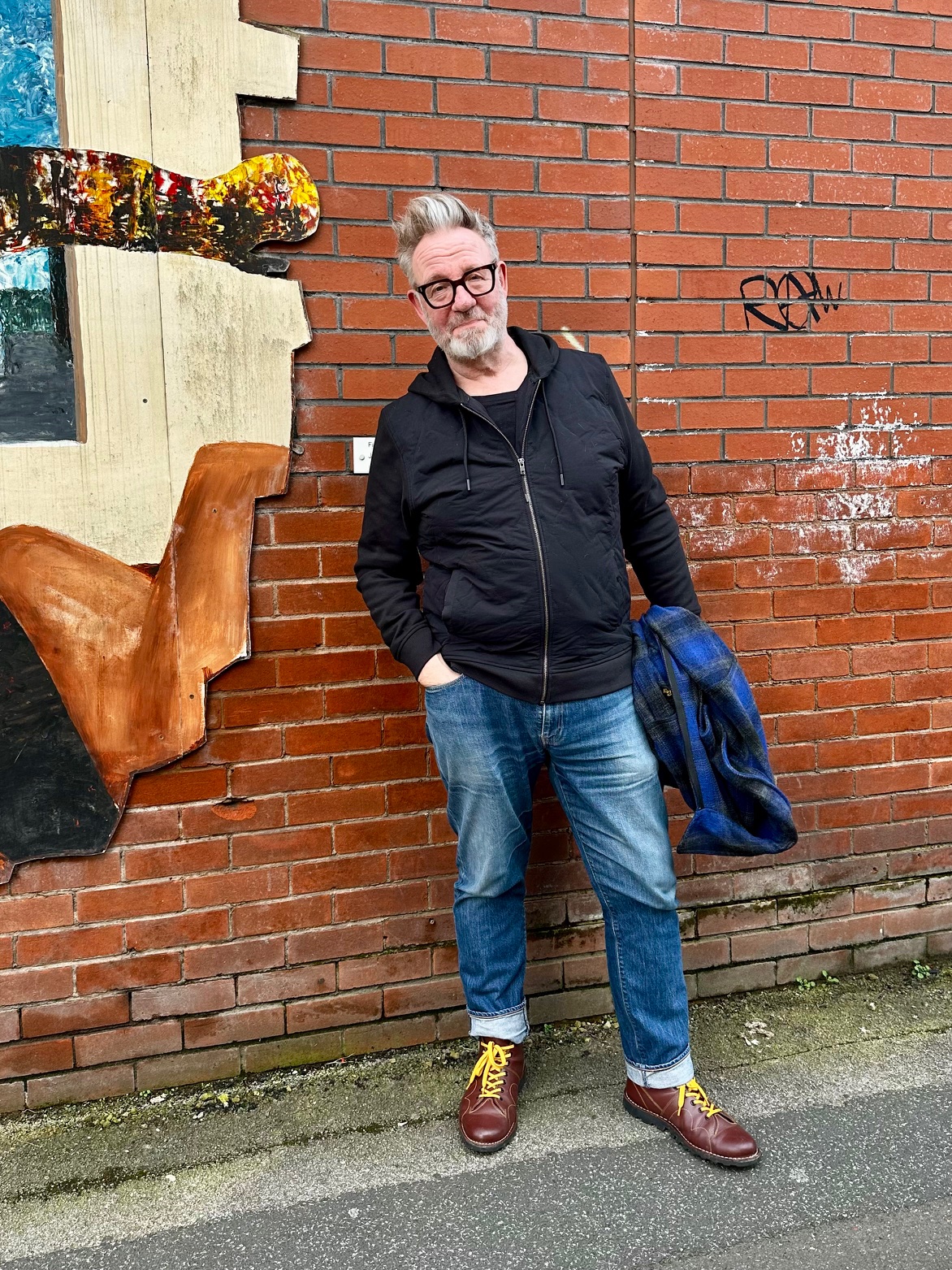
To understand McKee’s work, you have to start in Sheffield in the 1970s and 80s.
It was a city still defined by industry, steelworks and working-class neighbourhoods. But it was also a place bursting with music, fashion and youth culture.
McKee grew up on a council estate - the environment that would eventually become the backbone of his art. “I think the universal story of the working class resonates wherever you go,” he says. “We all grew up skint, listened to great music and wore stunning clobber.”
The clothes we agree - weren’t always quite what they were meant to be. “If you couldn’t afford a Fred Perry you got a Jeff Perry,” he laughs. “And instead of Lacoste you ended up with Le Shark. Which looked brilliant…until someone pointed out the crocodile had turned into a shark.”
It didn’t matter.
Everyone still walked around like they were the coolest person in Yorkshire. The energy of youth culture was everywhere.
“You had the punk movement, the mod revival, new romantics, electro - all these seismic changes happening in music,” he says.
Every kid could find something that felt like their tribe. For some it was football. For others it was fashion. And for a lot of them, it was music.
“Sheffield’s creativity came from its poverty,” McKee says. “Kids watched their parents going to the steelworks and thought - that’s not for me. I’ll find another way.”
Music became one of those ways out.
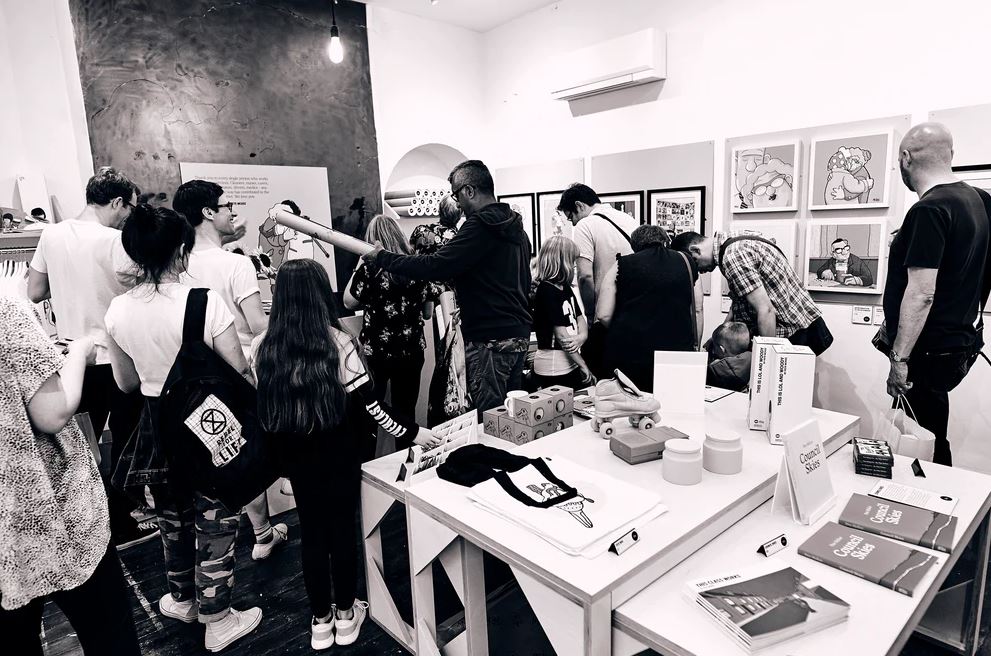
McKee’s art doesn’t try to capture grand moments of history. Instead, it focuses on the small details that people often forget until they see them again.
Bedrooms with posters on the wall. School playgrounds. Seaside cafés.
And televisions showing whatever happened to be on - which in the 1970s often meant something slightly baffling and very badly filmed.
“Everyone’s got those memories,” McKee confirms. “Playing football in the back field, collecting Panini stickers, swapping things with your mates.”
That shared nostalgia is the emotional core of his work. But it’s not just nostalgia for its own sake. The memories act as a kind of emotional bridge.
People see the paintings and suddenly recognise themselves inside them. “That’s just me and my dad,” people often tell him. Or: "That’s exactly what our house looked like."
McKee didn’t originally plan for that effect. In fact, the famous faceless characters in his paintings came from a completely different reason.
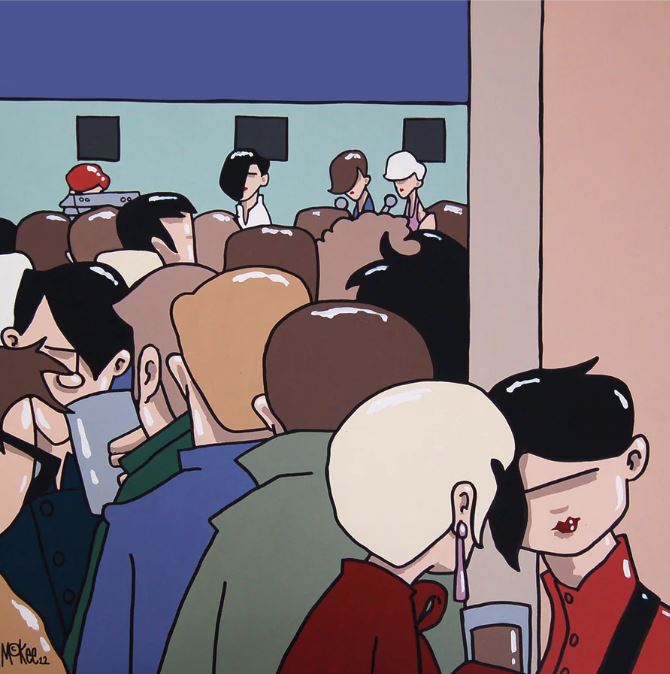
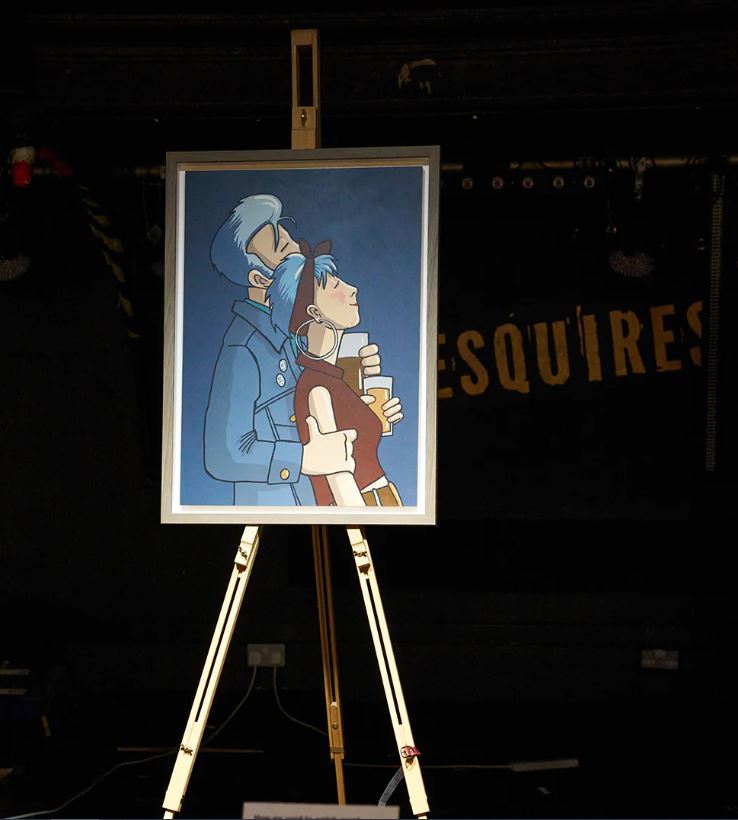
“My training was in cartooning,” he explains. “But when I started doing paintings I didn’t want them to look like comic characters.”
So he stripped the faces back. He removed the eyes and simplified the expressions.
“What that ended up doing was making them anonymous,” he says. “And when that happens, people can put themselves in the picture.” The result is artwork that feels both deeply personal and strangely universal.

The exhibition now going on tour is McKee’s most personal project yet.
Originally staged at Sheffield’s Weston Park Museum, it ran for a year and attracted more than 150,000 visitors.
The exhibition tells the story of McKee’s childhood - beginning with the loss of his mum and the experience of being raised by older siblings.
For someone who is full of humour and warmth, it meant revisiting some painful memories. “I really had to go deep into my past,” he says. “It was very cathartic.”
The exhibition is structured like a narrative, with chapters covering different stages of his childhood: loss, family, growing up on a council estate, and discovering identity through music and fashion.
Those final elements - music, clothes, subcultures - are central to McKee’s understanding of working-class life.
The 1970s and 80s, he argues, were a particularly powerful time to grow up culturally. “You lived through punk, mod revival, new wave - all these movements,” he says.
“And every kid could adopt something. Everyone had a hero.” Even if the fashion sometimes went spectacularly wrong.
When the museum show finished, McKee faced a choice. He could have taken the exhibition to more galleries. Instead, he decided to put it inside grassroots music venues.
For him, the move makes perfect sense. “My original dream was to play on Top of the Pops rather than become an artist,” he has said previously.
Music has always been a central part of his life. And he’s deeply aware that the venues which nurture new bands are under threat.
Across the UK, small independent venues are struggling with rising rents, energy costs and declining audiences.
“These 200-capacity venues are vital,” McKee says. “They’re where bands come straight out of school and start playing gigs.”
The tour is partly a celebration of those spaces - and partly a way of reminding people they matter.
It’s also, McKee admits, an excuse to combine two of his favourite things: showing his artwork and having a singalong with his band 'The Everley Pregnant Brothers' - and a room full of strangers.
“This isn’t nostalgia,” he says. “These venues are alive. They’re doing something vital for culture.”
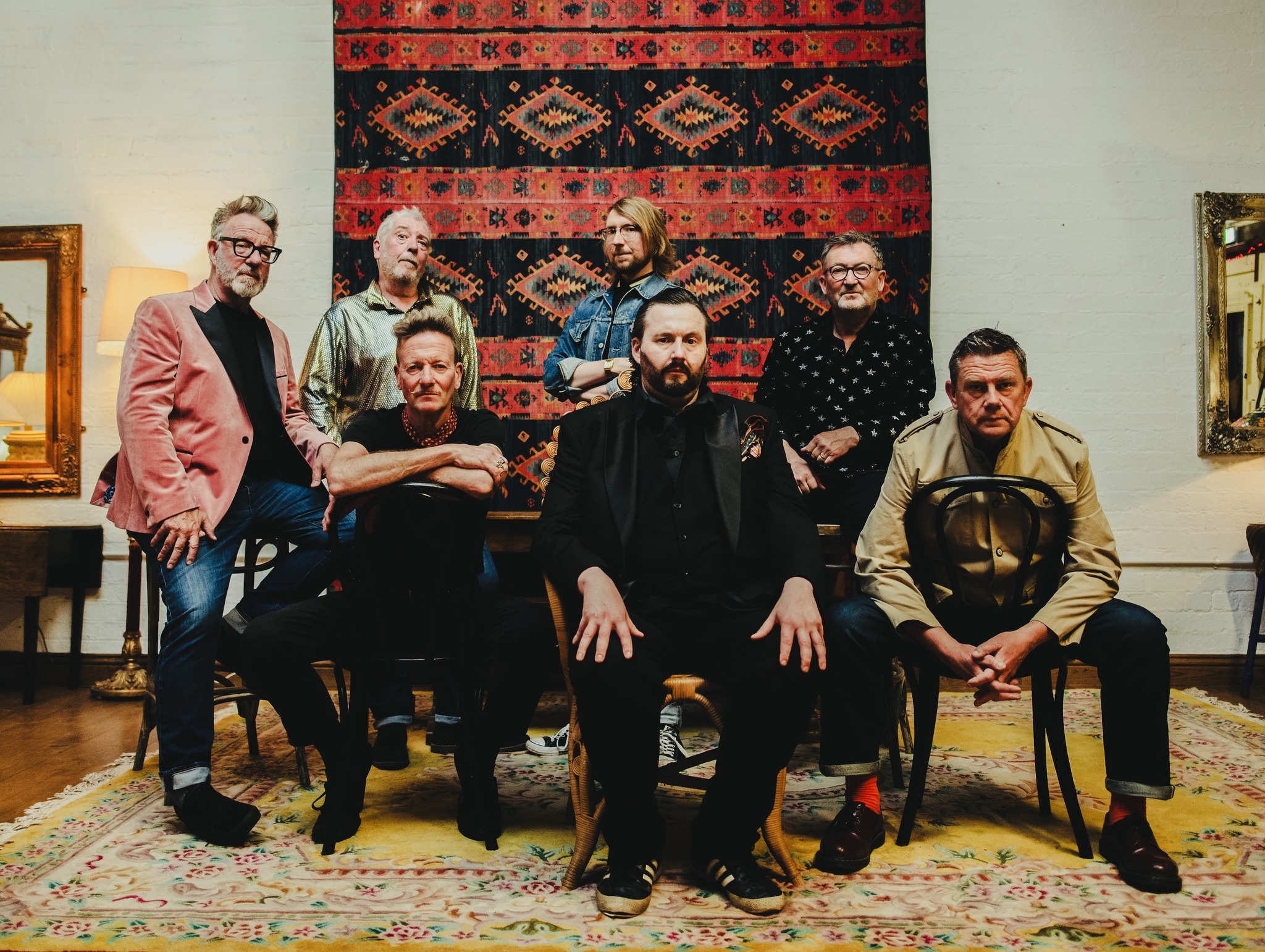
There’s another reason McKee prefers unusual venues: Accessibility. “I’m determined that my audience stays working class,” he says.
Traditional galleries can feel intimidating, especially for people who didn’t grow up around art. “Even I can get intimidated walking into those white-wall gallery spaces,” he admits.
“Everyone’s whispering, staring at a square on the wall, pretending they understand it. You feel like you’re going to get told off for breathing too loudly.”
McKee has spent much of his career deliberately avoiding that atmosphere. His earliest exhibitions were held in spaces that would welcome us all.
Places where people already felt comfortable. “My first exhibition was in a pub,” he says. “The second was in a bar. Then cafés.”
Partly because it was easier to organise. But mostly because it felt right.
“There are far more people walking into pubs and cafés than walking into galleries,” he says.

Although McKee’s work is rooted in Sheffield, audiences across Britain recognise themselves in it.
That’s because the stories he tells aren’t just about one city. They’re about a shared cultural experience.
“But there’s absolutely such a thing as shared northern memory,” he says. “The same bus shelters. The same bedroom posters.” “And the same terrible Saturday jobs as well,” he laughs. “Stacking shelves, washing pots, or pretending you understood how the stockroom worked.”
And Industrial centres across the North produced similar environments: Factories. Working-class communities. Limited opportunities. But also strong cultural scenes.
Manchester had Joy Division and The Smiths. Liverpool had The Beatles and Echo and the Bunnymen. Sheffield had The Human League, Heaven 17, Pulp and the Arctic Monkeys.
For young people growing up there, having that ancestry was essential. “They showed you it was possible,” McKee says. “You could be in a band. You could create something.”
Despite his love of nostalgia, McKee is far from sentimental about the present. Ask him what image would sum up the North of England in 2026 and his answer is brutally simple. “A boarded-up shop next to a vape shop.
“That’s the high street now,” he says. “That’s the landscape.”
It’s not exactly the sort of scene McKee wants to paint.
The communities he celebrates in his art are under pressure - economically and politically.
“The fabric of the working class has been chipped away,” he says.
Places once built around industry have been left behind. Opportunities have disappeared. And the sense of shared identity that once defined many communities has become more fragile.
Yet McKee’s art rarely dwells on that bleakness. Instead, it focuses on something else. “My work celebrates the positivity,” he says. “The unity of the human spirit - neighbours helping each other, families helping each other.”
McKee often describes himself not as an artist, but as a storyteller.
That approach shapes how he builds exhibitions. He treats them almost like albums - collections of individual pieces that together form a larger narrative.
“I’ll make a list of memories,” he explains. “And then think: how do I turn that into a painting?”
A childhood game of SPOT becomes a picture. A seaside café becomes a scene. An emergency sandwich combination from when he was a kid becomes a video installation.
The process is closer to songwriting than traditional painting. Which is why, for Pete McKee, taking an exhibition into music venues feels like a natural homecoming.
If there’s one audience McKee hopes will connect with the exhibition, it’s young people growing up in places similar to the one he came from.
When he visits schools, the reaction can be overwhelming. “I went into a school recently and the kids were high-fiving me in the corridor,” he says, laughing. “Which is strange when you’re a bloke who mostly paints sad-looking people sitting in cafés.”
For him, those moments matter more than awards or honours - because they reinforce the central message of his work.
If a teenager from a council estate walks into the exhibition this Spring, he hopes they leave with a simple thought: “Do art,” he says. “Make something.”
Because the story of working-class creativity - the one that shaped Pete McKee’s life - is far from finished.
Somewhere right now, another kid is probably sitting in a bedroom surrounded by posters, listening to music too loudly and trying to work out what they might become.
And if Pete McKee has anything to do with it, they’ll know one thing for certain.
You don’t have to wait for permission.
Pete McKee/The Everly Pregnant Brothers: The Boy With a Leg Named Brian – Tour Dates
Daytime exhibition: Free entry
Evening: The Everly Pregnant Brothers live
Header Image: Station to Station - From the Pete McKee Casual Trainer Trilogy
Thanks to Pete for images





