



Observational documentaries about real people, community, and the shared human condition are easy to describe and much harder to make. Jon King, the filmmaker behind Flamelight Films, understands that better than most. His work does not shout. It does not lecture. It does not arrive with a megaphone or a thesis. Instead, it listens. And in that act of listening, it reveals something increasingly rare: the dignity of ordinary lives, and the deep currents of feeling, memory and belonging that run beneath them.
There is a line on the Flamelight website that feels less like branding and more like a statement of intent: “We make independent documentaries which ignite human connection.” It is a simple claim, but an accurate one. Across Jon King’s films to date - Bartle, Monuments, The Belles and Phantasmagoria - the through-line is not spectacle, or commentary, or even subject matter. It is human proximity. His films are interested in what happens when people are given room to speak in their own words, on their own terms, in the places that have shaped them.
That makes Jon’s work feel strikingly aligned with what MagNorth tries to do with our own words and pictures. We are interested in people and place, in voices that are too often overlooked, and in the hinterlands - geographical, cultural, emotional - where the most resonant stories are often found. Jon does something similar with a camera. He is not simply documenting events; he is making space for people to be seen.
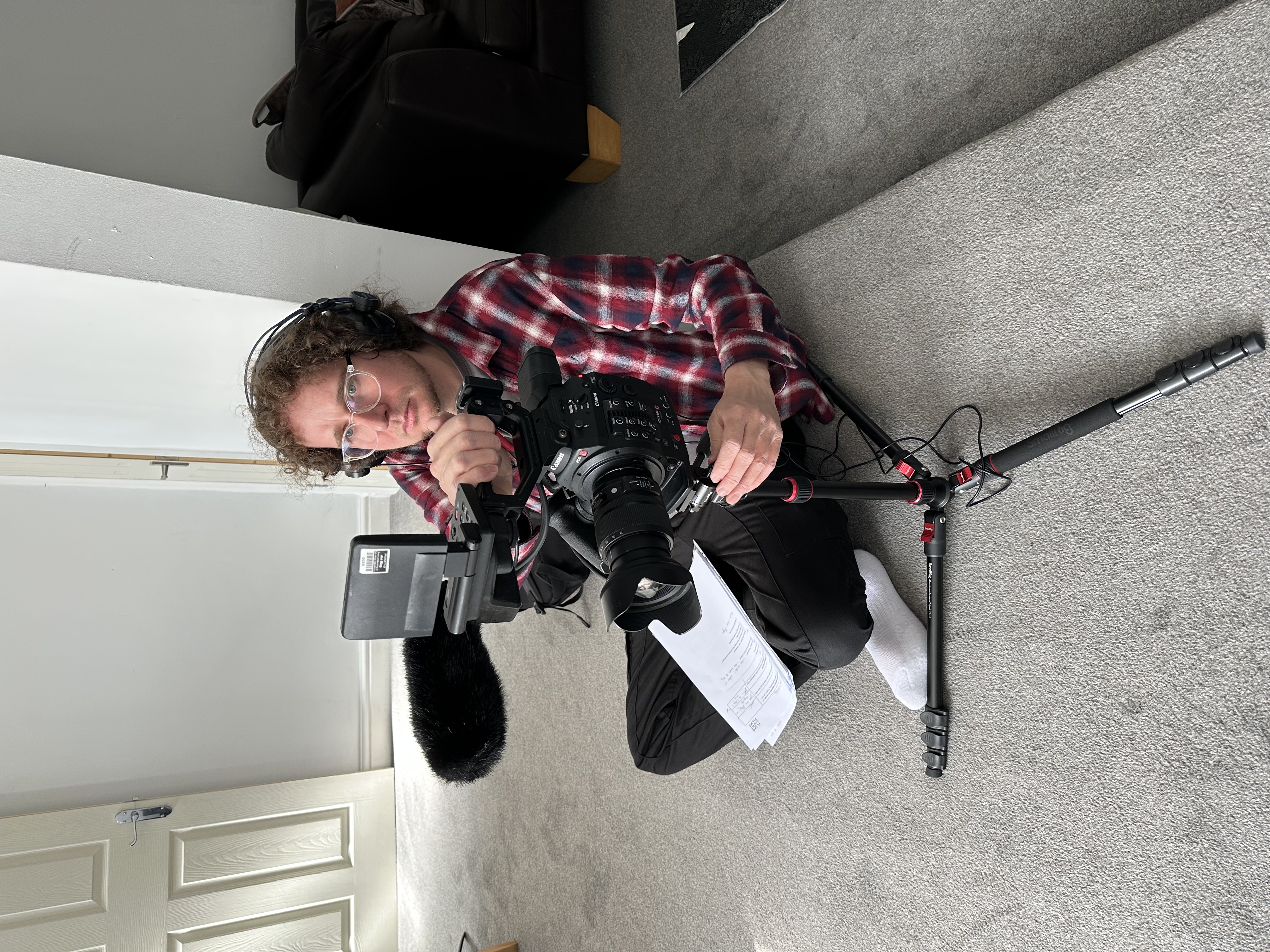
His route into filmmaking was not especially neat or preordained. He studied animation at Bradford University, more because it sounded fun than because he had mapped out a career. But within that course he discovered filmmaking, and realised that while animation interested him, documentary interested him more. He liked the camera, the encounter, the unscripted texture of real life.
After graduating, he gave himself a narrow window - the last stretch of his overdraft, six months or so - to see whether he could make a living from it. He began by making small films for charities and local businesses, learnt on the job, ran a business, left it, returned to commercial filmmaking, then eventually sold that business too in order to make more room for the work he actually cared about: films about real people and their stories.
That phrase is key: real people and their stories. It says a great deal about Jon’s instinct as a filmmaker. He is not drawn to slickness. He is not really interested in scripted work. What compels him is something more patient and more difficult - the challenge of paying attention long enough for a person’s world to disclose itself. He talks about documentary as a creative outlet, but also as something more worthwhile than the agenda-driven commercial work he had been doing. The implication is not that commissioned films cannot matter, but that the freedom to follow curiosity, and to build a story from lived experience rather than from a brief, is where his deepest commitments lie.
That commitment can be felt in Bartle, the earliest of the films now gathered under the Flamelight name. The film began not with a commission or a trend but with memory. Jon had known of the custom from family holidays in West Witton when he was younger. Years later, looking for an unusual story, he remembered it and recognised that here was something more than eccentric local colour: a living tradition, strange and specific, rooted in a community and quietly vulnerable to time.
What is most striking about Bartle is not simply the subject, but the manner of its telling. When we tell Jon that the film does not feel as though a filmmaker has parachuted in to gather a few quotes and disappear again, Jon points to the absence of the usual documentary apparatus. There is no voiceover. No presenter. No heavy-handed explanation. You are only hearing people in their own voice and their own words.
That, in essence, is the Flamelight method: strip away whatever stands between the viewer and the person on screen. Remove the clutter. Trust the encounter.
The irony, Jon admits, is that Bartle did in some ways feel “hit and run” to him. The men he filmed were older, rural, difficult to contact, not especially digital. He worked through the parish council, filmed for a few days, and then life and work got in the way of the kind of continued relationship he would have liked to maintain. That experience seems to have stayed with him. He speaks candidly about the importance of keeping relationships going, of not neglecting the people whose stories you are borrowing, and it is clear that his later practice has been shaped by that lesson. The finished film may feel intimate and embedded, but Jon knows intimacy is not just an aesthetic effect; it is also an ethical responsibility.
If Bartle is about continuity - tradition carried across time - then Monuments feels like a sidelong poem about England itself. Built from images of hundreds of postboxes filmed over three years, it is unlike Jon’s other work in form, but not in spirit. The idea came when he saw a man repainting a postbox and found himself wondering what it would mean to travel the country attending to such quietly civic objects.
Even here, where the subject appears at first glance to be infrastructure rather than people, what interests him is what these artefacts say about place, continuity and the national story written in plain sight. The red pillar box becomes something more than a fixture on a street corner. It becomes a marker of history, of common life, of a country talking to itself through objects it no longer notices.
Then came The Belles, a film that tells you much about Jon’s interests before you have even pressed play. He had seen photographs and glimpses online and sensed there was a richer story beneath the costumes and performances. What emerged was not merely a portrait of a dance or performance group in Bradford, but a film about confidence, visibility, friendship and the refusal to be quietly filed away by age.
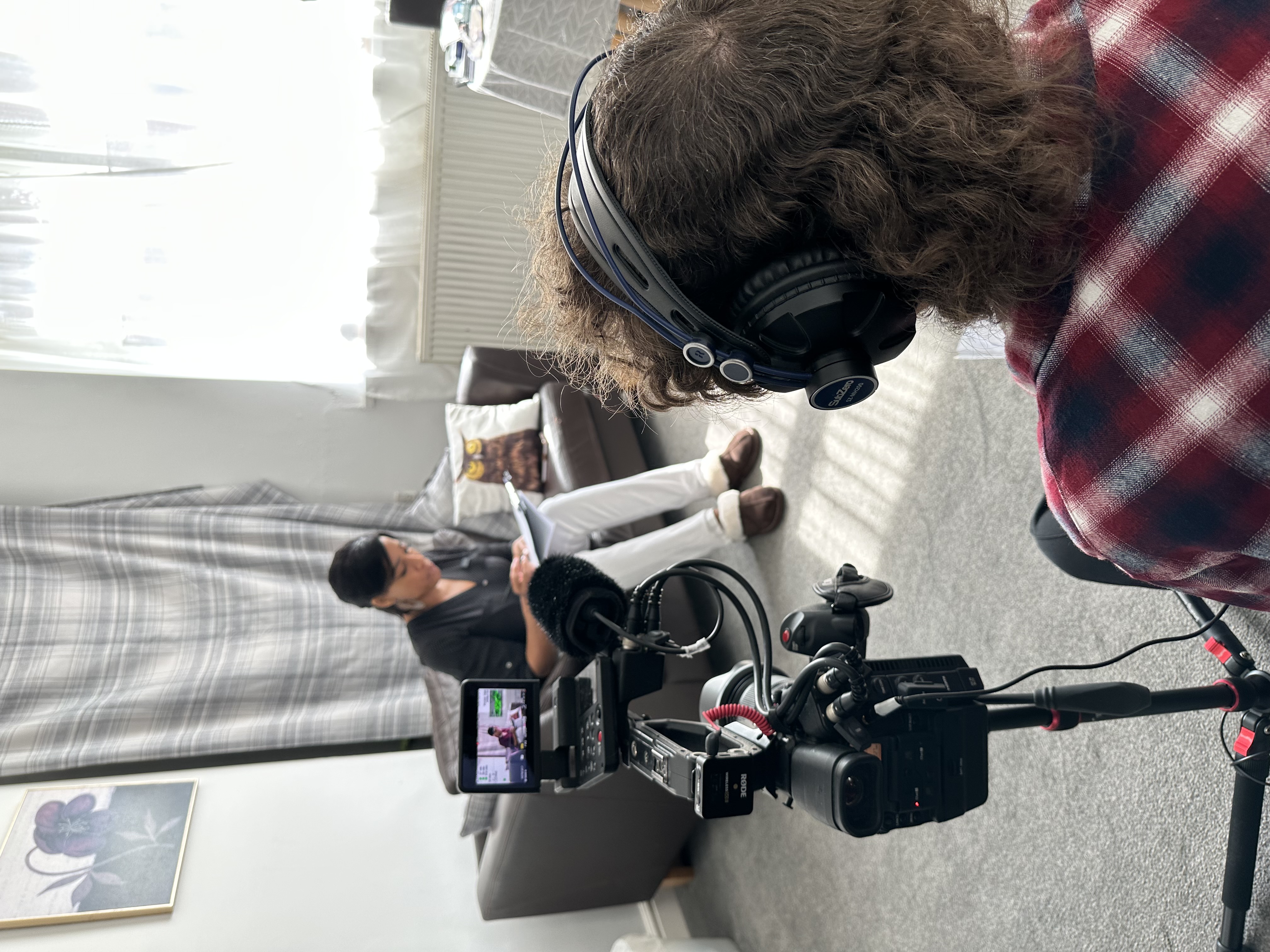
Jon filmed The Belles over time, gathering around forty hours of footage for a twenty-minute documentary. That ratio tells its own story. Observational work of this kind cannot be forced. You cannot storyboard serendipity or script the exact moment that vulnerability, humour or truth will surface. So Jon lets the camera remain present long enough for people to relax into themselves. He films rehearsals, kitchens, conversations, the spaces between performance and daily life. He wants everything to feel as natural as possible and not staged.
That patience paid off. The film found audiences at festivals and screenings in Bradford, but more importantly among viewers who saw their own experiences reflected back with warmth and recognition.
There is something significant in the fact that Jon does not frame these women as symbols first and people second. Yes, The Belles is about ageing and invisibility. Yes, it has a social theme. But he does not flatten his subjects into a message. He allows them their own cadence, silliness, candour and force. That is one reason the film lands as empowerment rather than advocacy copy: it earns its meaning through the women themselves.
A similar generosity runs through Phantasmagoria, which follows a group of people living on the margins - navigating unemployment, mental health challenges and social isolation. Jon discovered the group after moving to Greater Manchester and attending an artists’ networking event, where he met the people behind the project. At first he did not quite understand what it was. He was simply intrigued. That curiosity led him into a community arts space in Saddleworth where creativity, support and recovery overlap.
The film became shaped around a man named Darius, whose journey through depression and back towards purpose gave the documentary a human spine. This was not a story Jon could have predetermined. It unfolded because he stayed with the group long enough for a life to open out in front of him.
That is central to understanding his work. He is not hunting for a pre-packaged narrative. He is building the conditions in which one may emerge. Sometimes that means a ritual in Yorkshire. Sometimes it means older women in Bradford glittering against the notion that their best years are behind them. Sometimes it means a community arts project helping somebody imagine a future again.
Asked what draws him, Jon offers perhaps the clearest articulation of his ethos. He likes making films about people who are trying to make the world a better place by doing something unusual. They may not describe themselves in those terms, but that is what they are doing. His job, as he sees it, is then to look a little deeper - beyond the unusual thing itself and into the motivations beneath it.
Why preserve a ritual? Why form a performance troupe? Why create art in a village hall or old co-op? Why keep showing up?
Underneath each action lies a more universal question about loneliness, dignity, identity, recovery, belonging or hope. That is where Jon’s films do their real work.
It is also where his kinship with literary nonfiction becomes most apparent. Good long-form writing and good observational documentary share a resistance to simplification. They distrust the easy summary. They know that a person is never just an example of a trend, nor a caricature of a position, nor a headline with a face attached. Jon seems acutely aware of this, and perhaps that is why his films feel so humane. They are not naïve; they simply refuse to surrender complexity.
That refusal matters even more in relation to the work he is making now. Without detailing the new project too much, it is enough to say that it moves into more politically charged territory, exploring ideas of flags, identity, anti-immigration feeling and the polarised climate surrounding them.
What matters here is not the controversy of the subject but the consistency of Jon’s method. Even if he strongly disagrees with some of the people he films, he remains committed to hearing them fully. He wants audiences to recognise that even those they may find objectionable are still human beings with fears, histories and reasons - perhaps mistaken reasons, perhaps troubling ones, but reasons nonetheless.
That is not moral evasiveness. It is documentary discipline. It is a refusal to let the lens become a weapon of caricature.
In one of the most telling moments from our conversation, Jon says he hopes the audience comes away remembering that “we’re all human”. It is a phrase that can sound sentimental in lesser hands. In his, it does not. That is because he has done the harder part: he has built a body of work that actually demonstrates it. Not by telling us what to think, but by allowing us to sit with people long enough for recognition to happen.
There is also, running through all of this, a quiet argument about the value of small stories. Jon speaks openly about the difficulty of finding a home for short, one-off documentary films. They are not an obvious fit for streamers. They are rarely buoyed by marketing budgets. They do not always meet the demands of television commissioners looking for drama, scale or obvious international appeal.
And yet these films matter precisely because they linger where commercial culture so often looks away: in local traditions, modest rooms, community halls, overlooked demographics and lives lived outside the glare.
That feels important now. In a noisy world, attention itself has become political. To pay close, respectful, unshowy attention to other people is no small act. To make work that is hopeful without being soft-headed, thoughtful without being bloodless, is harder still. Flamelight’s films seem to understand that. They offer neither escapism nor outrage. What they offer is encounter.
And perhaps that is why they resonate so strongly with us. MagNorth, at its best, tries to use words to get closer to people and place - to let lives unfold in full rather than in summary. Jon King is trying to do much the same thing with moving images. Different medium, same impulse: less noise, more noticing; less performance, more presence; less certainty, more curiosity.
There is a temptation, when writing about documentary filmmakers, to reach for big claims about bearing witness or chronicling a nation. But Jon’s work feels truer, and more useful, than that kind of rhetoric. He is not trying to speak for everybody. He is doing something both smaller and more radical: he is listening carefully to particular people in particular places, and trusting that if he does that well enough, something shared and recognisable will flicker into view.
A ritual in Yorkshire. Postboxes across England. Women in Bradford refusing invisibility. A creative community in Saddleworth. Different stories, different textures, one underlying belief - that every life, properly attended to, contains more than first meets the eye.
That is the quiet flame at the heart of Jon King’s work. And in times like these, it may be one of the brightest things we have.
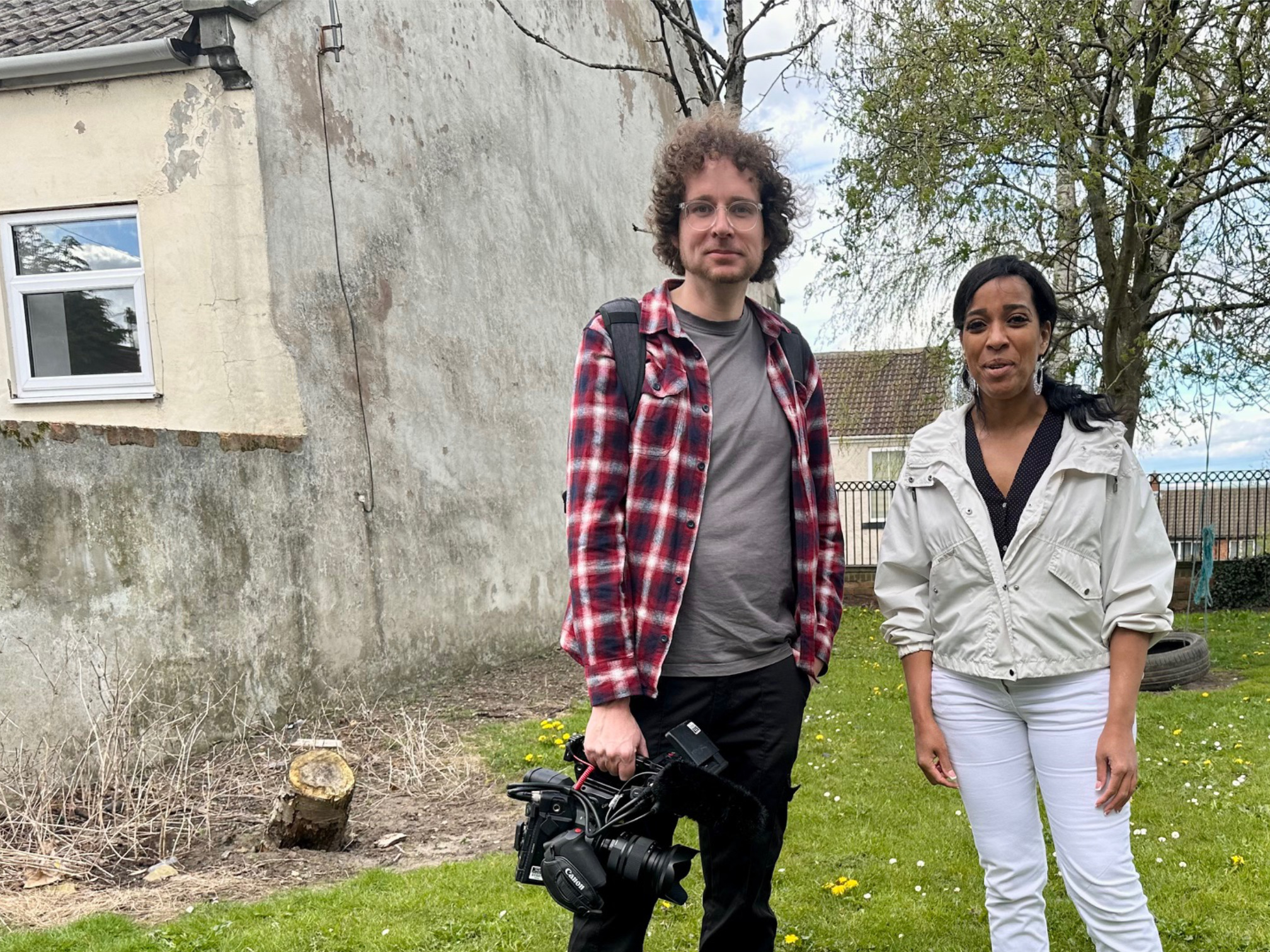
Header Image: Jon King from Flamelight Films on location in County Durham with online influencer/commentator Kate Pearl





