



For decades, the English education system has been built around a strangely narrow idea of when a life is supposed to begin.
You work hard at school. You make the “right” choice at 18. You leave home, if you can afford to. You study full-time, if your family circumstances allow it. You emerge three years later with a degree, a debt, a network, a direction - and, ideally, a job.
But across our patch, life rarely arranges itself so tidily.
People become parents. People become carers. People take the job that is available, not the one they imagined. People stay close to home because home matters. People leave education early and discover later that the world has changed around them. Industries rise, contract, automate, relocate, and reinvent themselves. A worker in Blackpool, Burnley, Bradford, Barrow, Doncaster, Hull, Sunderland or Salford may have no shortage of talent, ambition or appetite to learn - but very little room in life for that traditional full-time university model.
That's why todays announcement from the Government’s on student finance is a big deal. Not because its a neat Westminster policy line, but because - if it is properly funded, clearly explained and locally delivered - it just might begin to redraw who higher education is actually for.
From September 2026, people in England will be able to apply for student finance through the new Lifelong Learning Entitlement, with funded courses and modules starting from January 2027. The change will allow eligible learners to access loans for shorter “bite-sized” modules as well as full degrees, with support linked to the size of the course rather than only to the traditional academic year. The Government says the entitlement will be worth up to £39,160 - equivalent to four years of post-18 study at 2026/27 fee levels - and can be used across a person’s working life.
In plain English: this is student finance designed less for the imagined 18-year-old with a blank diary, and more for the 37-year-old working shifts, the parent who can only study two days a week, the care worker who wants to move into nursing, the technician whose industry has changed, the teaching assistant thinking about a degree, the redundant worker who can't afford to gamble three years of income on a wholesale reinvention.
The Department for Education has confirmed the first 130 universities and colleges approved to offer the new modular provision. Across the North of England, MagNorth counts 37 providers in the first wave: 17 in the North West, six in the North East, one in Cumbria, and 13 across Yorkshire.
They include major universities, further education colleges, university centres and local anchor institutions: from Blackpool and The Fylde College to the University of Lancashire; from Manchester Metropolitan University and the University of Salford to UCEN Manchester; from the City of Liverpool College and Edge Hill University to the University of Chester; from Teesside, Sunderland, Northumbria, Newcastle and Durham to Middlesbrough College; and across Yorkshire, from Bradford College, Calderdale College and DN Colleges Group to Sheffield Hallam, the University of Hull, the University of Leeds, York College and York St John.
It's that spread we should note. Because widening participation is not simply about getting more people through the doors of old institutions. It is about placing opportunity where people already live.
The Office for Students has previously identified higher education “cold spots”, including coastal regions in the North of England and the far north, where access to higher education remains more limited. It has also warned that mature student participation has declined, even as overall higher education participation has expanded.
Those are not abstract policy categories. They are lived geographies.
They are the bus routes that don't quite work. The cost of commuting. The family commitments that make moving away impossible. The local labour markets where a degree can feel risky because the graduate jobs seem to be somewhere else. Research by the UPP Foundation into higher education cold spots, including Doncaster, found that cost, debt, local job prospects, family ties and weak advice all shape whether young people see higher education as a credible route - or a gamble made by other people, in other places.
The same logic applies to adults. Perhaps even more so.
For someone with rent, children, caring responsibilities or an existing job, the all-or-nothing degree model can feel less like an invitation than a closed door. A modular system - one that allows people to build credits over time, study locally, pause, return, and move between education and employment - could make higher-level learning feel possible again.
The need is clear. The Learning and Work Institute’s 2025 Adult Participation in Learning Survey found that adult participation in learning had fallen from 52% in 2024 to 42% in 2025, with only 21% of adults currently engaged in learning of any kind. It also found sharp inequalities: people in work, lower earners, older adults and those who left full-time education earlier are significantly less likely to access learning.
That's the widening participation challenge in its adult form. Not aspiration, but access. Not talent, but time. Not willingness, but money, confidence, information and local availability.
And this is where the North’s college network becomes crucial.
The story of lifelong learning cannot be told only through universities. Colleges are often the institutions closest to the people this reform is meant to reach: adults returning to education, parents retraining, workers looking for progression, learners who may never have imagined themselves as “university people” but who know they need higher-level skills to move on.
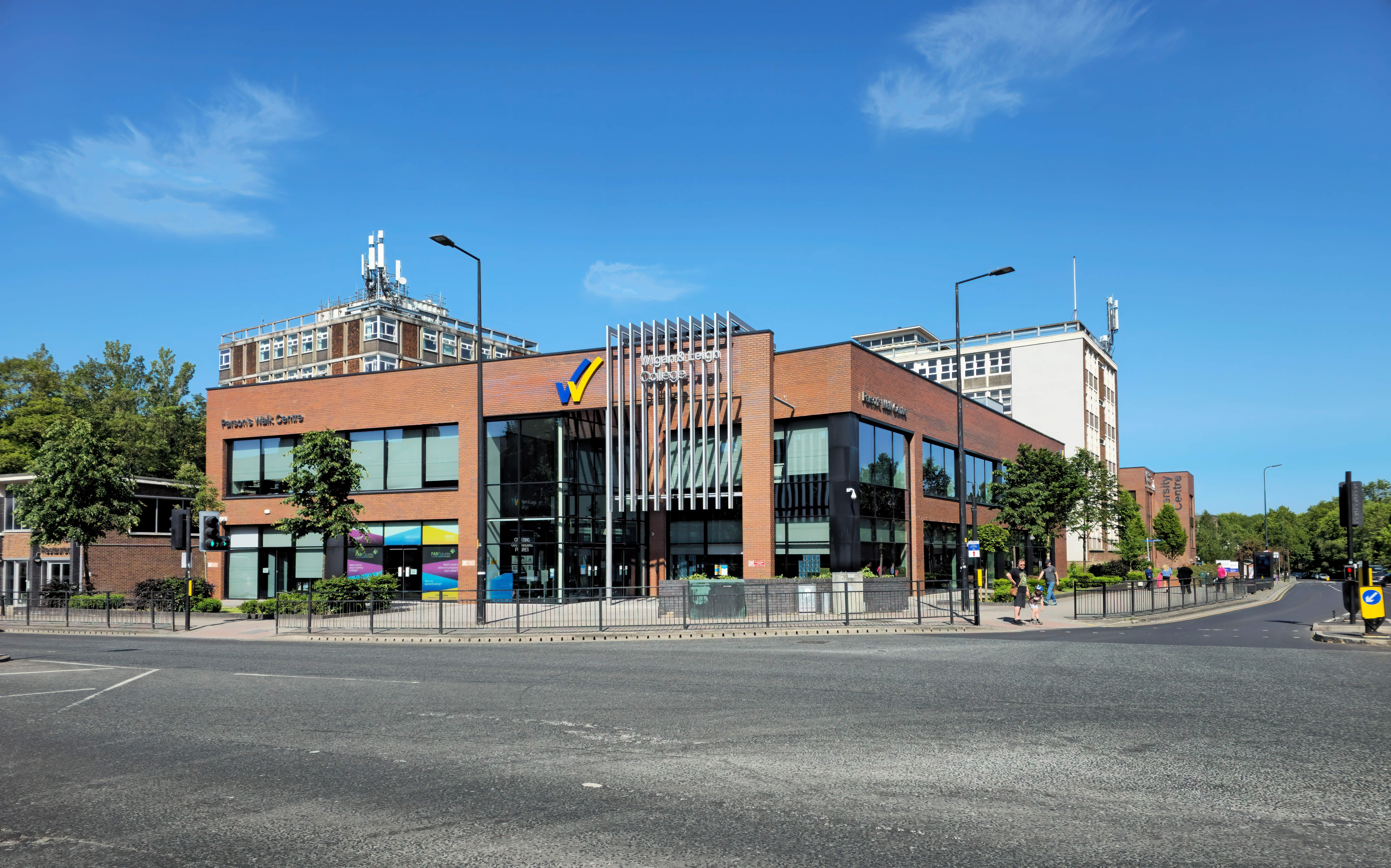
In the North West, the list includes Blackpool and The Fylde College, Burnley College, Bury College, Cheshire College South and West, City of Liverpool College, Hopwood Hall College, Riverside College, Tameside College, Wigan and Leigh College and East Lancashire Learning Group, alongside universities including Edge Hill, Liverpool Hope, Manchester Metropolitan, Salford, Chester and Lancashire.
In the North East, the first wave includes Durham University, Middlesbrough College, Newcastle University, Northumbria University, Teesside University and the University of Sunderland.
Cumbria is represented by the University of Cumbria.
Across Yorkshire, the approved providers include Bishop Burton College, Bradford College, Calderdale College, DN Colleges Group, Sheffield Hallam University, The Sheffield College, the University of Bradford, the University of Huddersfield, the University of Hull, the University of Leeds, York College, York St John University and RNN Group.
This gives the policy a distinctly northern test. Can a national finance reform become a local opportunity system? Can it support the skills needed in health and social care, engineering, computing, architecture and the green economy without reducing adult education to a narrow labour-market instrument? Can it help people move into better work while also restoring the idea that learning is part of a full civic life?
The Department for Education says the modules will focus on areas linked to skills shortages, including economics and computing, engineering and architecture, and health and social care. That is important. But the success of the Lifelong Learning Entitlement in the North won't be measured only by how elegantly it maps onto national skills strategies. It will be measured by whether people in places historically underserved by higher education can actually use it.
That's got to mean clear information. Good advice. Flexible timetables. Local delivery. Support with childcare, travel and disability. Maintenance support that reflects the real cost of study. Employers who do more than applaud the idea of upskilling while refusing to release staff to learn. Colleges and universities that collaborate rather than compete.
And it also means trust.
Adults who've been locked out of learning before are unlikely to be won over by acronyms and portals. The term “Lifelong Learning Entitlement” may be technically accurate, but it will not persuade a single parent in Fleetwood or a shift worker in Middlesbrough on its own. What will matter is whether someone can look at the offer and say: this is for me; this fits around my life; this leads somewhere real; I'm not going to be punished for starting.
Professor Andrew Ireland, Pro Vice-Chancellor at the University of Lancashire, has described the reform as “a significant and exciting development for the sector”, saying it creates the possibility of “a more flexible and responsive system” that enables people to access learning in ways that better support their circumstances and career ambitions.
At Blackpool and The Fylde College, Peter Greenall, Vice Principal for Higher Education and Frontier Economy, called the LLE “a powerful enabler” for Blackpool and the wider region, linking it directly to upskilling, reskilling, career change, social mobility and ensuring that “the benefits of regeneration are felt locally”.
That last phrase is the one to hold on to.
Because in the North we don't need education policy that extracts talent from our towns and sends it elsewhere. We need education policy that helps people stay, grow, lead, build and belong. We need routes into higher-level skills that are not only for the young, mobile and already-confident. We need second chances that aren't patronising, and adult education that isn't treated as remedial, marginal or optional.
The Lifelong Learning Entitlement will not solve those challenges on its own. Loans are still loans. Debt will still deter some people. Modular study can become fragmented if it isn't carefully designed. And a finance system, however flexible, can't compensate for weak public transport, insecure work, low pay or the long erosion of adult education funding.
But as a principle, this reform is a good start.
It says that the right to learn should not expire at 18. It says that higher education should not be a once-only bet made before life has properly happened. It says that universities and colleges can be part of a wider civic infrastructure - not just places of departure, but places of return.
For the North, that could be significant. In coastal towns, post-industrial communities, rural areas, city-regions and university cities alike, there are people whose lives have never fitted the old model. They aren't lacking ambition. They're lacking a system built with them in mind.
From later this year, lets see whether this new one is.
Header Image: Shutterstock





