



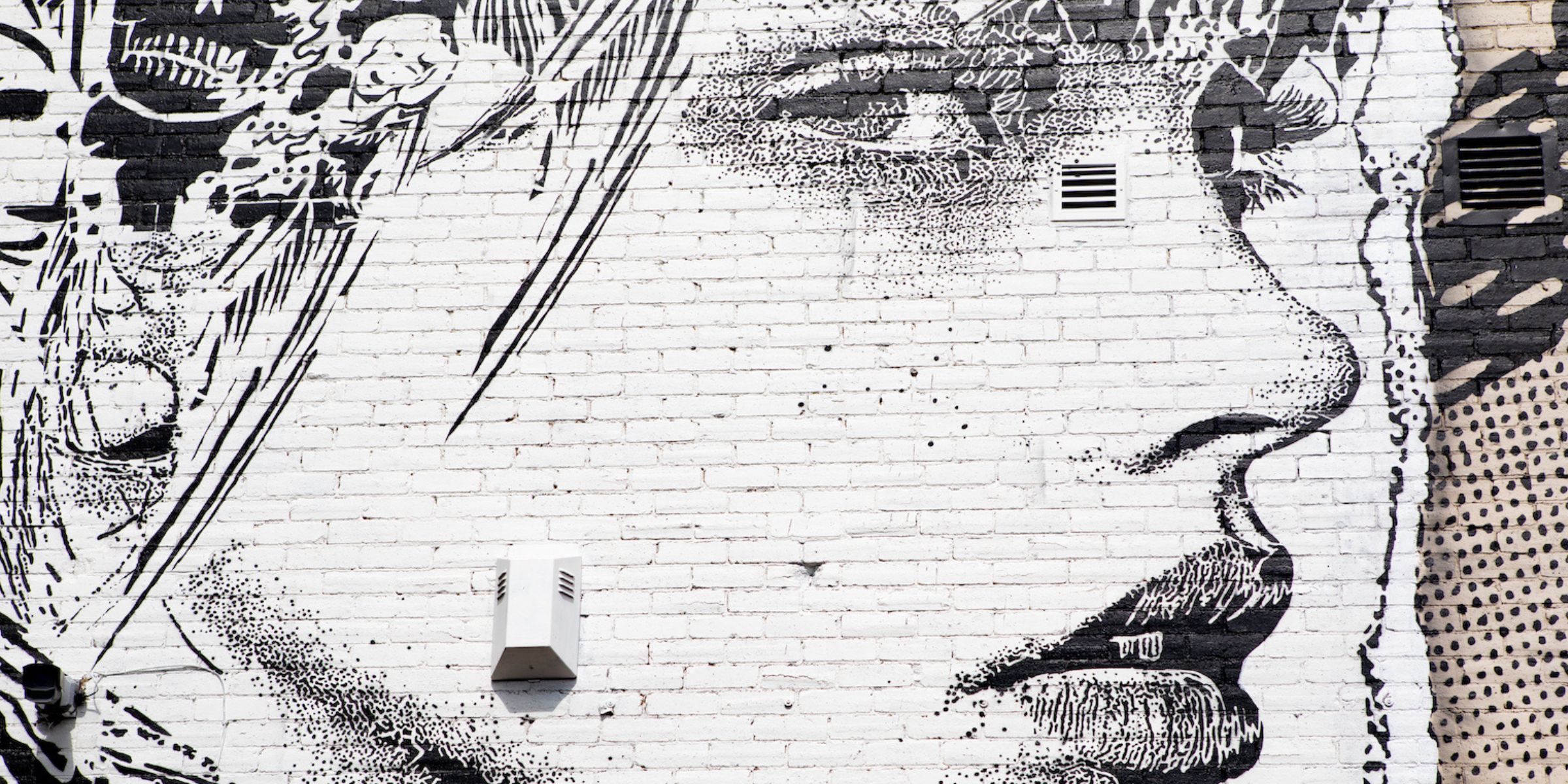
There is a wall on St James’ Boulevard in Newcastle that people might once have passed without looking.
It was large, conspicuous and somehow still anonymous: one of those blank urban surfaces that exists in a city without appearing to belong to it. Now, rising 30 feet above Newcastle, it carries an emphatic new work by two internationally recognised North East artists, Jimmy Turrell and Peter Manning - better known as Prefab77.
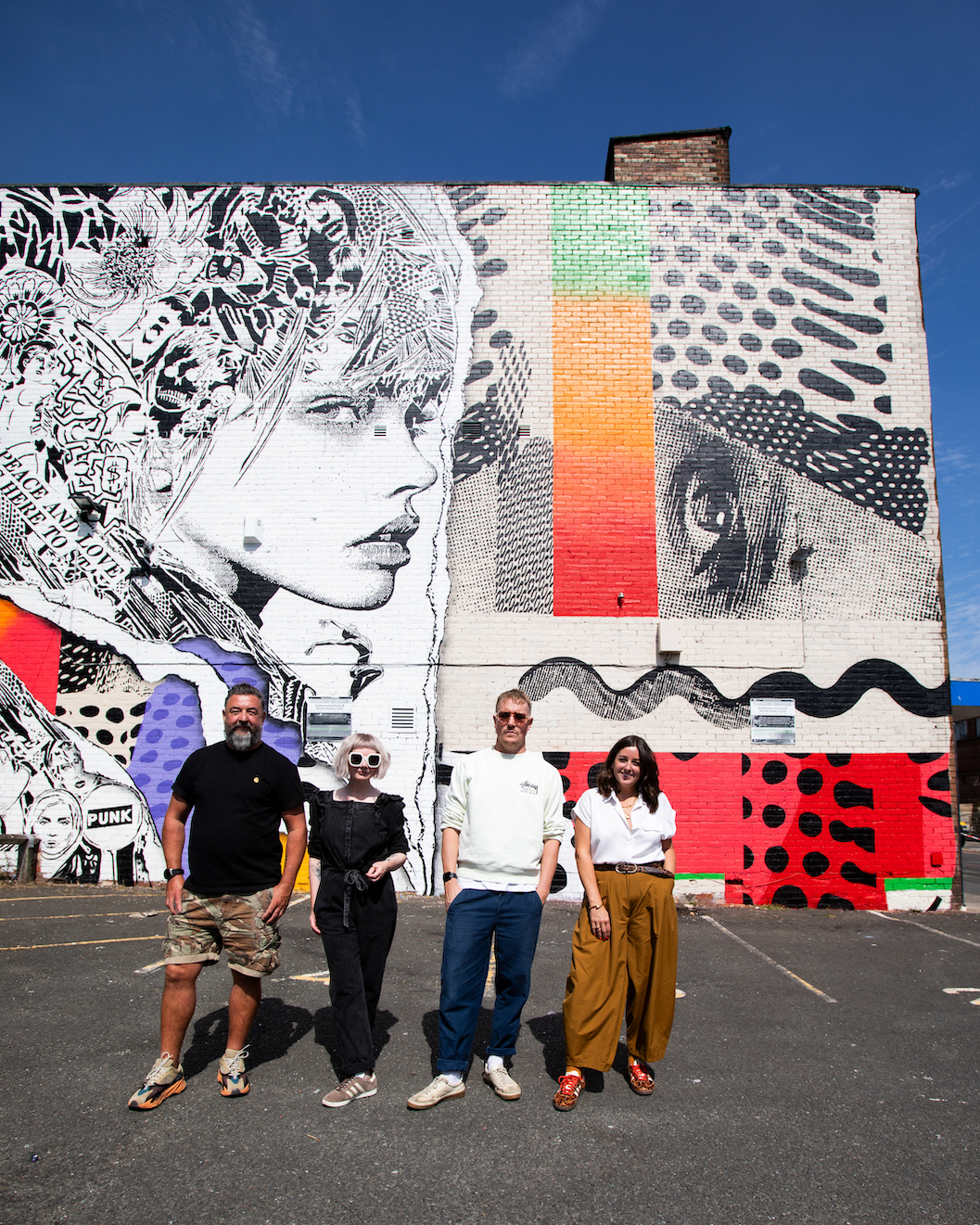
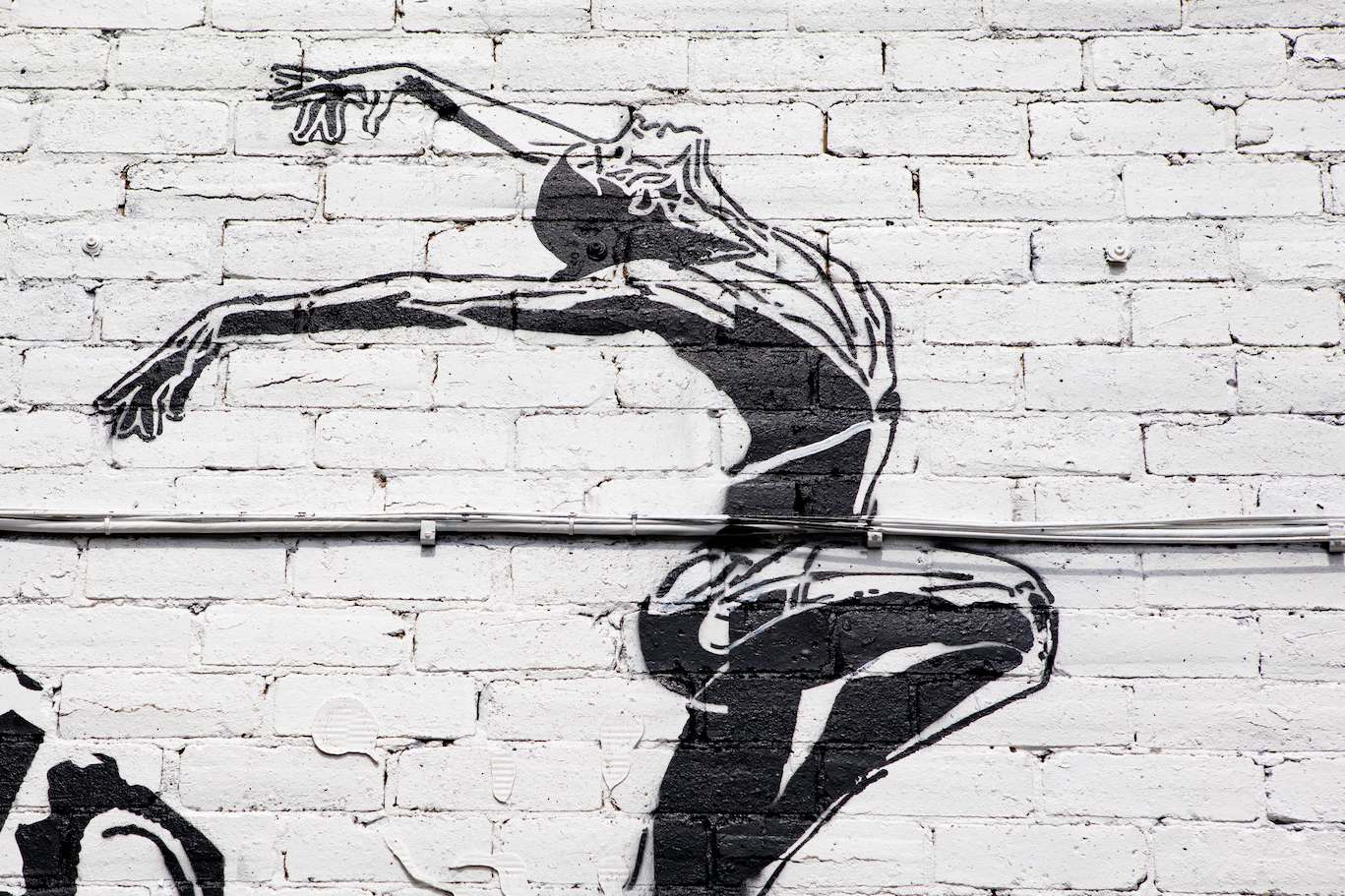
The mural is bold, layered and impossible to overlook.
That's the idea. Public art can interrupt the ordinary journey through a city. It can give an overlooked place an identity, invite people to stop and reconsider their surroundings, and allow artists to leave something of themselves in the streets they know.
But this particular wall is also announcing something rather cool happening behind it.
In September, the refurbished building beside the mural will welcome the first students to LMA Newcastle: a new city-centre campus offering creative degrees across music, performance, music production, musical theatre, acting, dance, film and television production, and business.
The mural is the most immediately visible part of the story. The potentially transformative part lies inside.
The artwork was commissioned through Creative Central NCL in partnership with LMA Newcastle. Its creators have both built careers reaching far beyond the region, but its location mattered.
“It’s always special creating work in Newcastle,” Turrell says. “You approach a piece differently when it’s somewhere you know, somewhere you walk past and somewhere that’s part of your own city.”
Manning agrees.
“Jimmy and I both have international careers, but we’re from and based in this region, so having opportunities to create work like this here really matters,” he says.
“Public art can completely change the way people see a space. This was a fairly anonymous wall before and now it has an identity.”
And that movement - from anonymity towards identity - is particularly apt.
For decades, thousands of talented young people in the North have been encouraged to believe that a serious creative life happens elsewhere. London has often been presented not simply as one possible destination, but as the inevitable one: the place where the training, commissioners, studios, networks and jobs are presumed to be.
The North East has never lacked talent. But it's frequently lacked an adequately visible route through which that talent can develop, remain and earn.
A new campus won't resolve that problem on its own. But it can become another important part of a regional creative ecosystem that is growing quickly - and beginning to insist on its own gravity.
The economic case for creative education in the North East is no longer speculative.
The North East Evidence Hub currently identifies approximately 50,000 creative-industry jobs across the wider region and reports employment growth of 67% during the past decade. It describes the creative industries as the region’s fastest-growing sector over that period. The North East also holds significant concentrations of employment in screen, music and the visual arts outside South East England.
Those figures sit alongside a substantial programme of public investment.
In March, the North East Mayoral Strategic Authority announced a £104 million package intended to strengthen the region’s creative infrastructure. It includes support for the proposed Crown Works film studios in Sunderland, preparatory work for a new arena at Gateshead Quays, investment in smaller venues and measures intended to support grassroots talent, participation and creative businesses.
By the end of 2027, the first phase of Crown Works is expected to provide 125,000 square feet of studio space beside the River Wear. Across the region, new production capacity, performance spaces, cultural organisations and independent enterprises are creating the possibility of a more substantial creative economy.
But buildings and funding announcements don't automatically create access. The crucial question is whether someone growing up in Sunderland, Gateshead, County Durham, South Shields, Northumberland or Newcastle can see a comprehensible route from early enthusiasm to training, experience and paid employment.
Research publicised through the Government’s Discover! Creative Careers programme found that almost one in three young people aged between 11 and 18 was interested in a creative career. Nearly half, however, didn't know which skills or qualifications they would need.
Almost one in four young people living outside London believed there were no creative-industry jobs where they lived.
That perception is economically inaccurate, but it isn't difficult to understand. A sector may be growing rapidly while its entry points remain obscure. Jobs can exist without appearing accessible. Young people may possess the ability without knowing the vocabulary, the institutions or the people who could help them begin.
This is where the arrival of LMA Newcastle has the potential to matter.
LMA describes its approach as industry-led, with an emphasis on practical experience, live projects and direct professional connections. Its Newcastle campus will offer undergraduate and postgraduate study in the heart of the city, within walking distance of theatres, music venues, cultural organisations, production companies and working artists.
That physical proximity is not incidental. Creative education is at its most persuasive when the surrounding industry isn't discussed as a distant abstraction, but encountered as a living network of people, places and opportunities. Students need teaching, facilities and time to develop their craft. They also need to understand how work is found, commissioned, funded, produced and sustained.
They need to meet the sound engineer, producer, choreographer, editor, lighting designer, venue manager, artist, accountant and freelancer - as well as the person standing in the spotlight.
In the months before opening, LMA says it has been forming regional partnerships, running free workshops and bringing figures from music, television, film, dance and performance into Newcastle.
Its principal, Deni Chambers, is clear that the intention extends beyond opening another educational building.
“We said from the beginning that LMA wasn’t coming to Newcastle simply to open a building,” she says.
“We want to become part of the creative community that already exists here, support it and hopefully add something new to it.”
That commitment will be important.
The North East does not need to be discovered by an incoming organisation. Nor does it require a creative identity to be parachuted-in. Its cultural life has been built across generations by artists, musicians, writers, performers, technicians, venues, community organisations and audiences - often while working with too little money, security or recognition.
The strongest contribution LMA can make will be to enter that landscape with curiosity and humility: listening to the people already doing the work, paying regional creatives properly, sharing facilities and opportunities, and building connections that continue beyond launch events and prospectuses.
The mural offers an encouraging early example. It was created by two artists whose practices are international but whose roots and working lives remain in the North East. The commission gave them the opportunity to make a substantial work in their own city.
Creative Central NCL project manager Vix Leaney says this principle runs through the organisation’s wider programme.
“We want to create opportunities for artists and creatives to make their mark on Newcastle and to ensure that people working in the sector can find meaningful, paid opportunities here in the region,” she explains.
During the past two years, Creative Central Newcastle has commissioned more than 30 pieces of street art and creative interventions, ranging from large murals and the transformation of Pink Lane to painted utility cabinets and the outdoor Urban Gallery in Forth Lane.
These works have been gamne-changing - and make creativity visible in the public realm. The next challenge is to make creative livelihoods equally visible - and attainable.
There's an understandable excitement surrounding new campuses, studios and cultural venues. They provide physical evidence that a place is investing in its future.
But access to a creative building and access to a creative career aren't the same thing.
University tuition, accommodation, travel, equipment and the loss of time otherwise spent earning can all become barriers. So can the absence of family contacts, confidence or knowledge about industries where informal networks still matter enormously.
For some young people, studying close to home can make higher education possible. It might allow them to remain within an existing support network, commute rather than relocate, and build professional relationships in the region where they hope to live and work.
For others, a degree will not be the appropriate route at all.
The North East’s emerging creative infrastructure will need vocational training, apprenticeships, entry-level employment, paid placements, mentoring and properly supported freelance opportunities alongside higher education. A genuinely inclusive sector must make room for different forms of learning and different kinds of life.
LMA Newcastle can become an important rung on that ladder, but the full ladder has to be built collectively.
That work begins long before university. It starts when a child is given an instrument, a camera, a stage, a studio, a pair of ballet shoes - or simply an adult who treats their creative interest seriously.
It continues when teenagers are shown that creativity isn't just an extracurricular pleasure enjoyed before choosing a “proper” job. It encompasses technical, commercial and production roles as well as performance. And it succeeds when emerging creatives are offered paid work rather than another invitation to gain exposure.
Talent is distributed everywhere. Knowledge, confidence and opportunity are not.
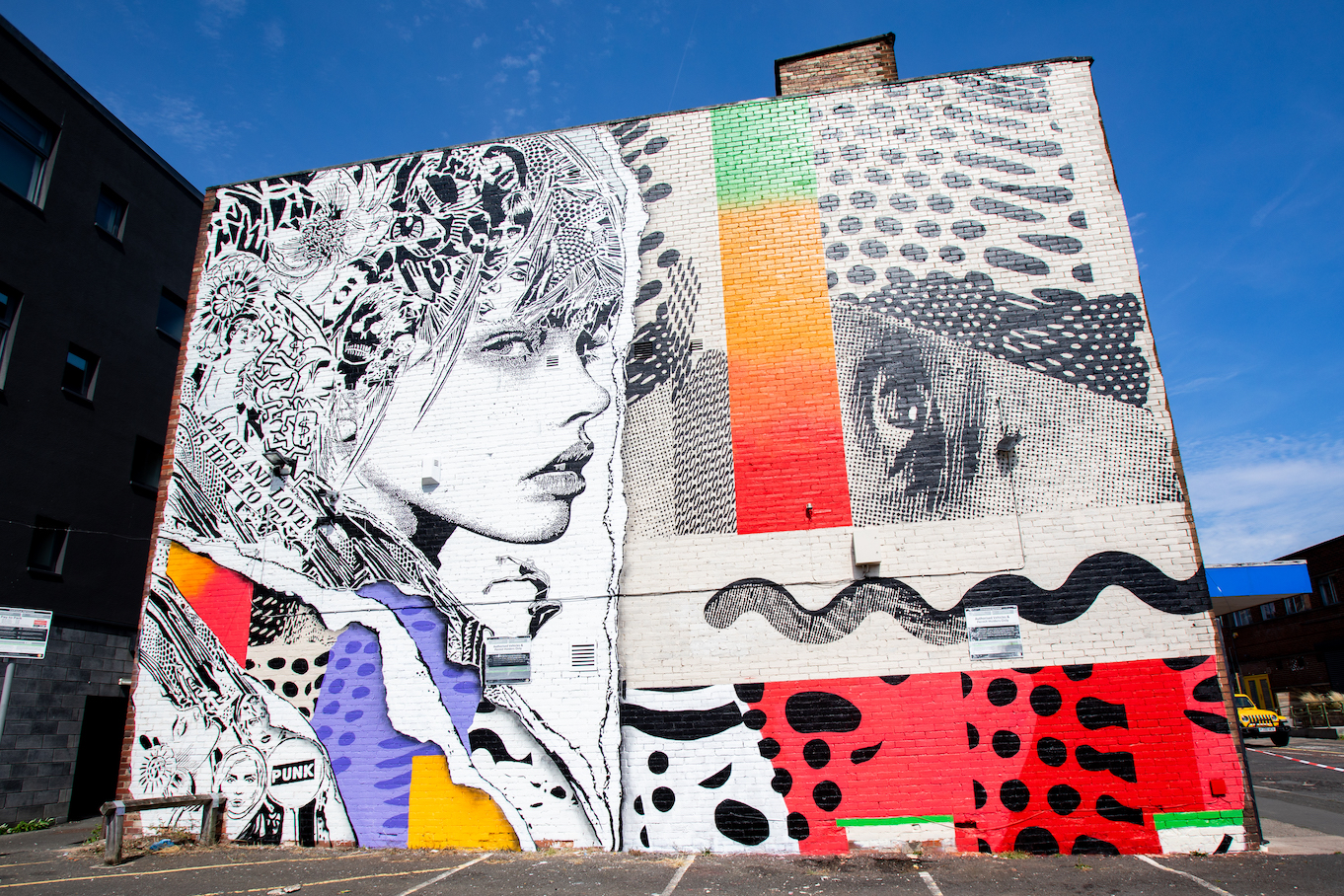
The new mural will inevitably become a landmark for LMA Newcastle. It's highly visible, photographable and carries the energy of two artists who understand the city in which they've made it.
It also belongs to a much larger moment.
Across the North East, the language surrounding culture is changing. Creative work is increasingly being discussed not as decoration added after economic development has taken place, but as part of the region’s economic, educational and civic infrastructure.
That change brings opportunity, but also lots of responsibility. If the creative industries are to become one of the North East’s great growth stories, they have to offer more than exceptional buildings and occasional examples of individual success. They must create durable routes through which people from ordinary and underrepresented backgrounds can participate, train, experiment, fail, begin again - and ultimately earn.
The region shouldn't have to export its young talent and hope that some of it might eventually return home.
In September, the first students will walk into LMA Newcastle. Around them will be a city already full of music, performance, writing, filmmaking, art, enterprise and stubborn creative ambition.
Outside, the anonymous wall has acquired an identity - and given them one too.
What happens inside the building - and how far its opportunities reach beyond it - will determine whether something more significant has changed too.
LMA Newcastle opens on St James’ Boulevard in September 2026. Applications for its undergraduate courses can be made through UCAS or directly to LMA, with postgraduate applications made directly. Further information is available HERE
Creative Central Newcastle is funded by the North East Mayoral Strategic Authority and Newcastle City Council. The mural was also supported through the UK Government Shared Prosperity Fund.
Header image: Adam Kennedy





