




In March, a film made by Sunderland College students brought a crowded room at Sheepfold Stables to silence.
Young voices - some confident, some hesitant, all still searching - spoke about who they were, where they came from and what they imagined for themselves. They talked about being seen and heard, and about not always feeling they belonged.
MagNorth had travelled to Sunderland for an update on Culture Start, a three-year, £1.5 million attempt to build what the city called a “protective framework” around children and young people growing up in poverty.
The language was ambitious. Culture wouldn't be treated as an add-on, nor as a handful of worthy activities distributed around the city. It would sit alongside education, housing, health and community life as part of the infrastructure shaping a child’s future.
“Culture is not a luxury,” Sunderland Culture chief executive Nick Malyan told us. “It’s a foundation.”
Paul Callaghan, chair of Sunderland MAC Trust, expressed the inequality at the centre of the day just as plainly.
“Talent is universal,” he said. “But opportunity is not.”
The city was making a promise: that opportunity could be designed rather than left to accident.
Five months later, we can see what that promise looks like.
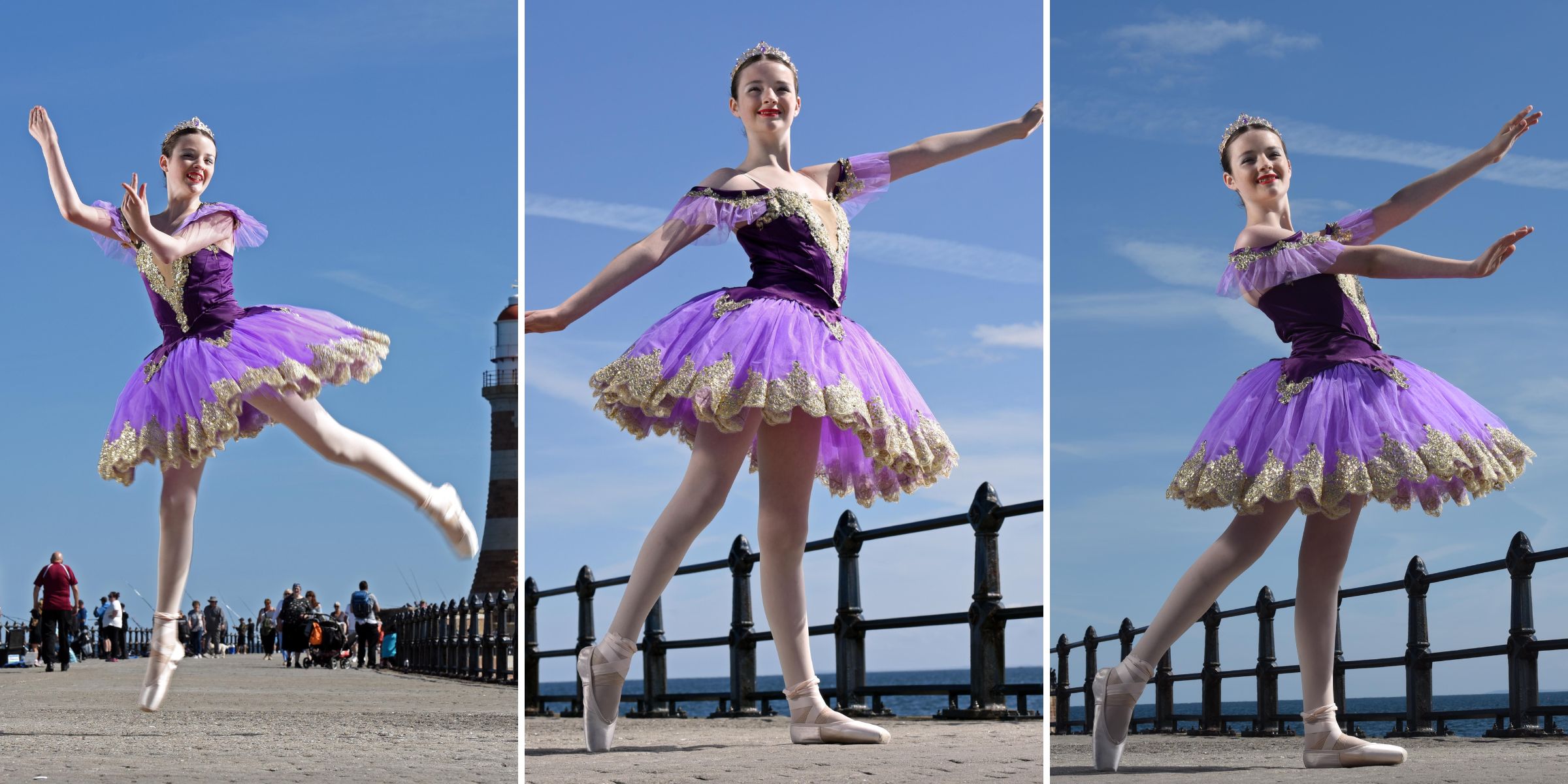
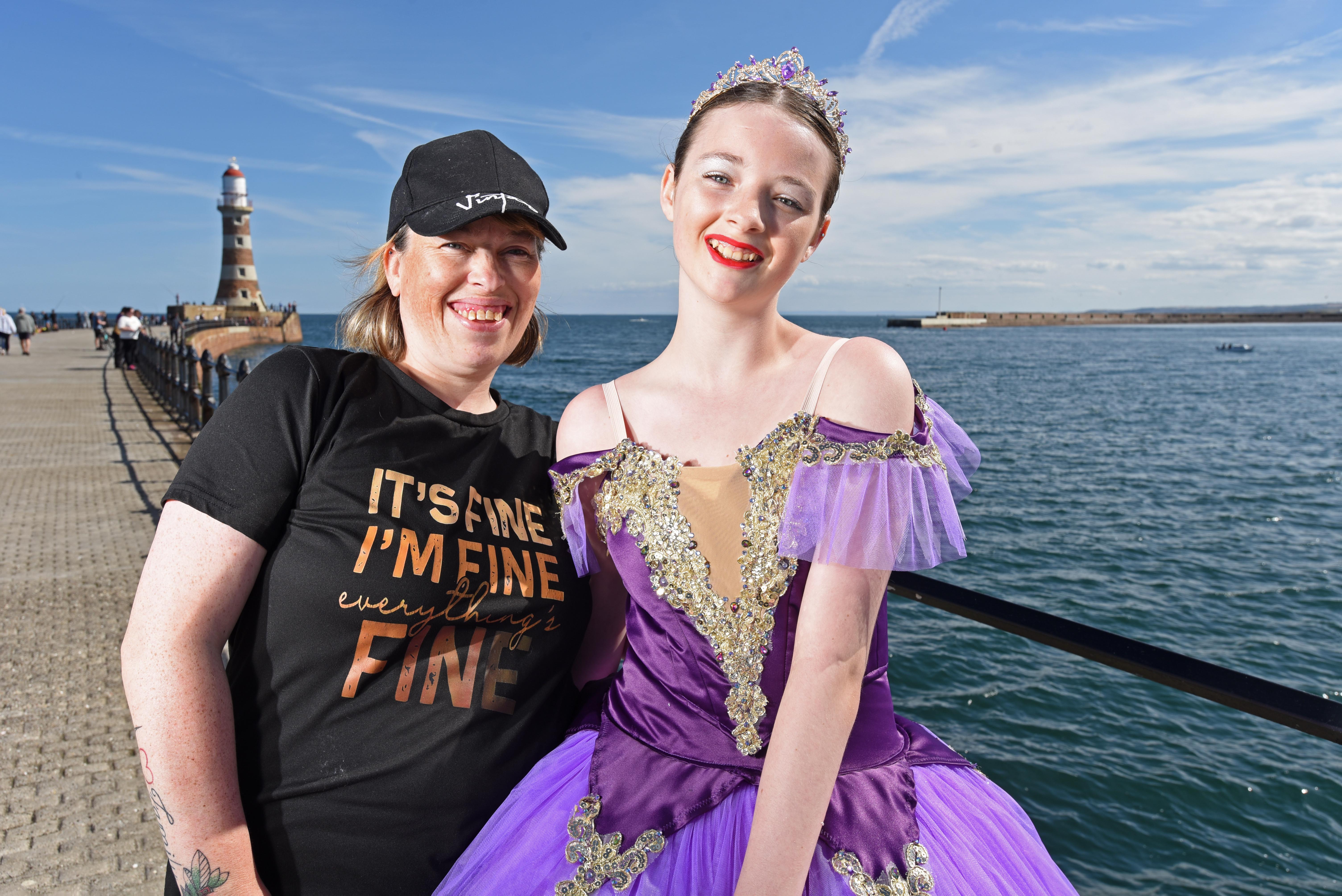
On the concrete beside Roker Lighthouse, where the North Sea keeps Sunderland’s horizon wide open, Belle Collier is wearing her new ballet shoes.
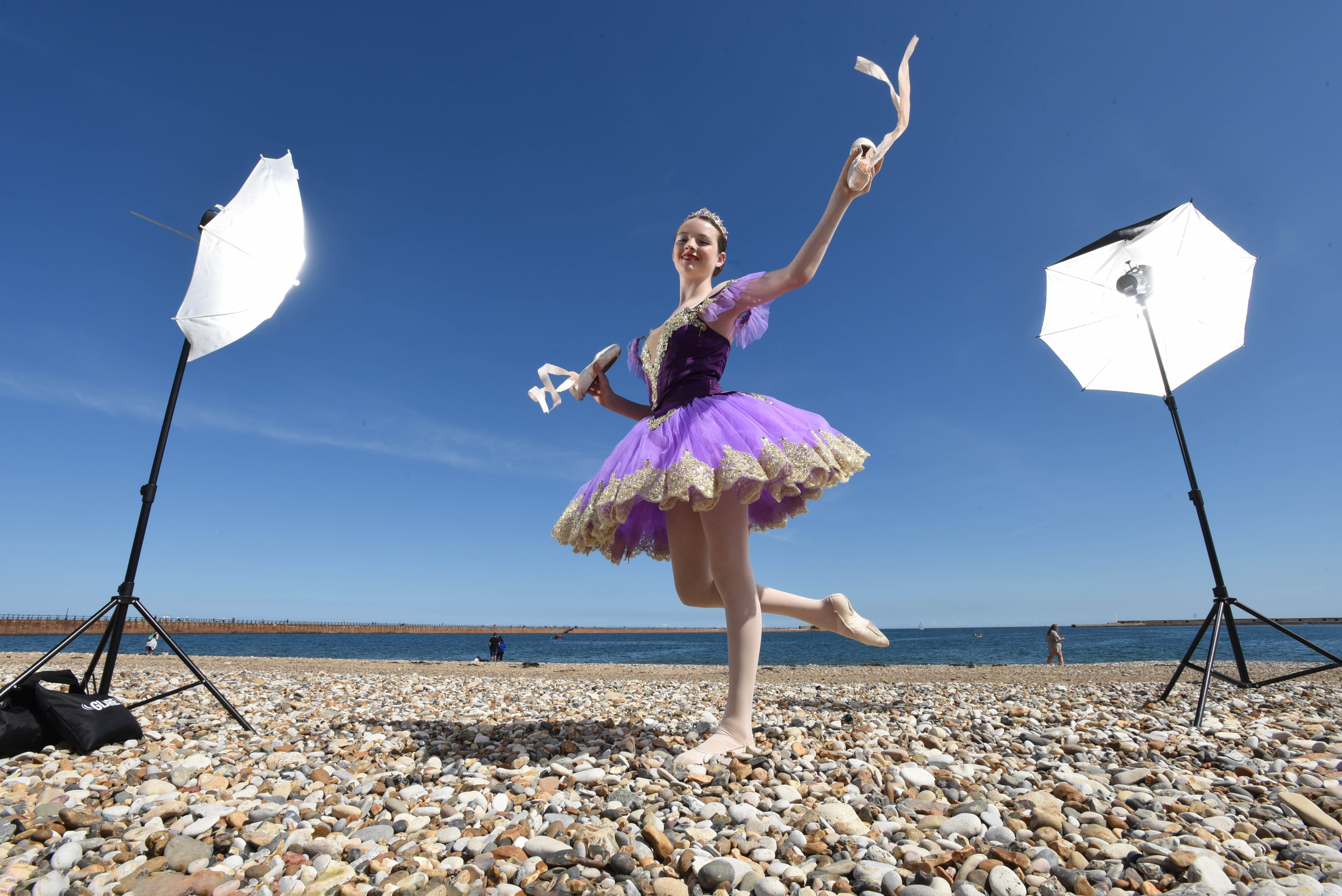
The setting is playful and improbable: a 14-year-old dancer carrying the precision and discipline of the studio into the wind at the end of the pier. In Asadour Guzelian’s exquisite photographs, Belle is poised, expressive and evidently delighted. Nothing in the images asks us to feel sorry for her. Nor should it.
Belle isn't a tragedy with ballet shoes attached. She's our future. She's a talented Sunderland teenager who's worked hard, taken examinations and earned an extraordinary collection of results. She recently achieved a Pass with Merit in her ballet iPath exam and a Pass with Distinction in musical theatre. A singing examination, also supported by the bursary, brought another Distinction.
Earlier this year, she secured three more Passes with Merit: Grade Four Ballet, 2nd Silver Bar Tap and Gold Modern.
She's already performed at Newcastle’s Theatre Royal as part of her dance show. In October, she's due to take part in a singing showcase.
These are Belle’s achievements. But the fact that she was able to pursue them also depended upon something over which no 14-year-old has control: whether her family could afford the price of participation.
The shoes in the photographs matter because, without the right shoes, talent can't enter the room.
We often talk about children’s creative potential as though it were self-executing. Find your passion. Work hard. Believe in yourself. Practise.
All of that is essential. None of it pays an examination fee.
Behind almost every young dancer, musician, actor or artist is an accumulating bill: lessons, specialist equipment, instruments, sheet music, costumes, shoes, travel, auditions, examinations and competitions. Each item can appear modest when considered alone. Together, they decide who gets to continue.
Belle and her mam, Leanne, live (like lots of us), with financial hardship. Leanne wants her daughter to have the opportunities other children have, but describes the pressure of continually finding the extra money needed to support her talent.
“As a parent, there is a lot of pressure when it comes to finding the extra money to support your child’s talents, with the expense of ballet shoes, lessons, exams and competitions,” she says.
“The bursary money has really helped and it has given Belle a huge boost in confidence. We are so proud of everything she is achieving.”
The support came through Culture Start Sunderland’s Ignite Bursary Programme. Ignite provides grants of up to £500 to young people who face financial or social barriers to developing their creative abilities.
It's open to those aged 11 to 18, with the upper age extended to 25 for young people with special educational needs and disabilities. The Gillian Dickinson Trust supports the programme.
The grant can pay for the practical things that stand between potential and participation: an instrument, equipment, specialist tuition, training or an examination fee. In Belle’s case, it helped with ballet shoes and the growing costs of developing her talents.
There is a temptation to describe £500 as a small amount. Compared with the budgets of major cultural organisations or the vast sums attached to national regeneration projects, it is. Compared with the disposable income of a family already struggling to meet essential costs, it may be the difference between carrying on and quietly withdrawing.
That's what £500 can change.
The importance of the Culture Start gathering didn't lie in the announcement of another programme of activities. The larger idea was more ambitious: culture should form part of the protective infrastructure around children and young people.
Not an optional pleasure once poverty has been solved. Not an “extra” for families with money left over. Not a reward reserved for children whose parents and carers can transport them, equip them and repeatedly pay the next fee.
Culture can provide confidence, trusted adults, friendship, discipline, self-expression and a place to belong. It can help a young person imagine a future not wholly determined by the pressures surrounding them. None of those things replaces secure housing, sufficient household income, food or heat. But neither should a child be expected to wait for every material inequality to disappear before being allowed to dance, sing, draw, act or make music.
Culture isn't an add-on to tackling poverty. It's part of the essential infrastructure that can prevent poverty from determining the entire shape of a childhood.
At Sheepfold Stables, we heard what this meant at system level. Simon Marshall, chief executive of Together for Children, described how public money so often arrives only after something has gone wrong.
“If you were designing a system from scratch, you’d invest in communities - help families be more resilient, help children be more successful. That’s where the return is.”
Sir Nicholas Serota, chair of Arts Council England, rejected the language normally used to make creative participation sound pleasantly dispensable.
“It’s not enrichment,” he said. “It’s a right.”
Belle’s story brings those large propositions down to their most practical level. A protective framework is not only a partnership diagram, a strategy or a room filled with institutional leaders. Sometimes it is the money for the correct shoes arriving before a young person has to stop.
Nick Malyan, CEO of Sunderland Culture, puts the central inequality plainly.
“Belle’s story shows what can happen when a talented young person is simply given the opportunity to develop,” he says.
“Relatively small amounts of financial support can make a transformative difference. It might be ballet shoes or an exam fee, but behind that is something much bigger - confidence, aspiration and the belief that your circumstances should not determine what you can achieve.
“Talent exists in every community, but opportunity does not. Ignite is helping to bridge that gap.”
The crucial word is simply. Belle didn't need somebody to manufacture ambition on her behalf. She didn't need to be rescued from an absence of talent, commitment or parental support. The ability, work and encouragement were already present. What her family needed was a bit of help with the bill.
At the launch, Children North East’s poverty-proofing work identified a phrase that had repeatedly surfaced in conversations with families and young people: “It’s not for me.”
That feeling can be produced by an unfamiliar building, by class signals, by the fear of not knowing how to behave - or by the knowledge that every new opportunity may bring another cost. The barrier is psychological and material at the same time.
Children don't always leave creative activity in one dramatic moment. More often, exclusion happens quietly.
A parent says that this term might need to be the last. An examination is postponed. The correct equipment can't be bought. A young person begins declining opportunities because they understand the pressure at home and don't want to add to it. Eventually, what appears from outside to be a loss of interest might actually be a careful act of self-denial.
This is why practical bursaries matter. They intervene at the point where aspiration encounters a price.
Ignite has now supported 138 individual young people through 172 bursaries, investing £82,300 directly in their creative development. Its latest round awarded 68 bursaries worth £32,800 as demand continued to grow across Sunderland.
Those numbers represent many different ambitions and many different obstacles. One young person might need an instrument. Another needs specialist lessons. Somebody else can attend the course but can't afford the journey or the required materials.
Independent evaluation of the programme found that 84% of recipients felt encouraged in their chosen art form. 84% reported greater confidence in their creative practice, while 87% nexperienced an increased sense of achievement.
These aren't decorative outcomes. Confidence is frequently discussed as though it can be delivered to a young person by motivational language alone. In reality, confidence grows when they're permitted to attempt something difficult, receive serious tuition, improve through practice and discover that their work is worthy of investment.
Belle’s exam results are an especially vivid example. A Merit or Distinction isn't the bursary’s achievement; it's hers. The bursary allowed her to stand where her effort could be recognised.
Culture Start says that around 15,000 children in Sunderland are living in poverty.
That figure is so large that it risks becoming abstract. Belle’s story should help us understand what it means without asking her to represent every one of those young people.
Child poverty isn't a shortage of dreams. It 's a shortage of choices and margins. It means that ordinary childhood opportunities are weighed against food, energy, rent, school costs and transport. It places parents in the impossible position of wanting to say yes while knowing what that yes will cost elsewhere.
The inequality isn't confined to the formal arts. It exists wherever participation requires equipment, fees, travel or an adult with flexible time. But culture carries an additional burden because it's still routinely treated as dispensable - as though painting, music, theatre and dance begin only after every serious need has been met.
For a child, creative life should be one of those serious needs.
This doesn't require us to promise that every bursary will produce a professional artist. Belle might build a life in dance and performance; she might ultimately choose an entirely different path. The value of the opportunity doesn't depend on a future starring role.
She's entitled to take her ability seriously now.
That principle matters because public conversations about arts access often drift towards finding the exceptional child - the prodigy whose later success will retrospectively justify the investment. That's a damaging test. We don't ask children from wealthier families to prove that a ballet class will lead to employment before allowing them to attend.
The right to explore a talent must include the right not to turn it into a career.
The Government has now announced the £132.5 million Every Child Can programme, funded through the Dormant Assets Scheme and intended to widen access to enriching activity in culture, sport, nature, civic engagement and wider life skills.
The national programme acknowledges a problem Sunderland organisations already understand: access remains unequal, and too many young people are locked out by where they live, the institutions around them and the income available at home.
Nick Malyan welcomes the announcement.
“We warmly welcome the Government’s Every Child Can programme,” he says. “Here in Sunderland, we are already seeing first-hand what happens when financial barriers are removed and young people are given the chance to fulfil their potential.”
The investment is important. But the lesson from Ignite isn't simply that a national fund should exist. It's that support has to be capable of reaching the specific point at which a young person is about to lose an opportunity.
Large policy ambitions are ultimately tested in small transactions. Can the shoes be bought? Can the exam be taken? Can the instrument be repaired? Can somebody get to the lesson next Thursday?
If Every Child Can is to live up to its name, it must understand both the scale of inequality and the intimate detail of how exclusion works.
Sunderland’s experience also offers a warning. Charitable and trust funding can demonstrate what is possible, but a child’s ability to participate in cultural life shouldn't permanently depend upon a patchwork of short-term awards and the skill of local organisations in finding the next pot of money.
The demand recorded by Ignite is evidence of success, but it's also evidence of unmet need.
That question of endurance was already present at Sheepfold Stables. Culture Start programme manager Michael Barrass warned against allowing a city to build trust with children and families only for the work to disappear with the funding cycle.
“We can’t fail the children and young people by stopping,” he told the room.
Belle’s progress helps explain why. Continuity isn't an administrative preference when a child is developing a practice. It's the condition that allows one lesson to become an examination, one examination to become a performance and one success to generate the confidence for another attempt.
There's massive joy in Belle’s story and we shouldn't lose it beneath policy.
She's achieved distinctions and merits. She's danced on the Theatre Royal stage. She is preparing to sing again in October. Her confidence has grown and her family are rightly proud.
At Roker Lighthouse, in Guzelian’s photographs, she's not presented as the grateful recipient of somebody else’s generosity. She is a young dancer inhabiting her own ability.
That distinction is what's important to us at MagNorth - and you too, hopefully..
The Ignite bursary didn't give Belle talent. It didn't provide the hours of practice or sit the examinations for her. It didn't create Leanne’s determination to support her daughter.
It bought room for all of those things to count.
We sometimes speak about opportunity as though it were an open door. For many children, the door may be visible and adults may sincerely invite them through it - but there's still a charge at the threshold.
At the Culture Start launch, Callaghan described poverty and unequal access as producing “a narrowing of horizons” - at precisely the age when the world should be opening.
Guzelian’s photographs give us the opposite image. Belle stands at Roker Lighthouse with the North Sea behind her and the horizon open.
For her, part of the charge at the threshold was a pair of ballet shoes.
Now she has the right shoes, and she is dancing.





