



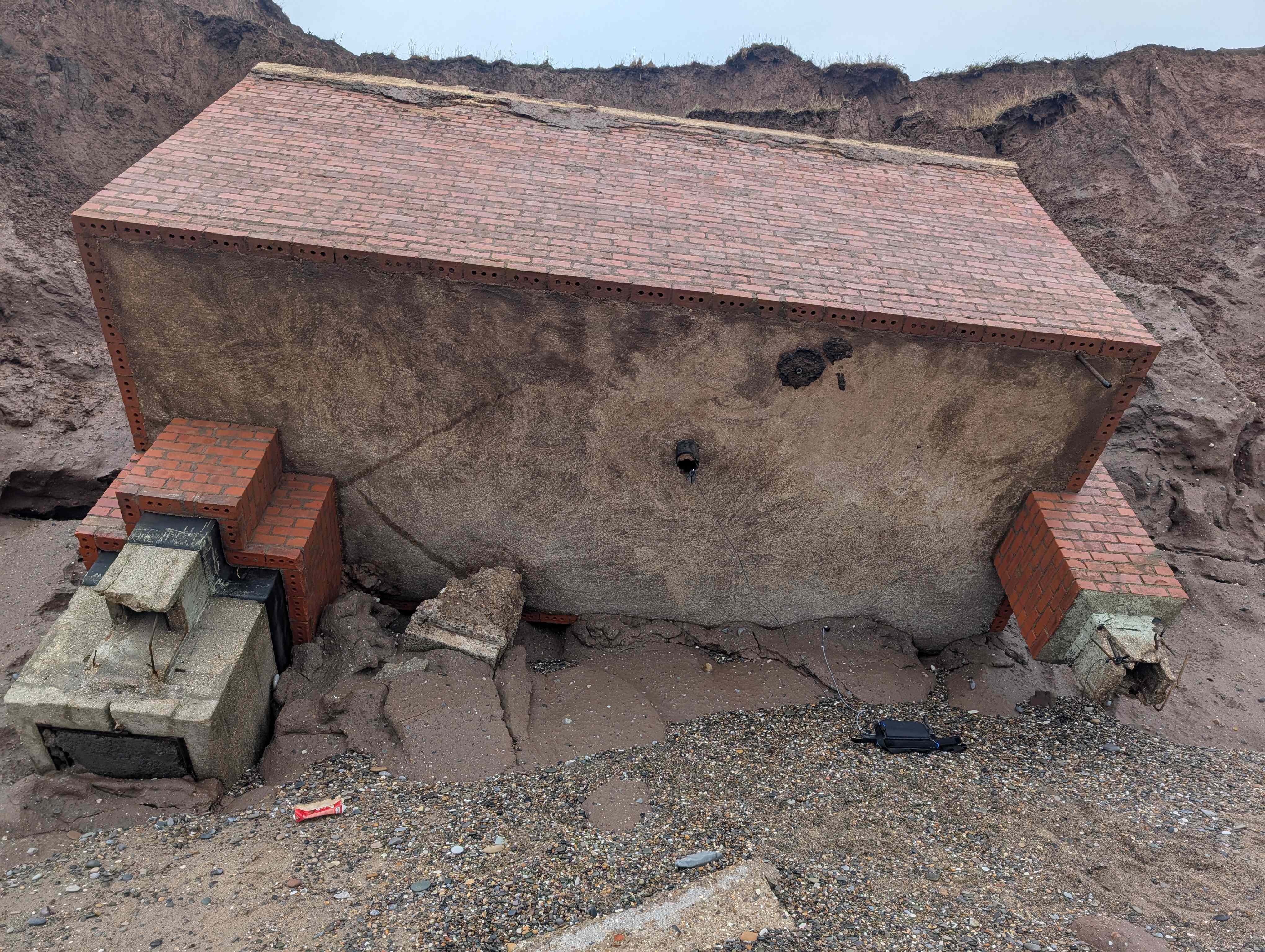
On the very edge of the north, the earth is no longer a solid thing. It is a slow-motion landslide, a fraying hem of a region that is rapidly losing its land and its shape. But is it losing its identity too?
Near Tunstall, on the Holderness Coast near Withernsea in East Yorkshire, a relic of our deepest collective anxiety - a 1959 Royal Observer Corps nuclear bunker - has finally surrendered its grip on the clifftop. After seventy years of bracing for a Russian attack that never came, it has been claimed instead by wild and relentless erosion of the North Sea.
The Mag North team went down to Holderness the day after the bunker’s collapse to investigate what this extraordinary pace of change is doing to both the land there and asking how this is shaping people’s relationship with the region. We all know the north is changing, and Holderness is the fastest eroding coastline in all of Europe according to geologists, but are we really prepared for what is to come?

Rapid change
“It is wild and cruel and beautiful here,” dog walker Alison Pitts told Mag North when we visited the location.
Alison is from Hessle, near Hull, but regularly visits the landscape around Tunstall and remarked on the sense of loss from the landscape, explaining it was different every time they made the journey. She told us that everytime they drive over they notice pubs that are closing and communities having to deal with change.
She has fond memories of family trips here as a youngster but is now focused on thinking about the Holderness coast for the future generations. She said: “Being here just makes me think we really need to look after the world better, don’t we? Everytime we come here we try to do some litter picking.”

An allegory for instability
Dr Kevin Corstorphine, from the University of Hull, works on the narratives of fear across genres of gothic, horror, and the weird with his research increasingly focused on the Yorkshire Coastline. He recognised the sense of the bunker collapse being symbolic, an allegory for instability. How does this collapse shape our collective understanding of home?
“I think it’s fair to say that the idea of home is more intimately connected to our sense of self than we normally think,” Dr Corstorphine told Mag North. “There’s the word ‘nostalgia’, which derives from the Greek for a sense of pain combined with a longing to return home. A real or idealised sense of home provides stability and comfort. It’s no wonder that geological events like landslides can be frightening (as well as actually threatening to people’s homes and livelihoods).”
He explained: “The philosopher Timothy Morton writes about ‘hyperobjects’: things so outside of our control that we struggle to see their connection to us. With the coast changing so rapidly, even before your eyes, this is quite a stark realisation. It’s imaginatively powerful: J.R.R. Tolkien stayed in the region towards the end of WWI and you can see those tensions in The Lord of the Rings, which has this contrast between the beautiful and pastoral Shire and the destruction spreading out from Mordor.”

Transience shaping creativity
It’s not a huge leap from the idea of real lost settlements like Ravenser Odd to his flooded island of Númenor in the lore of Middle Earth, Dr Corstorphine added. “I think that all of this puts people in the region in quite a unique position to be aware of transience, and that’s something that can affect creativity in a positive way,” he said.
“And there’s a Japanese concept translated as 'wabi-sabi', where it’s possible to see beauty in the impermanence of things. That’s something we often lose sight of, but I think that it’s something that people, including artists, who live on this coast feel intuitively.”
In 1959 the ground felt unstable to leaders because of the threat from the East; the Cold War was seen as a threat to our very survival as a human race. Known as the Tunstall ROC (Royal Observer Corps) Post, it is believed to have been built in 1959 and decommissioned in the early 1990s.

A magnetic pull
When it was built, the bunker was around 100 yards from the sea. Today it is gone - proving the pace of the loss of land in East Yorkshire. People working there had a bleak and secretive existence as it acted as the north’s main look-out, military staff literally keeping watch for any nuclear blasts. Inside the bunker was a basic existence, with just a car battery to power a lightbulb, no proper heating and a chemical toilet.
The Holderness coastline is eroding at an average annual rate of about 6.5ft (2m), according to the Environment Agency. So, this geological instability could be an allegory of our current moment of geo-political instability as we look once more toward old shadows in Russia and the fragility of international borders. Since the Romans first charted East Yorkshire twenty-three villages have been lost to the North Sea. The nuclear bunker is merely the latest casualty. It was a sentinel that watched for the end of the world, only to find its own end in the tide.
Today, the East Riding Council warns us to keep our distance, but the pull is magnetic. We watch this collapse because it mirrors our own instability. It is a reminder that identity - whether of a village or a nation - really is built on shifting sands. In a disorientating era of AI, global unrest and international conflict the bunker’s fall into the sea is a punctuation mark: a full stop in a chapter of East Yorkshire’s and part of the sea’s long, dark memory.
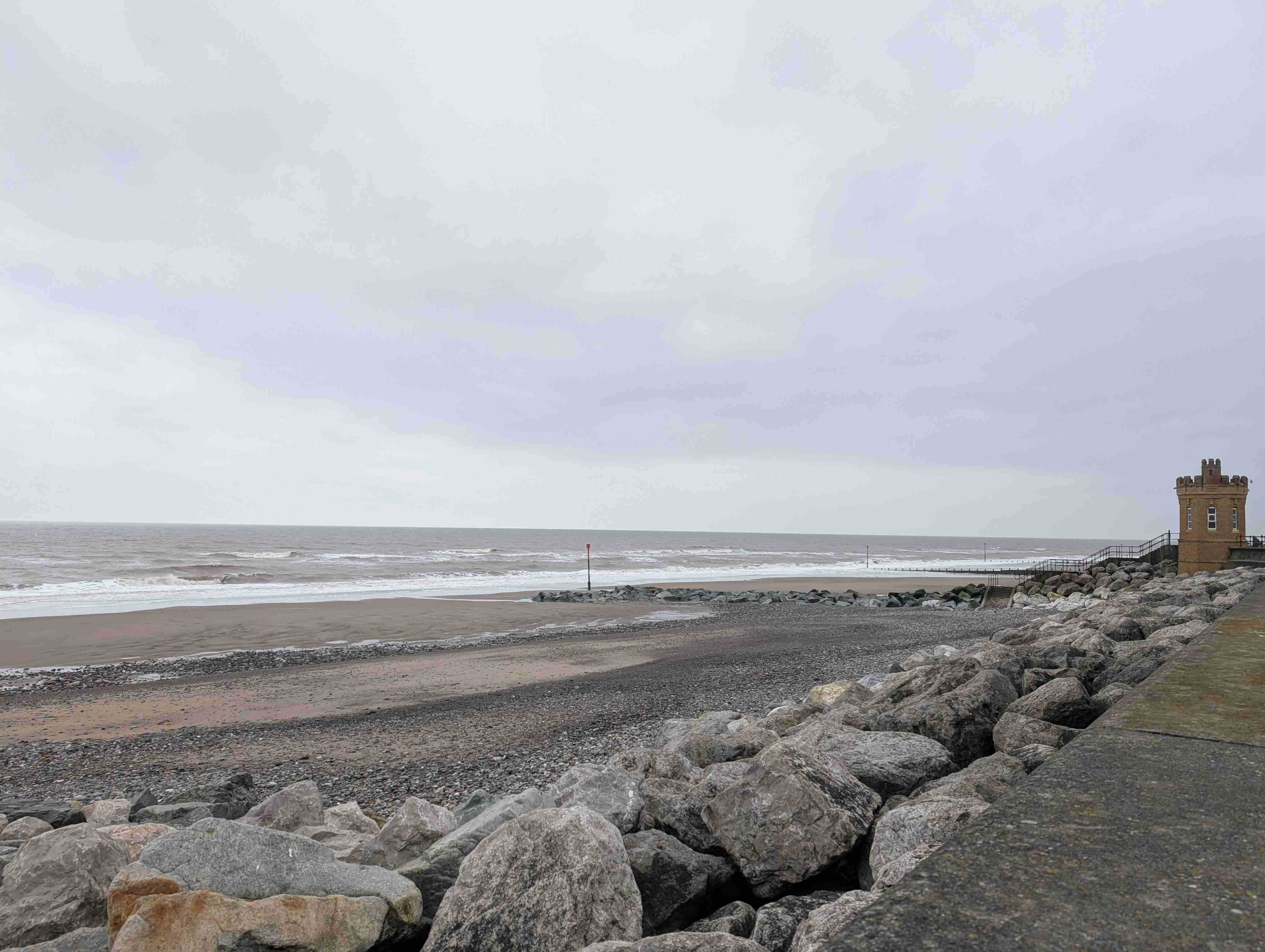
Coastal adaptation
The story might have a new chapter though? Under the Environment Agency’s new Coastal Adaptation Pilots, £18 million will be shared between coastal projects across the East Yorkshire coast as well as in Norfolk and Suffolk, to continue advanced coastal adaptation work.
This could mean projects helping communities take practical steps to prepare for coastal change, including moving community buildings away from at-risk areas, testing early warning systems that can alert residents to erosion events, and improving beach access and coastal tourism infrastructure.
This is due to start in April. But back on the coastline, Mag North got chatting to another Yorkshireman who had travelled over to Holderness from York to see the bunker.

Shifting sands
Paul Finney, from York, just couldn't resist the long drive over to the Holderness coast to witness the quiet and strange atmosphere around the bunker. “Technology has made these places redundant,” he said. “Would you as a person want to spend nights and days in there just listening or looking out to sea? The tensions are still there, but the technology's changed, so these things are really redundant aren’t they. It’s just like a lot of our history has ravelled up in periods of time.”
For now, the bunker rests in against the cold mud of the Yorkshire Coast and faces a daily battering from the North Sea. It is a concrete ghost from the Cold War, finally at peace in the very water it looked out on for almost seventy-years. Is it a reminder that our identity truly is built on shifting sands?
Images of the Holderness Coast: Nick Granville-Fall





