



Are you old enough to remember there was once a small holiday ritual that took place somewhere between the cream tea and the gift shop.
You found a postcard rack and turned it slowly. Waterfalls, castles, sheep, market squares, improbable sunsets. Perhaps a slightly faded aerial photograph in which every parked car appeared to have been manufactured by British Leyland.
You chose carefully. Not necessarily the most beautiful card, but the right one for the right person.
Then came finding (or buying) a pen, remembering a postcode and trying to say something meaningful in the narrow space not already occupied by an address. The weather was mentioned. The accommodation was assessed. Somebody was inevitably told that the food was “lovely”. You might have worried about the standard of your handwriting.
Finally, a stamp was found, the card was posted and there was every chance you would arrive home before it did.
It was inefficient, limited and rather wonderful.
Now, across the Yorkshire Dales and North York Moors, more than 180 visitor-facing businesses are attempting to bring the holiday postcard back.
The Picture Perfect campaign, created by the Tourism Network, is encouraging visitors to step briefly away from their screens and rediscover the pleasure of sending a handwritten message from North Yorkshire.
Restaurants, pubs, attractions, shops, guesthouses and self-catering accommodation providers are offering postcards, suggesting places to buy them and, in some cases, supplying the stamps too.
It's not a demand for wholesale digital abstinence. Nobody is confiscating phones at the county boundary or insisting that visitors navigate Wensleydale with an Ordnance Survey map and a compass.
It's just an invitation to pause.
At Homestead Kitchen in Goathland, postcards have been placed on tables for customers to use over lunch.
“We quickly noticed people were using them,” says Cecily Fearnley. “One little girl was writing to her grandparents.”
There's the entire argument for the campaign in one tiny scene.
The postcard is different from the photograph sent to the family WhatsApp group or the succession of holiday images placed on Instagram. Those forms of communication might reach (and potentially bore) dozens or hundreds of people at once. A postcard asks you to choose one.
It says: amid everything we saw and did, there was a moment when we sat down and thought particularly of you.
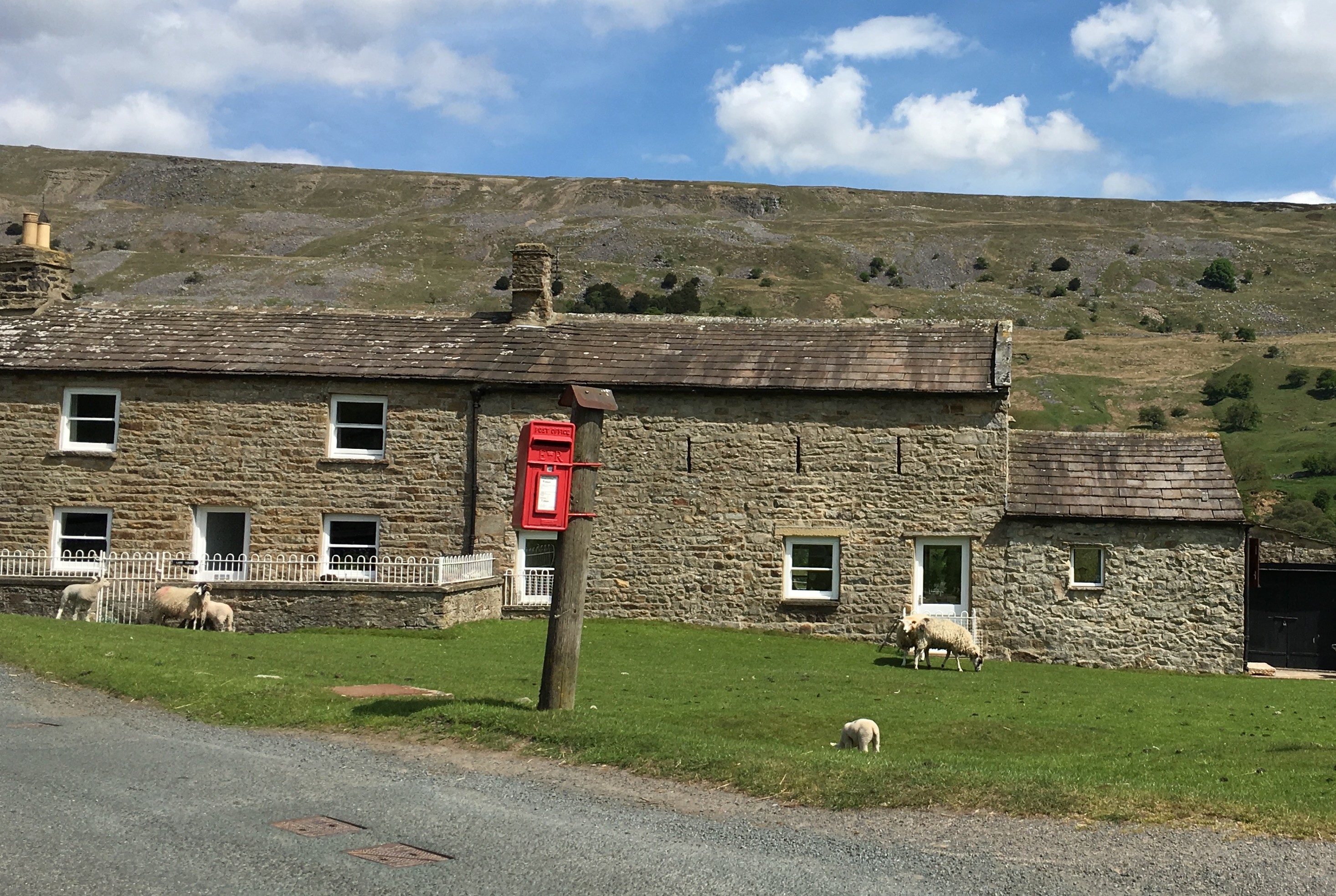
The message doesn't arrive instantly. It travels through sorting offices and mailbags, carried across the country before landing, unexpectedly, among the bills and takeaway menus. It can be propped on a mantelpiece, attached to a fridge or tucked inside a book and discovered years later.
Britain’s first postcards were introduced in 1870 as a quicker and cheaper means of correspondence. According to The Postal Museum, they were initially sent without pictures. The illustrated cards that followed would become both messages and miniature records of place: affordable little landscapes travelling from coastal resorts, towns and countryside into homes across the country.
One hundred and fifty-six years later, the postcard is beginning to feel almost rebellious.
Our holidays are now photographed, uploaded, captioned and responded to while they're still taking place. A view can be shared before we've properly looked at it. The pressure to document an experience can sometimes prevent us from fully inhabiting it.
Writing a postcard imposes a useful restriction. There's no delete key and very little room. You must decide what mattered.
At Town End Farm in Appleton-le-Moors, owners have found a neat way to connect the analogue ritual with the digital world. Their postcard, titled A Walk That Feels Like Home, features a local landscape and a QR code taking guests to one of the owner’s favourite walking routes.
This is a thoughtful combination: technology used not to replace the physical experience, but to lead people further into it.
Elsewhere, Kiplin Hall near Richmond has created a Silent Space in its garden where visitors can sit quietly and write their cards.
That might sound like a very modest visitor attraction. In 2026, however, a beautiful place in which nobody expects you to buy, swipe, stream or perform might be something approaching a luxury.
Susan Briggs of the Tourism Network believes the pleasure lies as much in writing the cards as receiving them.
“People are realising there’s a real joy in writing a thoughtful message and receiving proper post,” she says.
Postcards, she adds, are also finding a new audience among younger people at music festivals, where the business of sending a physical message has acquired a certain retro appeal.
There's an economic intelligence behind the nostalgia too.
Encouraging visitors to pause in a café or pub, browse in a village shop, purchase a locally produced card or seek out a postbox creates small points of contact with the people behind independent businesses. It turns tourism from a race between photographed landmarks into a slower encounter with a place.

For beautiful North Yorkshire, that's particularly appropriate.
The Dales and North York Moors have never been destinations best experienced at speed. Their appeal lies in lanes rather than motorways; in journeys interrupted by sheep, sudden weather and a view that requires you to stop the car. They invite the visitor to pay attention. A postcard does the same, doesn't it?
It also provides a quietly personal form of destination marketing. A social-media post is glanced at for a second before disappearing down a feed. A postcard from Goathland, Swaledale or Appleton-le-Moors arrives in somebody’s home carrying a message written by a person they actually know.
It is advertising, perhaps, but advertising driven by affection.
The Picture Perfect campaign is set to continue through the summer, with participating businesses plotted on an online map. Some are offering cards free of charge; others provide somewhere welcoming to sit and write.
All we need as visitors is a pen, an address and somebody we would like to surprise.
The message doesn't need to be profound. You can still mention the weather. You can report that the food is lovely. The writer might still return from North Yorkshire before the card reaches its destination.
None of that matters.
Because somewhere, a few days later, a person will hear something drop onto the doormat.
And they will know that somebody thought of them.





