



.jpeg)
It's too early, on this uneasy Friday morning, to pretend we know the full meaning of yesterday’s local elections. Counts are still being declared. Maps are still being redrawn. The inevitable hot-takes are still hardening into tomorrow’s received wisdom.
But some things are already clear enough.
Reform UK has had a significant night. Early results show the party making major gains across England, including in places that have long been treated as Labour or Conservative territory, with Hartlepool among its headline gains and striking advances reported in many northern and post-industrial areas. Labour has suffered serious losses in traditional strongholds, while the wider picture points not simply to a bad night for one party, but to the accelerating fragmentation of British politics.
For us in the North of England, this is not a surprise. It is a warning.
Only weeks ago, MagNorth reported from outside a Reform UK rally in Leeds, where protest, counter-protest, grievance and performative media collided in miniature. We argued then that the old idea of the North as politically settled - predictable, Labour, static - was over. Reform’s rise, we wrote, was being built in places shaped by deindustrialisation, stagnant wages, long-term underinvestment and declining trust in institutions. The conditions were real. The explanations being offered for them were often dangerously simplified.
This morning, that argument looks less like analysis and more like a diagnosis.
There will be, in the coming days, no shortage of attempts to explain what has happened. Some will be serious. Some will be self-serving. Some will reach instinctively for the nearest scapegoat. And that's where the danger lies.
Because in a politics increasingly fuelled by anger, the temptation is always to convert complexity into accusation. Long waits for housing become “migration”. Collapsing public services become “asylum hotels”. Low wages, insecure work, hollowed-out high streets and councils starved of capacity become the fault of people who arrived here with nothing, often after fleeing war, persecution or terror.
That must be resisted - clearly, calmly and without apology.
There must not now be a free-for-all in blaming refugees, asylum seekers and migrants for Britain’s problems. Not because immigration policy should be exempt from scrutiny. It shouldn't. Not because communities are wrong to feel pressure. They're not. But because a serious country does not ask the most vulnerable people within its borders to carry the blame for decades of political failure.
The North’s anger did not begin with the arrival of a family seeking sanctuary. It did not begin with a small boat in the Channel. It began in the slow violence of boarded-up civic life: the bus route cut, the youth centre closed, the GP appointment unavailable, the job that no longer pays enough, the council that can barely perform the basics, the repeated discovery that Westminster remembers the North most vividly when it wants a backdrop.
Populism thrives in precisely that space. As our Leeds piece argued, grievance fills a vacuum. Reform’s political skill has been to offer emotional clarity where established parties have offered managerial fog. Its promise is not just policy; it is a story. Someone has taken your country. Someone has jumped the queue. Someone is being looked after while you are ignored.
It's a powerful story. It is also a profoundly dangerous one when it points downward - at the refugee, the asylum seeker, the neighbour with an unfamiliar accent - rather than upward, at the structures that have produced insecurity in the first place.
We have been here before.
The Conservative “Hostile Environment”, accelerated from 2012 under Theresa May as Home Secretary, was designed to make life in the UK as difficult as possible for people unable to prove their immigration status. In practice, campaigners and watchdogs have documented a system that spread suspicion into everyday life - housing, work, healthcare, banking - and helped create the conditions for the Windrush scandal. The Equality and Human Rights Commission concluded in 2020 that the Home Office had failed to comply with public-sector equality duties in relation to hostile environment measures.
That history is relevant this morning because policies do not arrive in a vacuum. They're made possible by mood. By permission. By the slow normalisation of cruelty dressed up as control.
And the mood is hardening.
Recent reporting suggests that asylum and refugee policy is again moving toward greater restriction: shorter periods of leave, longer routes to settlement, tighter family reunion rules and an official language of deterrence. Whether such measures survive legal challenge or political scrutiny remains to be seen. But the direction of travel is unmistakable: make life more uncertain, more conditional, more precarious - and call it firmness.
Anyone who thinks this is abstract should read, or re-read, the 2019 Northern Soul piece on Refugee Tales III. In that review, the most haunting passage is not literary criticism at all, but witness. It describes a young man in a North East police custody suite who had not been accused of a crime, but had been detained over immigration “irregularities”; he lay in a cell asking for water, a shower, a phone call, and an explanation, before immigration officers arrived in black uniforms, handcuffed him and took him away to an undisclosed destination.
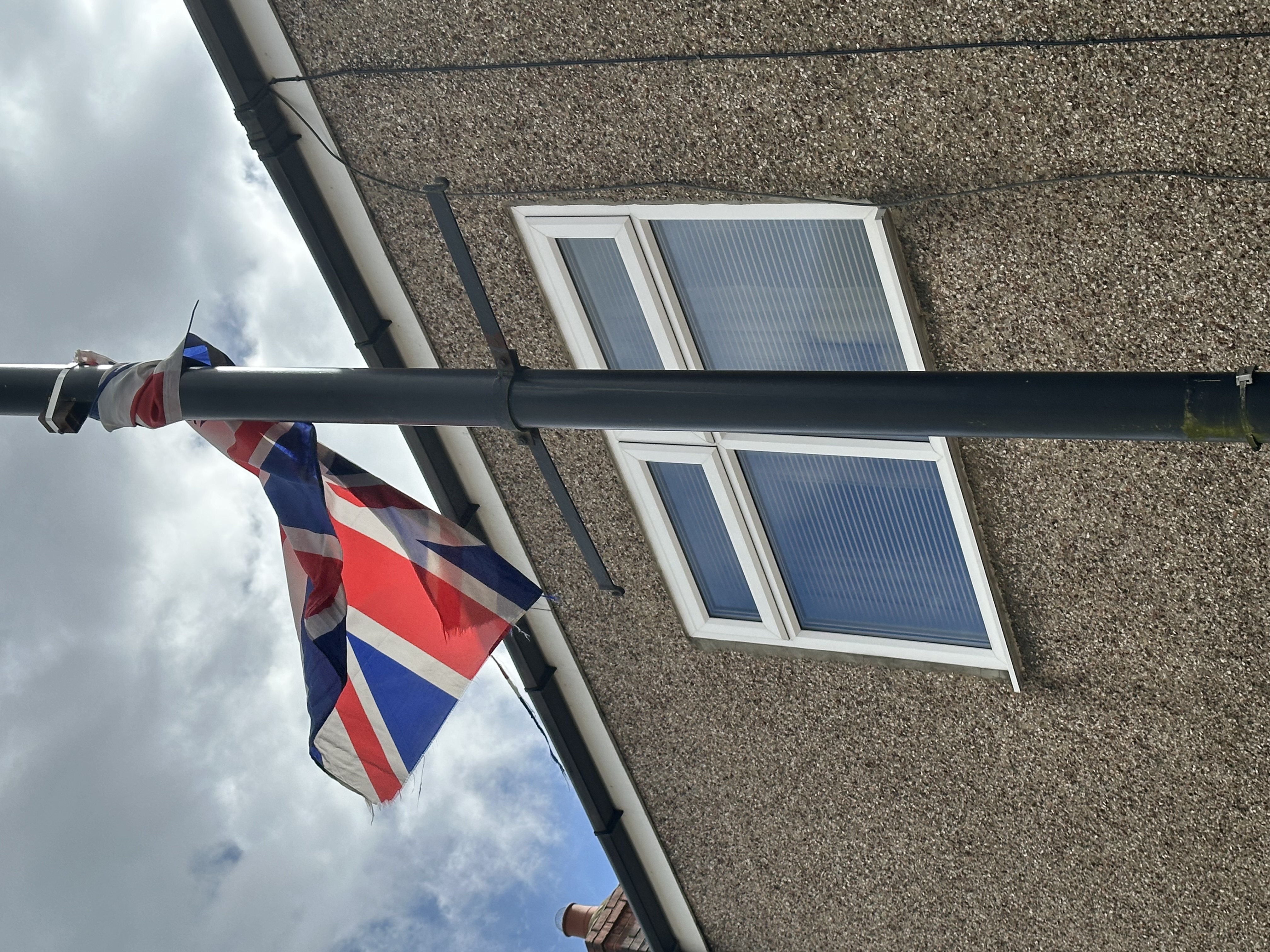
That's what the hostile environment looks like when it stops being a phrase.
It's not a slogan. It is a door that does not open. It is a human being asking, “When are they coming for me?” It's a bureaucracy that turns fear into procedure. It's the quiet removal of someone from public concern.
This is why this June’s Refugee Week now matters more, not less.
Refugee Week 2026 runs from 15–21 June. Its theme is “Courage” - a word that could hardly feel more urgent. Refugee Week is not a sentimental add-on to politics. It is part of the moral infrastructure we are going to need if the coming months are to be met with anything better than fear. It is the UK’s annual celebration of the contributions, creativity and resilience of refugees and people seeking sanctuary, aligning with World Refugee Day on 20 June.
Courage, in this context, is not only the courage of those who flee. It is the courage of those who welcome. The courage to listen when the easier option is to accuse. The courage to say that poverty is real without pretending refugees caused it. The courage to demand functioning public services without turning human beings into symbols of national decline. The courage to insist that compassion is not weakness, and accuracy is not elitism.
For MagNorth readers, this shouldn't be a remote appeal. It should be local, practical and immediate.
If there's a Refugee Week event near you, please attend it. If there's not, help create one. Invite speakers. Support local City of Sanctuary groups, refugee charities, food projects, legal advice centres, arts organisations and community groups doing the unglamorous work of welcome. Share stories that restore names, faces and histories to people too often discussed only as numbers. Challenge false claims when you hear them - not with sneering superiority, but with patience, evidence and humanity.
And ask harder questions of those seeking power.
If a politician tells you refugees are the reason you cannot see a dentist, ask them what they have done about NHS capacity. If they blame asylum seekers for housing shortages, ask them about social housebuilding, empty homes, private rents and local authority funding. If they invoke “our people” and “their people”, ask where that line is drawn, who benefits from drawing it, and what happens to a country that grows comfortable with exclusion.
These election results aren't an instruction to panic. Nor are they a reason to dismiss voters as ignorant or hateful. Many people who voted Reform will have done so from frustration, alienation and the entirely rational belief that the political class has failed them. To deny that would be foolish.
But to indulge every explanation offered by populism would be worse.
There is a difference between hearing anger and surrendering to it. There is a difference between acknowledging insecurity and licensing cruelty. There is a difference between understanding why people are drawn to simple answers and pretending those answers are true.
As Northerners, we deserve better than that.
The North deserves investment, honesty, good work, decent homes, reliable transport, safe streets, strong councils, cultural confidence and political language that treats people as adults. It deserves a politics capable of naming structural failure without hunting for outsiders to punish. It deserves leaders who can say both that communities are under pressure and that refugees are not the enemy.
This morning’s changing political map is worrying. It should be. But it is not destiny.
Maps can change again. Stories can change. The emotional weather of a country can change - but only if enough people refuse the easiest lies.
In our Leeds report, we ended with the warning that the atmosphere outside the arena would return: louder, sharper and increasingly mediated. This morning, it has returned through the ballot box. The task now is not simply to oppose it, but to build something stronger in its place.
That work begins with refusing scapegoats.
It continues by standing with those most likely to be targeted next.
And in June, during Refugee Week, it must be made visible - in our towns, our villages, our cities, our schools, our libraries, our theatres, our churches, mosques, synagogues, gurdwaras and community halls.
Because courage is contagious too.
And right now, we are going to need a great deal of it.





