



As if we don't have enough to do at MagNorth, we're just ruminating over how many actual chairs will be needed for the Edinburgh Festival Fringe this August. Thousands? More?
They'll be arranged in theatres, comedy clubs, rehearsal rooms, makeshift auditoriums and venues temporarily assembled in almost any building with a fire exit. People will sit in them to watch work that has been written, rehearsed, designed, funded, fretted over and finally made public.
The Manchester-founded, artist-led, boffin-type duo Short Supply are taking a different sort of chair.
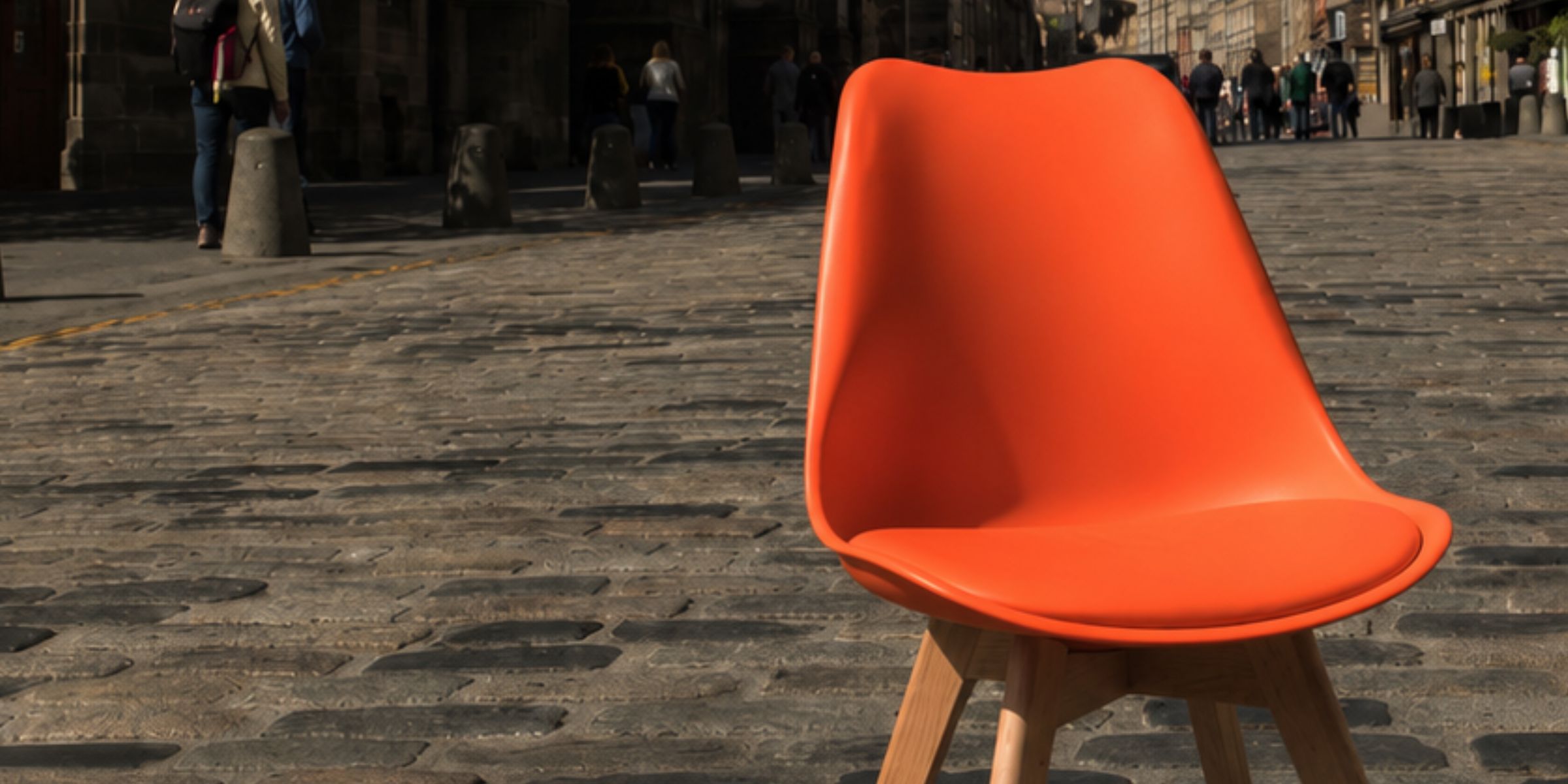
It's orange. There is only one of it. And the person who sits down won't be asked what they have made.
They'll be asked: What’s an idea you’ve always wanted to try, but haven’t yet?
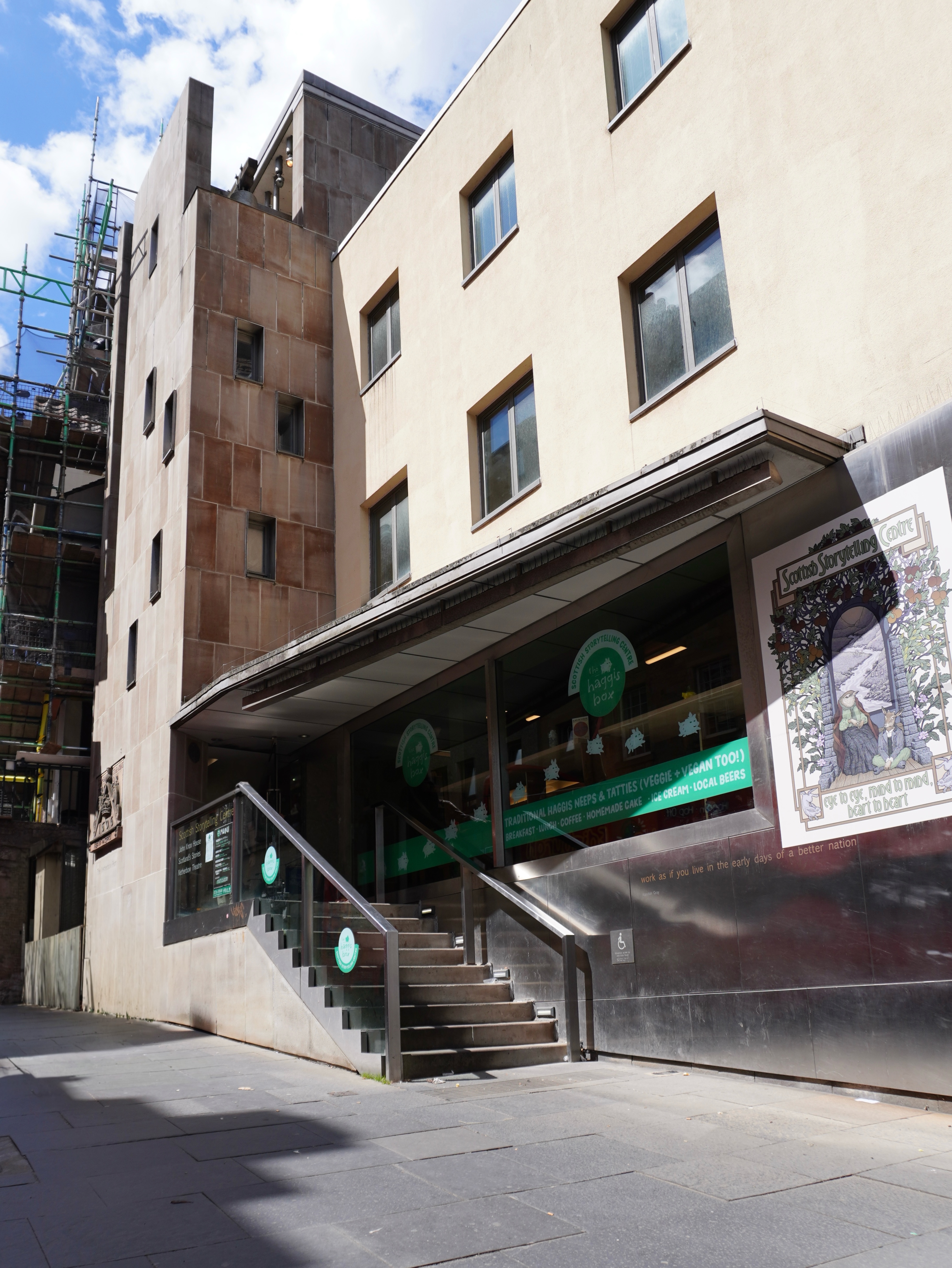
That is Step One - a free, live artwork and public conversation created by Mollie and Rebekah “Bek” Balshaw, taking place daily at the Scottish Storytelling Centre from 7 to 22 August.
No polished pitch is required. No evidence of feasibility. No funding strategy, business plan, preliminary sketch, professional biography or explanation of how the proposal might satisfy three measurable cultural outcomes.
Just the idea.
.png)
It might be a book that has existed only as a filename. A business repeatedly described to friends but never registered. A performance imagined on the bus home. A letter not sent. A conversation postponed. A song, exhibition, journey or life change that has been waiting in a Notes app for conditions that never quite arrive.
Visitors are going to be invited to sit, pause and say that idea aloud. Across the Fringe, their contributions will form a growing archive of unfinished ambitions: part artwork, part collective testimony and part record of the private moment before something begins.
There is another experiment contained within it. Most short-form interview series begin online and move into live venues only after attracting an audience. Mollie and Bek are reversing that journey.
They believe Step One might be the first ongoing short-form social interview series to create its entire inaugural season through live, face-to-face encounters at the Edinburgh Festival Fringe. The people sitting in the orange chair will not simply be attending an established show. Collectively, they're going to make Season One.
The project is conceived and interchangeably hosted by Mollie and Bek as a queer married artist duo. There's no single presenter positioned as expert, benefactor or hero. The authority - and the attention - remains with the person in the chair.
At a festival built from people presenting their finished work to the world, Short Supply are making room for everything that hasn't yet acquired a form. Isn't that beautiful? That might just be the more revealing story.
MagNorth first talked about Mollie and Bek’s 100 Ideas project earlier this year.
That gloriously unruly experiment takes 100 sidelined ideas and gives each one the chance to exist. There have been 30-second sculptures made in IKEA, paintings discovered rather than painted, miniature galleries, decision coins and an exhibition installed in a fridge.
The work is funny, intentionally low-fi and deeply serious about the forces that prevent people from creating.
Our piece, The Art of Not Waiting, considered what happens when artists stop waiting for permission, validation and perfect conditions and simply try the thing.
Step One travels further in reverse.
It asks what must happen emotionally before a person can act on that principle. Before the work is attempted, someone must acknowledge that they want to make it. They might then have to say so in front of another human being.
That can involve a peculiar kind of exposure.
“Step One develops many of the ideas explored in MagNorth’s previous Short Supply feature, The Art of Not Waiting,” Mollie and Bek explain.
“That conversation looked at the need for artists to stop waiting for permission, validation and perfect conditions. Step One explores what happens emotionally before someone can act on that principle: the hesitation, vulnerability and uncertainty of admitting an idea exists and taking its smallest possible first step.”
We tend to talk about beginning as though it's a practical matter.
Buy the notebook. Set the alarm. Register the domain name. Send the email. Write 500 words before breakfast. Break the large objective into a series of achievable tasks and reward yourself with a herbal tea.
This advice isn't necessarily wrong. It simply assumes that procrastination is a problem of organisation. Often, it is a problem of vulnerability. (We know.)
An idea kept private can't be rejected, ridiculed or exposed as inadequate. It can't fail to attract funding. It can't reveal the gulf between what someone imagines and what they presently know how to make.
The unstarted idea retains its perfection because reality hasn't been allowed anywhere near it.
Beginning means putting that perfection at risk.
Mollie knows that hesitation personally. For years, they carried the idea of making conversation part of their creative practice - and of allowing themselves to become more visible within it.
“We’re used to building platforms for other artists, so it often felt safer and more useful to remain behind the scenes,” they say. “I worried that stepping forward as a host or interviewer might look self-important, that I hadn’t earned the right to do it, or that nobody would care what I had to ask.”
Step One requires Mollie to begin before that uncertainty's been resolved.
“The fear hasn’t disappeared; the chair is there anyway.”
For Bek, the postponed idea was taking Short Supply beyond the visual-arts spaces whose conventions they already understood - and into the enormous, conspicuous machinery of the Edinburgh Fringe.
“It remained a ‘one day’ idea because Edinburgh is so public, ambitious and outside our usual world,” she says. “I was frightened we would arrive among comedians and theatre-makers who understood all the rules and discover that we didn’t belong there.”
Eventually, that fear became part of the reason to go.
“If we’re going to ask other people what they haven’t yet begun, we can’t wait for somebody else to certify us first.”
%20Rebekah%20(right).jpg)
Not everybody arrives at the threshold of an idea with the same resources.
Some people grow up being told that their curiosity is important. They're surrounded by adults who know how creative careers work, where opportunities are advertised and how to recover when an application is unsuccessful. They learn early that unfinished thinking isn't embarrassing. It's an utterly essential part of making something.
Others become highly skilled at waiting.
They wait until they possess the right qualification, language, equipment, network or introduction. They wait to become financially secure. They wait until the caring responsibilities ease, the paid work becomes less exhausting or somebody with authority confirms that their idea might be worth pursuing.
They wait to be invited into a room whose door appears to have been designed for someone else.
This is one reason Step One matters beyond the personal stories it will collect. (We are sorry/not sorry for our ongoing over-use of the verb Matters. But it matters.)
Confidence's often treated as an individual personality trait - something fortunate people possess and hesitant people should learn to manufacture. But confidence also has a structure. It's produced by money, education, representation, geography, security, networks and repeated experiences of being welcomed rather than tested.
The question isn't just why one person begins while another remains frozen. It's who's been taught that beginning belongs to them.
Short Supply has spent seven years working directly with the consequences of that inequality. Founded in 2019, it creates paid pathways into creative careers for early-career and underrepresented artists, particularly people from working-class, queer, marginalised and regional backgrounds.
The organisation reports that it's supported more than 2,000 artists, worked with over 100 partners and venues and paid £120,000 directly to artists. Its digital community now exceeds 100,000 people.
Those figures give essential context to the orange chair.
Mollie and Bek aren't approaching hesitation as a pair of visiting motivational speakers, promising that sufficient positivity can overcome structural disadvantage. Their wider work is concerned with fair pay, transparent opportunities, professional skills and sustainable creative careers outside London.
They understand that encouragement doesn't pay an artist’s rent. They also understand that an opportunity can't support an idea somebody has become too frightened to voice.
After seven years working with emerging artists, Mollie and Bek have learned that feeling entitled to begin has remarkably little to do with talent.
“It is often produced by your circumstances: whether you have money, time, contacts, a safety net, familiarity with institutions, or previous experience of being treated as though your ideas matter,” they say.
Then comes a distinction that should be written above the door of every cultural funding body:
“Some people are allowed to treat their first attempt as a draft. Others feel it has to be a final exam.”
For somebody with money, time and supportive networks, an unsuccessful experiment might be disappointing. For somebody working without those protections, the consequences can be far more significant.
“If failure might cost you rent, energy, confidence or one of very few opportunities, waiting for funding or an invitation isn’t necessarily a lack of ambition - it can be a perfectly rational response to unequal risk.
“Starting is not equally cheap.”
That sentence changes the tenor of the conversation. It prevents Step One from being mistaken for another exhortation to conquer fear through individual willpower. Sometimes hesitation is not irrational self-doubt. It is an informed understanding of what failure may cost.
“The problem comes when funding, qualifications and selection begin to feel like permission,” Mollie and Bek continue. “Funding can make an idea possible, but it shouldn’t be what makes that idea legitimate.”
Much of Short Supply’s work has involved reminding artists that they can make one small move before an institution chooses them. It's allowed to be private, imperfect and incomplete.
“Beginning is often how you discover what no qualification or application form could have told you.”
.jpg)
On the Step One webpage, Short Supply makes a deceptively simple observation: “So many ideas never fail because they were bad. They fail because they were never started.”
It's tempting to read that as an encouraging slogan. It's more troubling than that.
We have no meaningful way of measuring everything a culture loses because it never gets going.
Arts organisations can count applications, commissions, ticket sales and participants. They can monitor whose work reaches a gallery, festival or stage. They can't count the people who never apply because they've already decided the opportunity isn't meant for them.
There is no archive of the books abandoned before their first sentences, the businesses discussed but never opened or the artworks quietly judged too strange, small, regional, unfashionable or difficult to explain.
There is no rejection letter because nothing was submitted. No closure notice because nothing opened. No bad review because nothing entered the world far enough to be disliked.
From the outside, these ideas leave no evidence. Privately, they can remain present for years.
They return while someone is doing the washing-up. They occupy a saved browser tab. They appear whenever another person makes something similar, producing the painful recognition that the impossible idea was possible after all - only somebody else had begun it.
Step One doesn't promise to convert every confession into a finished project. That would be dishonest, patronising and, frankly, exhausting. Some ideas will remain unfinished. Some should. Not every dream requires a productivity regime.
The artwork does something more modest and perhaps more humane. It says that an idea doesn't have to prove its future value before it is worthy of attention.
For a few minutes, somebody is going to listen. We all just want to be heard. Don't we?
The Fringe is the perfect setting for this conversation because it represents creative beginning and creative excess at the same time.
It's a vast demonstration of people having taken the leap. Scripts have left laptops. Performers have moved beyond rehearsal. Companies have raised money, hired venues and placed their work before strangers.
But Edinburgh's also a place of formidable pressure.
Artists arrive among thousands of competing shows, posters and promises. Visibility costs money. Accommodation costs a great deal of money. Participants have to persuade audiences, programmers, journalists and the algorithm that their work deserves attention.
Even the language of the festival is about arrival: the debut, the breakthrough, the next big thing.
Into that machinery of cultural visibility, Mollie and Bek are carrying an orange chair and asking about what remains hidden. That's a bit subversive - and we love subversive.
Step One doesn't demand that a person promote themselves. It doesn't ask what they'e already achieved, where they trained or what professional outcome might follow. It gives value to uncertainty at a festival largely organised around declarations of confidence.
At a Fringe full of people saying “come and see what I have made”, the chair asks:
“What have you not made - and why?”
The answer could be funny. It might be wildly ambitious. It might be so ordinary that its owner feels embarrassed to say it.
And that embarrassment is part of the work.
There's an important distinction between collecting people’s answers and properly witnessing them.
A question such as this can uncover more than dormant artistic projects. Someone might describe leaving a job, contacting an estranged relative, changing their identity, starting again or doing something they've been afraid even to formulate privately.
The chair may look playful, but sitting in it could become unexpectedly intimate.
Short Supply says that filming will take place only with consent. That practical safeguard is important, particularly in a culture that frequently converts vulnerability into content before the person sharing it has understood what they have given away. But the more interesting responsibility could be emotional.
If somebody says an idea aloud for the first time, does the listener encourage it? Ask questions? Protect it from immediate practicality? Does recording the idea alter it? Does the act of being heard create an expectation that something must now happen?
And what if nothing does?
Step One appears to leave space for that possibility. This isn't a public accountability booth. Visitors aren't being recruited into a challenge that will email them in six months demanding evidence of progress.
The first step might simply be the sentence. That still counts.
The couple feel a genuine responsibility towards those encounters - but not, they stress, a responsibility to make somebody’s idea happen for them.
“That would position us as experts or benefactors and take the authority away from the person sitting in the chair,” they explain.
Their first responsibility is to the participant.
“They don’t owe us vulnerability, profundity or a neat ending. We have to listen without rushing to solve the problem, sensationalising what they’ve shared or editing an uncertain moment into a tidy motivational success story.”
When Mollie or Bek asks, “So, what’s Step One?”, the answer has to belong to the person in the chair. It can't become an instruction prescribed by the hosts or a conclusion manufactured for a camera.
“Ideally, they leave feeling that the idea belongs to them a little more firmly than it did when they arrived. Sometimes saying it aloud will be the first step.
“We would always rather protect the integrity of that moment than extract the perfect clip from it.”
In an online culture that continually rewards disclosure, compression and emotional resolution, that may be one of the project’s most important principles. Not every uncertain human moment needs to be converted into an inspirational narrative. Sometimes attentive listening is the work.
Before leaving for Edinburgh, Mollie and Bek are inviting people across Manchester and the wider North West to contribute their own unfinished ideas.
Selected responses will travel to the Scottish Storytelling Centre and become part of the growing archive during the Fringe. That is set to create a rather lovely reversal of the usual cultural journey.
Northern artists and organisations are often expected to travel elsewhere in search of recognition. Work is validated after it reaches London, Edinburgh or another established centre of attention.
Here, the precious cargo isn't a finished northern success story.
It is our uncertainty.
Manchester will send the books it hasn't written, the bands it hasn't formed, the businesses it hasn't opened and the ridiculous plans its people haven't quite dared to mention.
Perhaps there's regional confidence in being honest about the absence of confidence.
Short Supply describes itself as building creative careers outside London. Its founding belief is that regional talent deserves national routes. Step One carries that argument to Edinburgh, but it also complicates the familiar language of pipelines, progression and professional development.
Before someone can travel along a road, they must believe they've got the right to set off.
So, we are going to ask the question too:
Not the sensible answer. Not the one that best matches your current employment, experience or public identity.
The other one.
The documentary you keep imagining. The community garden. The night class. The poem. The shop. The exhibition. The campaign. The move. The apology. The invention that might be useless but continues to bother you.
You don't need to explain how it would work.
You don't need to persuade us that it is good.
You don't need to promise that you will begin tomorrow.
For the moment, just allow it to exist outside your own head.
Selected responses from across the North will be taken into the Step One archive during the Edinburgh Fringe. They can be anonymous. The important part isn't who you are or what you've already achieved.
It is the thing you haven't done yet. Do it HERE
There's a danger in writing about creative courage that structural problems become repackaged as personal ones.
Artists can't positive-think their way out of inadequate funding, closed networks, unpaid labour, inaccessible buildings, prejudice or the continued concentration of cultural power. Northern talent doesn't need another lecture about resilience. It has been surviving on resilience for far too long.
Nor should scrappiness become an excuse for institutions and governments to withhold proper investment. Short Supply’s own work demonstrates that artists need money, opportunity, knowledge and professional support - not just positive reinforcement.
But structures and emotions aren't separate. A closed door encountered often enough can eventually remain closed inside a person’s imagination, even when another entrance becomes available. Someone who has repeatedly been excluded might begin excluding themselves in anticipation.
This is why the smallest acts of welcome matter.
A transparent application form matters.
A paid opportunity matters.
A person saying “that idea is interesting” matters.
And perhaps, occasionally, one orange chair matters. Or actually might be a catalyst.
Our last Short Supply feature concluded that perfect conditions were overrated. Step One doesn't disagree. It just acknowledges how frightening imperfect conditions can feel when the idea being risked belongs to you.
Beginning is rarely the confident moment it appears to be in retrospect.
It's often awkward and provisional. It might not look like making anything. It may be a conversation, a note written down or a sentence offered to two strangers in the middle of Edinburgh.
The Fringe will be filled with finished shows this August.
Mollie and Bek are making space for what comes before them: hesitation, hope, embarrassment, longing and the possibility that an idea might become slightly more real once somebody else knows it exists.
One chair.
One question.
One unfinished thought leaving its hiding place.
Sometimes, that is how the whole thing starts.
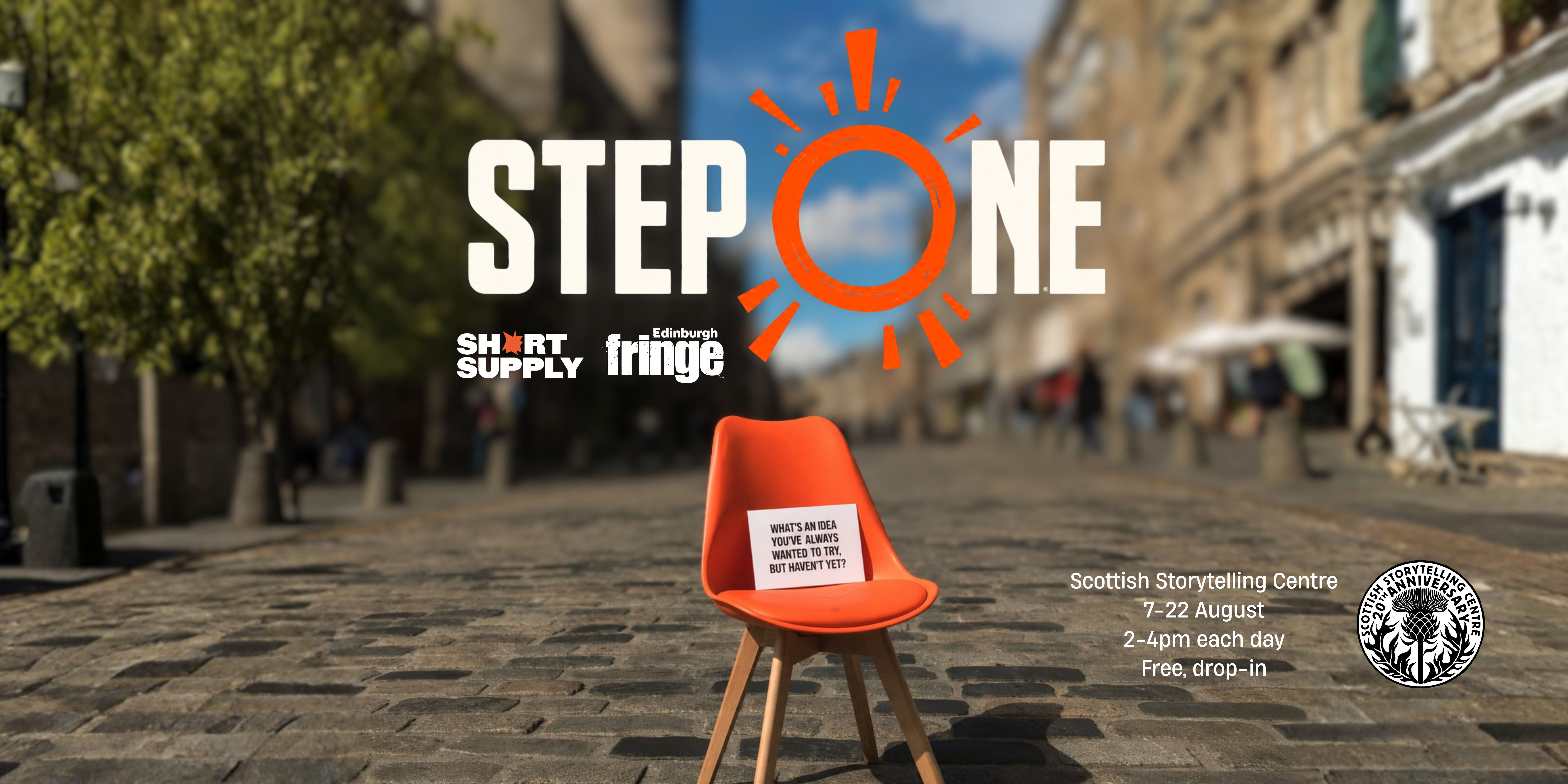
Step One — Short Supply
Scottish Storytelling Centre, Edinburgh
7–22 August 2026
2–4pm daily
Free and drop-in HERE
Header: Short Supply's 'Step One' chair on Edinburgh's Royal Mile





