



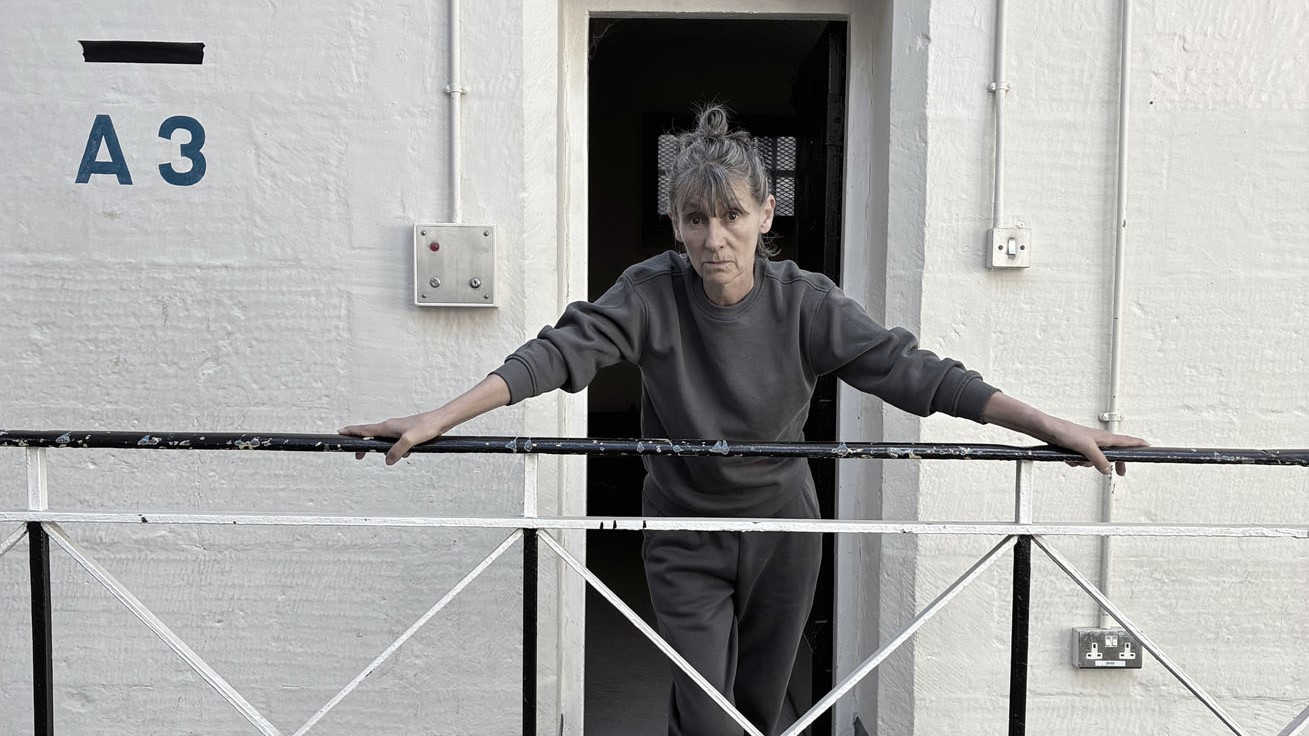
There is an appealing neatness to this story. Christine Mackie, familiar to millions as Coronation Street’s long-serving Dr Gaddas, will appear on stage alongside her daughter, the actor Lois Mackie, for the first time. Better still, they will be playing a mother and daughter. It is the kind of casting announcement capable of almost writing its own headline.
Except that the mother and daughter at the centre of Rona Munro’s Iron are not sharing an easy family history.
Fay is serving a life sentence for murdering her husband with a kitchen knife. Fifteen years into that sentence, her daughter Josie arrives at the prison to see her. Raised by her paternal grandmother, Josie has no meaningful memory of her father, the killing or the mother from whom she has been separated for most of her life.
She has come looking for answers.
Fay, meanwhile, has survived incarceration partly by learning how to contain them.
What follows is not a sentimental reunion, but a tense and psychologically intricate encounter between two women connected by blood and divided by almost everything else: experience, memory, guilt, loyalty and the competing versions of a past that neither can safely leave alone.
For Christine and Lois Mackie, the production creates an unusual artistic proposition. They are not simply portraying a mother and daughter; they are bringing their own intimate knowledge of that relationship into a play built around its violent disruption.
“It has always been on my bucket list to act opposite my brilliant mother,” says Lois. “I couldn’t be more thrilled that it will be on such a juicy bit of theatre as Iron.”
Juicy may sound like an unexpectedly cheerful description of a drama involving murder and imprisonment, but it captures something important about Munro’s writing. This is not a static prison story in which one character confesses and another listens. Its emotional ground keeps moving.
The characters seek closeness and retreat from it. They test one another, protect themselves and attempt to discover how much truth the relationship can withstand. Each new piece of information carries with it the possibility of connection — and the threat of another separation.
“Rona Munro’s characters are so complex,” Lois continues, “and they complement each other throughout the twists and turns of this story. It’s an emotional rollercoaster and I can’t wait to share it.”
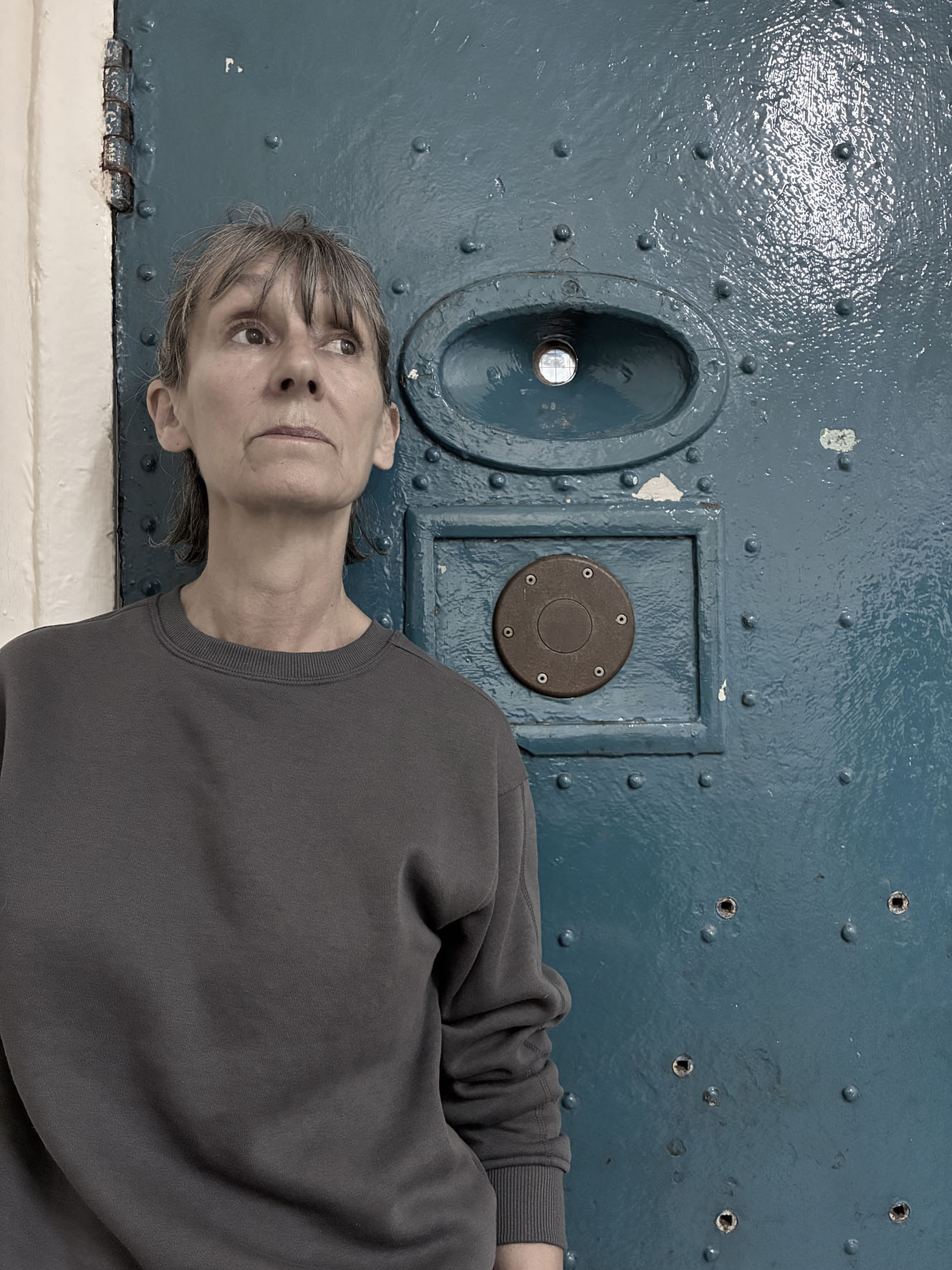
First performed at Edinburgh’s Traverse Theatre in 2002, before transferring to the Royal Court in London, Iron is ostensibly contained within the severe physical architecture of a prison. Yet its deeper confinement is emotional.
Fay is incarcerated by the state, but Josie is also living within boundaries created by an event she cannot remember. Her childhood has been constructed around an absence: an absent father, an absent mother and an explanation that has never fully belonged to her.
The prison therefore becomes more than a setting. It is the physical expression of everything standing between the pair.
There are locked doors, rules and guards, but there are also the barriers produced by shame, uncertainty and the passage of time. Fay cannot simply resume being Josie’s mother because motherhood has continued without her. Josie cannot recover the relationship they might have had because that version of their lives no longer exists.
Their visits carry the almost impossible burden of trying to create something new while excavating what was lost.
“Iron is so beautifully written,” says Christine, “and although it seems straightforward on the surface, it has hidden depths. All four characters, contained within the confines of the prison, have no choice but to confront the truth.”
That truth is not necessarily liberating.
We are fond of the idea that disclosure heals: that families become healthier when secrets are exposed, silences are broken and previously suppressed experiences are finally spoken aloud.
Munro’s play asks a more troubling question. What happens when the truth arrives too late to repair anything? What if knowing does not release a person from the past, but binds them to it more tightly?
For Josie, the search for information is also a search for identity. To understand Fay’s crime is to learn something about her parents, her childhood and perhaps herself. But the closer she comes to her mother, the more complicated that inheritance becomes.
Fay, meanwhile, must decide whether motherhood now means revealing the past or continuing to protect her daughter from it.
That tension gives Iron its force. Both women may believe they are acting out of love while moving in opposite directions.
For Christine and Lois, the production marks the first time they have performed together on stage, although their professional lives have long overlapped.
Christine trained at Rose Bruford and has worked extensively across northern theatre, appearing at venues including Manchester’s Royal Exchange, the Bolton Octagon, Oldham Coliseum, Shakespeare North Playhouse and The Dukes in Lancaster. Her television career has ranged from Clocking Off, Fat Friends and Downton Abbey to Waterloo Road, Emmerdale and her recurring role as Dr Gaddas in Coronation Street.
Lois trained at the Royal Conservatoire of Scotland. Her stage credits include Miss Julie, Romeo and Juliet, Lifeboat and Blackout Songs, while her screen work includes Coronation Street, Emmerdale, Hollyoaks and the feature film Finding Emily.
Their collaboration is also part of a longer family and creative story.
Best Girl Productions was established in 2019 to take Christine’s first play, Best Girl, performed by Lois, to the Edinburgh Festival. The production received four-star reviews and played to sold-out audiences before touring venues in the North West.
Christine’s later play KIN, supported by Arts Council England, was staged in 2022 and toured again in 2024, visiting The Dukes, Hull Truck Theatre, Theatr Clwyd and HOME Manchester.
There is something characteristically northern and determined about that journey: creating the work, building the company, developing relationships with regional venues and taking serious theatre to audiences beyond the usual metropolitan centre of gravity.
Best Girl Productions describes its purpose as making high-quality theatre while promoting kindness and creativity. At first glance, Iron might appear an unexpectedly severe vehicle through which to pursue those principles.
Yet kindness in theatre does not have to mean comfort.
It can mean giving difficult stories sufficient time and attention. It can mean refusing to reduce women to familiar categories: the criminal, the victim, the abandoned daughter, the dangerous mother. It can mean allowing characters to remain complicated even when audiences might prefer a clearer moral verdict.
Fay has committed an appalling act. But Munro is interested in what remains of a person after the criminal justice system has defined her by the worst thing she has done.
Josie has been harmed by that act without having witnessed or understood it. Her meeting with Fay is therefore not simply a question of whether she can forgive her mother. Before forgiveness can even be contemplated, she must work out who her mother is - and whether anything Fay tells her can be trusted.
Women under observation
The two women will be joined by Jamie Smelt and Ellaney Hayden as the prison officers whose presence extends the play beyond a private family confrontation.
A prison visit can never be entirely private. Conversation takes place within an institution, under supervision and according to rules imposed by others. Every tentative movement towards intimacy happens in a space designed around control.
Smelt’s extensive northern credits include work with Red Ladder Theatre Company, Northern Broadsides, York Theatre Royal and the John Godber Company, alongside appearances in Brassic, The Bay, Ackley Bridge and The Full Monty.
Blackpool-born Hayden trained at Manchester’s Arden School of Theatre and has worked at The Lowry, Manchester International Festival and Hope Mill Theatre, as well as appearing in Casualty and Brassic. She is also developing an original television pilot set in Blackpool.
The production is directed by Sam Holland-Bunyan, recipient of the 2024 Peter Cheeseman Award for Exceptional Development and Outstanding Achievement. Her recent directing work includes productions at Manchester’s 53two, the Royal Exchange Studio and venues in London and Dorset.
The creative team also includes designer James Mackie, lighting designer Katy Errington and stage manager Sabine Sulmeistere.
The presence of another Mackie within that team makes Iron feel even more like a family endeavour - although nobody involved is likely to mistake it for a comfortable one.
“I’m very excited about the show,” says Christine. “The whole creative team is so talented, and it’s a real privilege to work with my daughter Lois on stage for the very first time.”
Privilege, in this case, will require both actors to enter some painful territory together.
The production’s fascination will not lie in trying to spot where Christine and Lois end and Fay and Josie begin. Acting is not autobiography, and real-life relationships do not provide shortcuts through complex drama.
What their relationship may provide is a particular awareness of the things mothers and daughters communicate without language: the tiny recalibrations of affection, authority, irritation, protectiveness and independence that exist beneath a conversation.
In Iron, those ordinary mechanisms have been denied fifteen years in which to develop.
Every glance must therefore negotiate the distance between biological intimacy and practical estrangement.
More than two decades after its first performance, Munro’s play retains an uncomfortable relevance.
The prison sentence belongs formally to Fay, but the consequences of imprisonment spread far beyond the person in the cell. Children grow up elsewhere. Families rearrange themselves around an absence. Relationships become dependent upon visiting hours, institutional permission and the ability to keep returning to a place designed to remind everyone involved of the offence.
Iron does not need to become a policy lecture to make that reality visible.
Instead, it asks audiences to remain in the visiting room with two women who cannot recover their lost years and cannot move forward without disturbing them.
The play’s title suggests strength, rigidity and confinement. It evokes the material of bars and gates, but also the emotional armour required to survive behind them.
Fay has had fifteen years to harden.
Josie arrives believing that questions might penetrate that armour. She may discover that the defences keeping her mother at a distance are also the things that have allowed her to endure.
And at the centre of this new production will be two actors confronting that rupture while carrying an entirely different mother-daughter history of their own.
That is the irresistible story here - not simply that Christine and Lois Mackie are related, or that viewers may recognise one of them from the cobbles of Weatherfield.
It is that they have chosen, for their first performance together, a play in which motherhood offers no protection from harm, love does not guarantee honesty and reunion may be only the beginning of another kind of sentence.
Iron is at HOME Manchester from 15–19 September 2026, Hull Truck Theatre’s John Godber Studio on 23–24 September, and The Dukes, Lancaster, from 30 September–3 October.





