



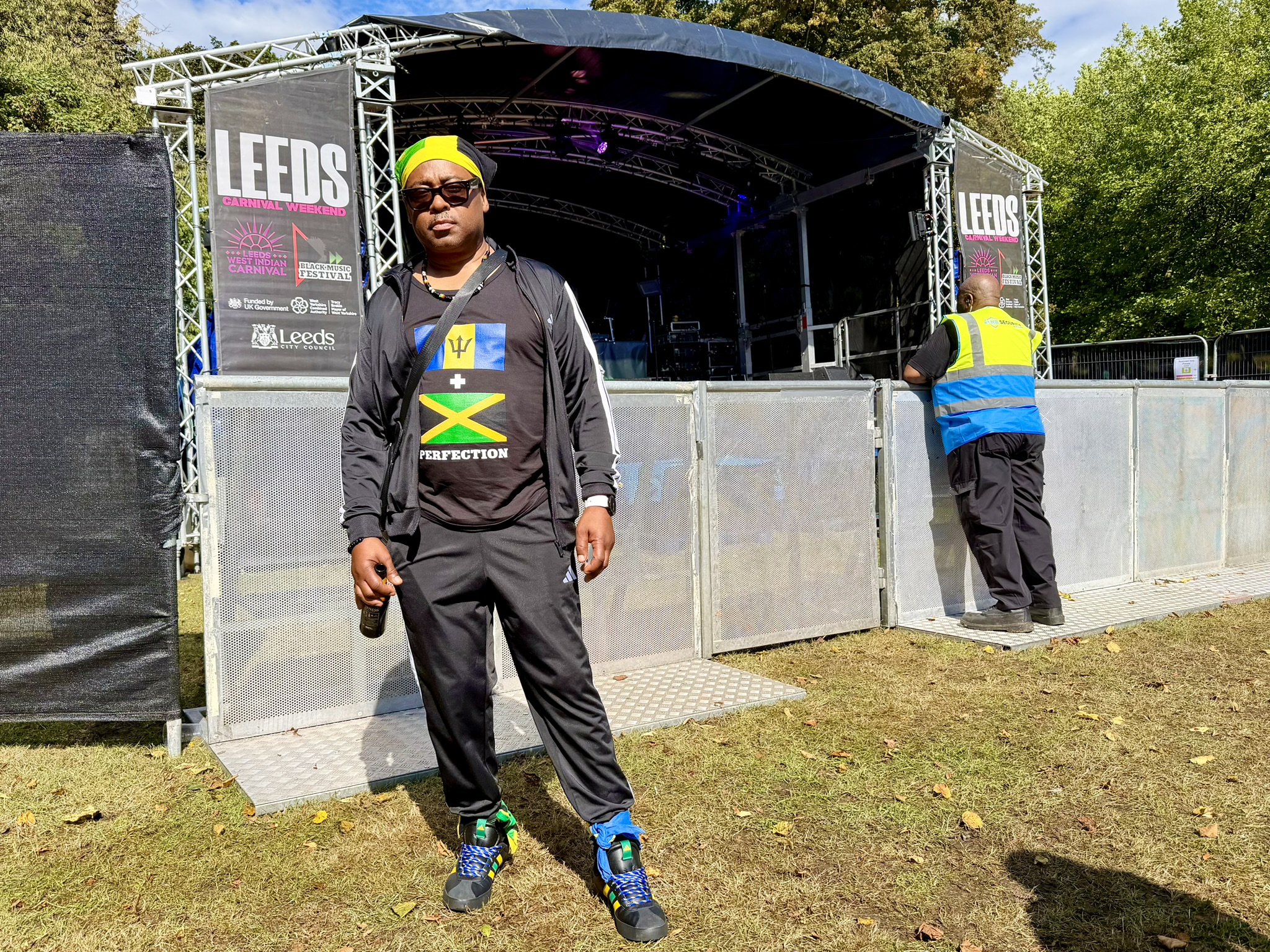
We were standing in Potternewton Park, close to the stage, beneath one of those improbable late-summer skies which make the North look as though it's been saving up all its blue for the Bank Holiday.
Ricky had travelled from London. Behind him, the stage was waiting, the barriers were up and Leeds West Indian Carnival was steadily assembling itself around us.
“Why are you here,” we asked, “and not at Notting Hill?”
“Notting Hill? It’s like sardines,” he said. “And it’s so expensive.”
Then came his verdict on the alternative he had chosen:
“Leeds is wicked.”
There are people who spend all year preparing for Carnival: designing, sewing, rehearsing, organising, cooking, driving and finding ways of moving speakers of improbable dimensions through the streets of Chapeltown.
Then there are those of us who just arrive on the day.
We come through the gates under the trees and enter a temporary city made from food stalls, flags, steel barriers, stages, trestle tables, sound systems, cool boxes and people. The air smells of smoke, spice, fruit and hot oil. Somewhere, bass is travelling through the ground. Everywhere, somebody is looking for somebody else.
Near the entrance, two women were selling fruit and rum punch. Gina and Alicia had travelled from Birmingham to be part of the day.
“This is on the house,” they told me, handing over a drink. “No alcohol - but you’ll love it.”
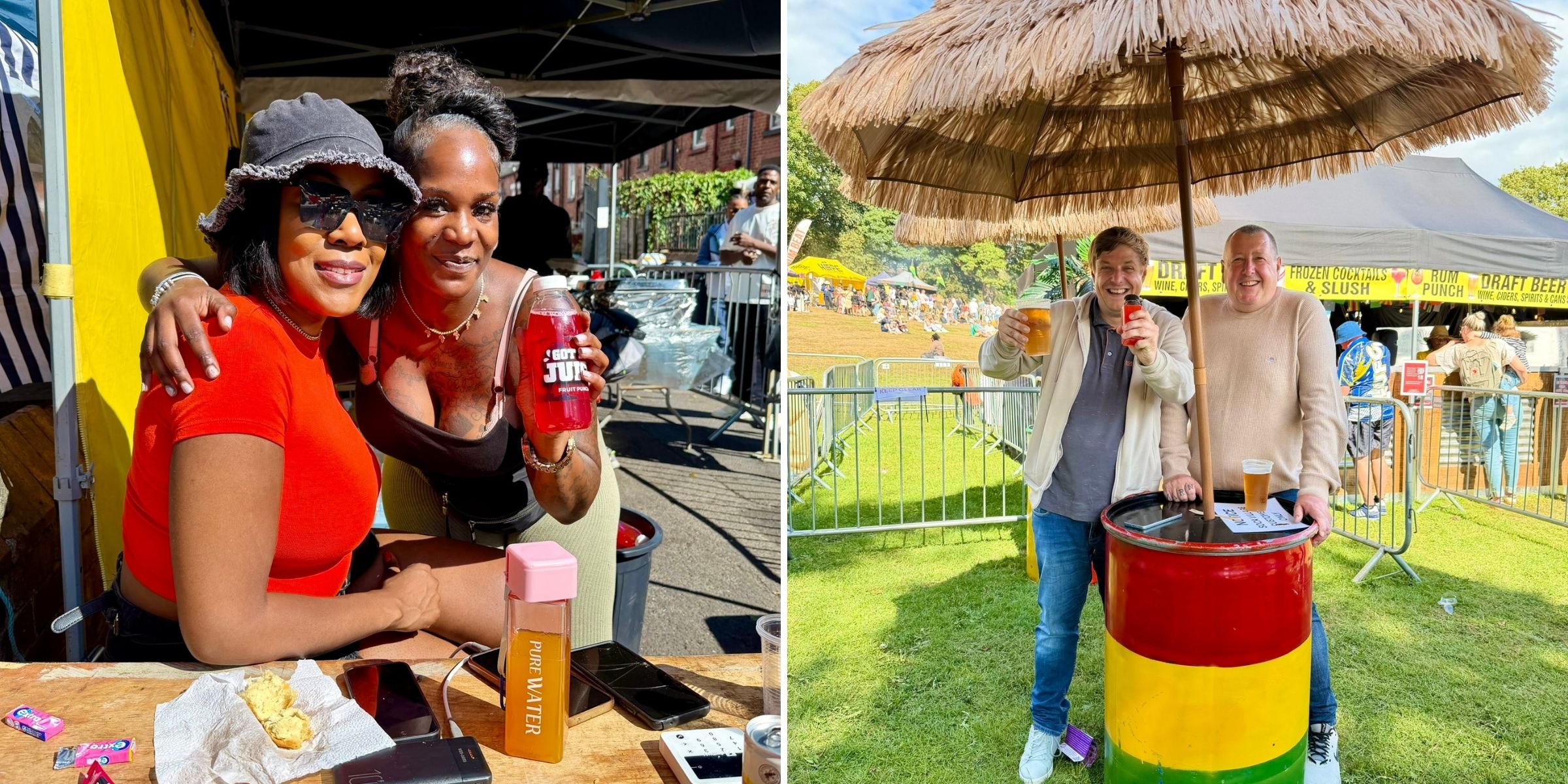
This is how Carnival works on a human scale. Behind the numbers, the procession and the immense constructions of feathers, fabric and wire, there are thousands of brief acts of exchange: money passed across counters, food shared, strangers photographed and conversations held above the music.
Nearby, two lads had taken shelter beneath a parasol. They'd drinks in their hands, although confidence in what they contained appeared limited.
“We don’t know what’s in it,” one of them admitted, “but we’re having it.”
Around Potternewton Park, Leeds was spreading itself across the grass. Families had brought folding chairs and blankets. Children carried balloons above their heads. An elderly woman and a young girl pushed a shopping trolley filled with discarded cans. Traders sold food, hats, flags and things which flashed, squeaked or floated.

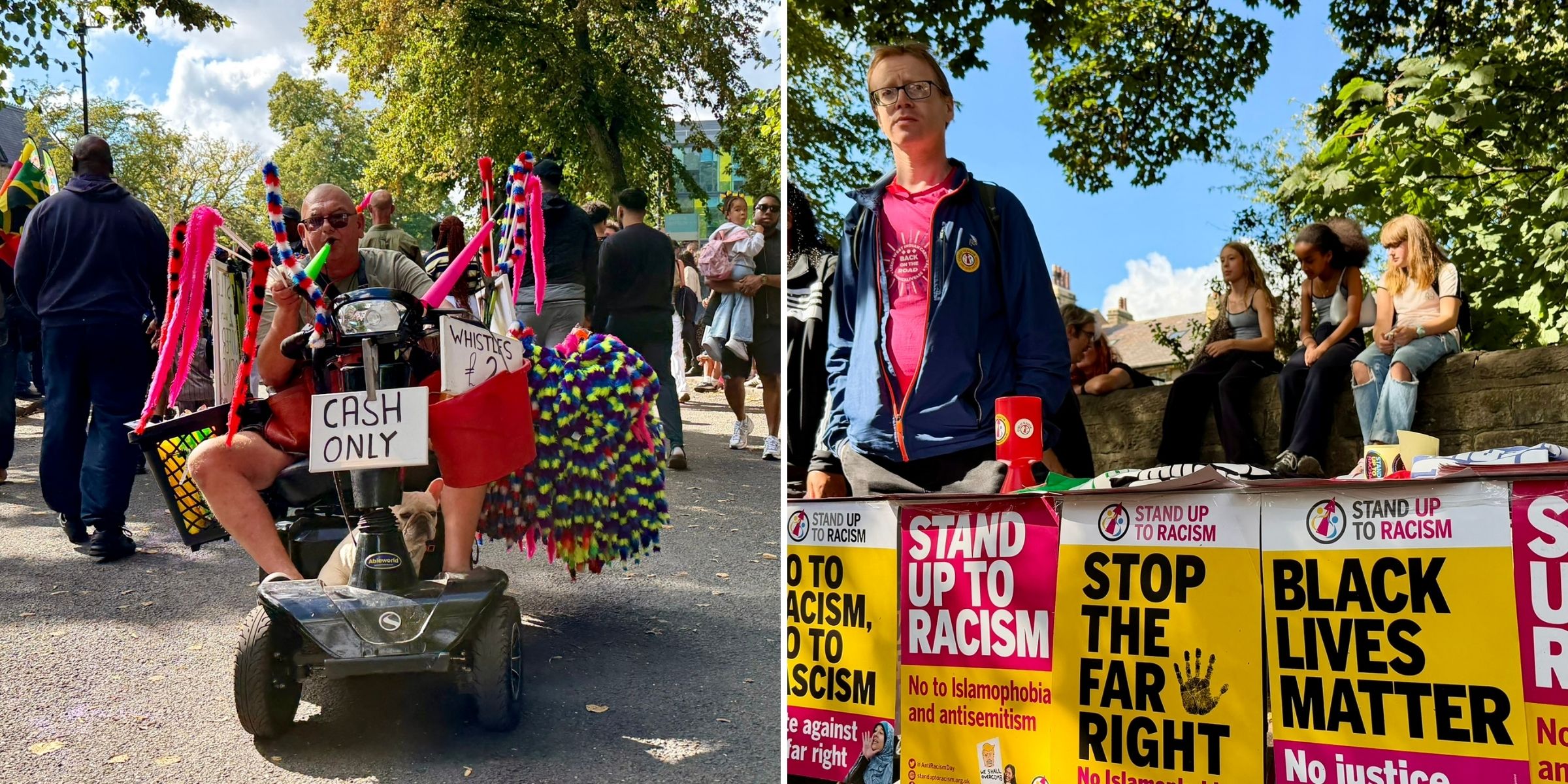
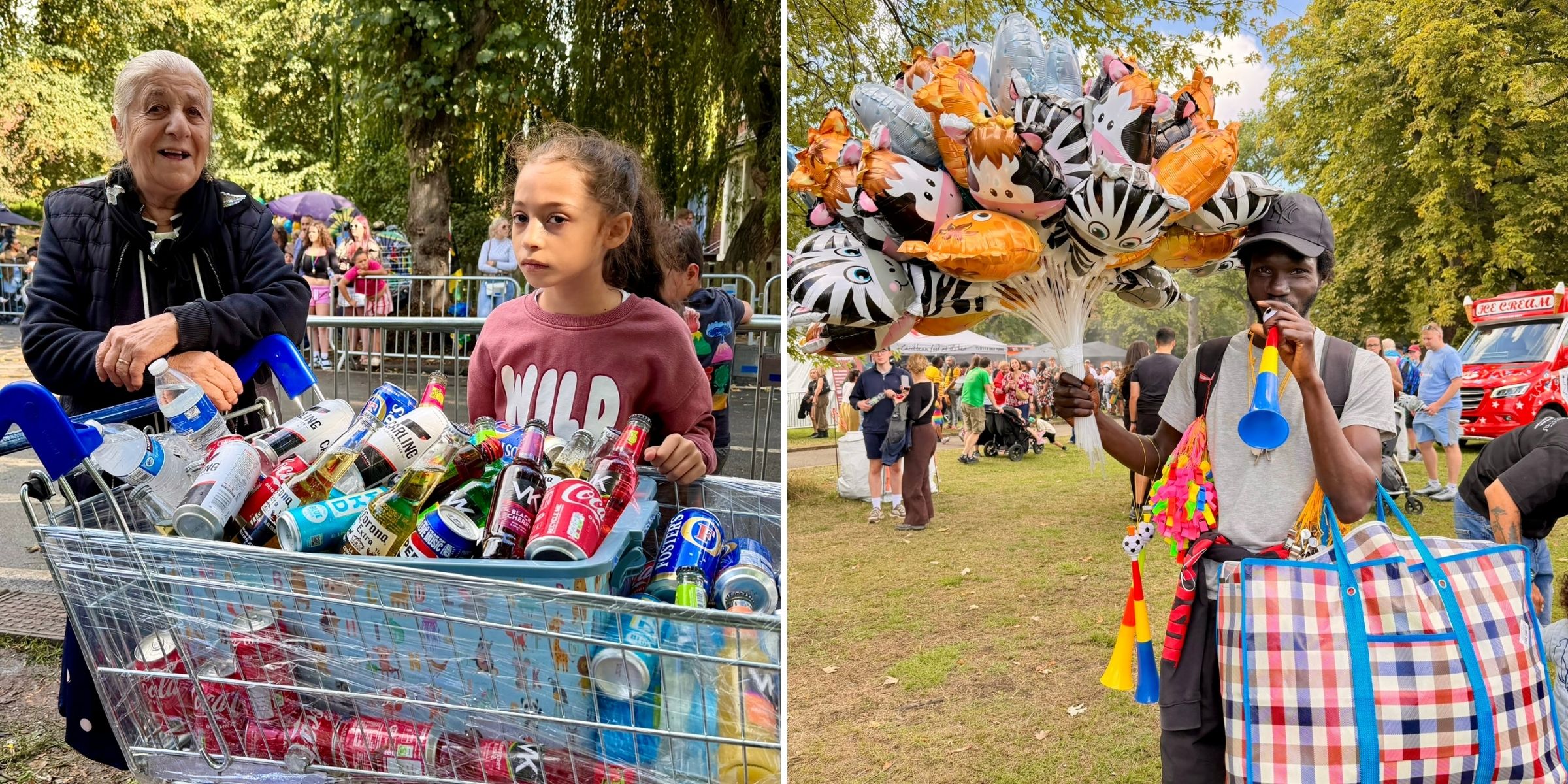
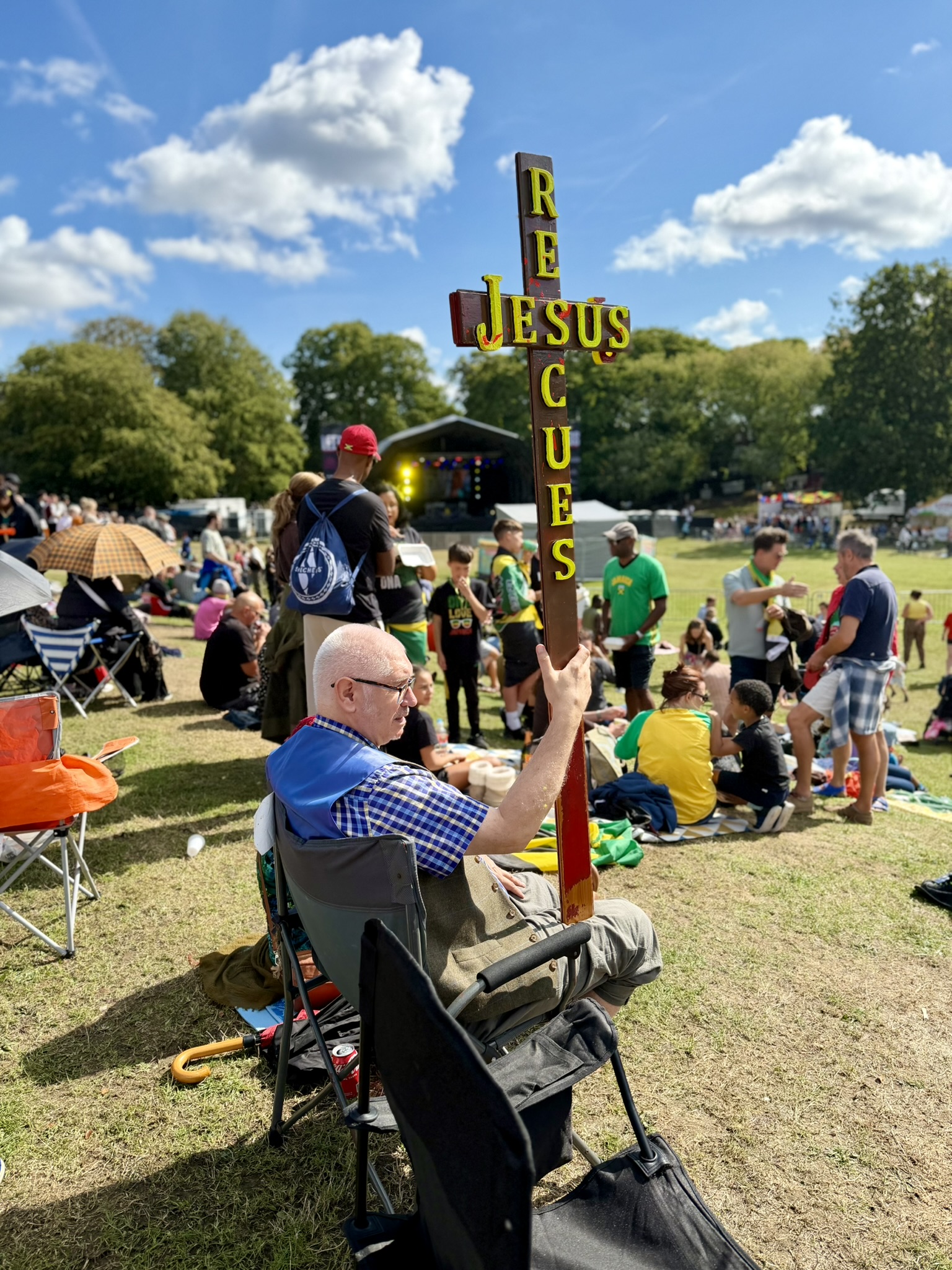
Faith was present. So was politics. A man held a towering sign declaring “Jesus Rescues”; an anti-racism stall stood tall under the trees. Carnival's never existed outside the world which surrounds it. Celebration and resistance have always travelled together.
The first Leeds West Indian Carnival was organised in 1967 by the incomparable Arthur France and the Carnival Committee. Traditional Caribbean music was central from the beginning: four steel bands, alongside big drum and fife musicians, entertained crowds before joining the procession. Homemade trolleys carried the pans through the streets.
This year was Carnival’s 59th. In 2027, Leeds is set to celebrate six decades of a community creating and sustaining one of the city’s defining cultural institutions.
But history at this Carnival isn't kept behind glass. It walks.
It moves in the children dancing beside their parents; in the older participants still wearing magnificent costumes beneath the August sun; in the flags carried through streets where Caribbean families built lives, organisations and businesses. It exists in skills passed between generations - the complicated business of turning imagination into something strong enough to dance in.
Shortly after two, the road began to change.
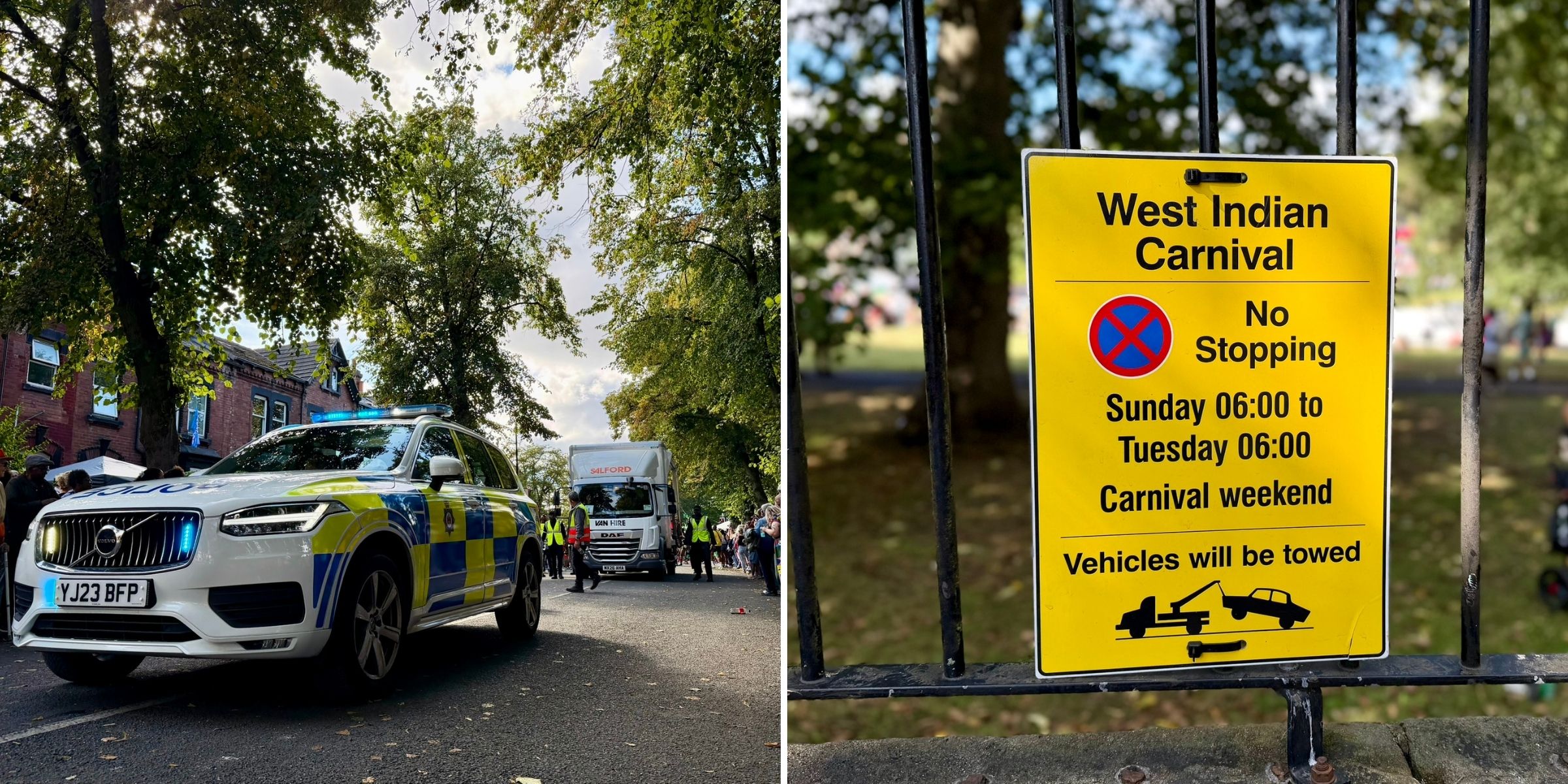
Police vehicles came through first. Stewards moved people back behind the barriers. Phones rose into the air and the crowd leaned towards the space that had opened in the street.
Then Carnival arrived.
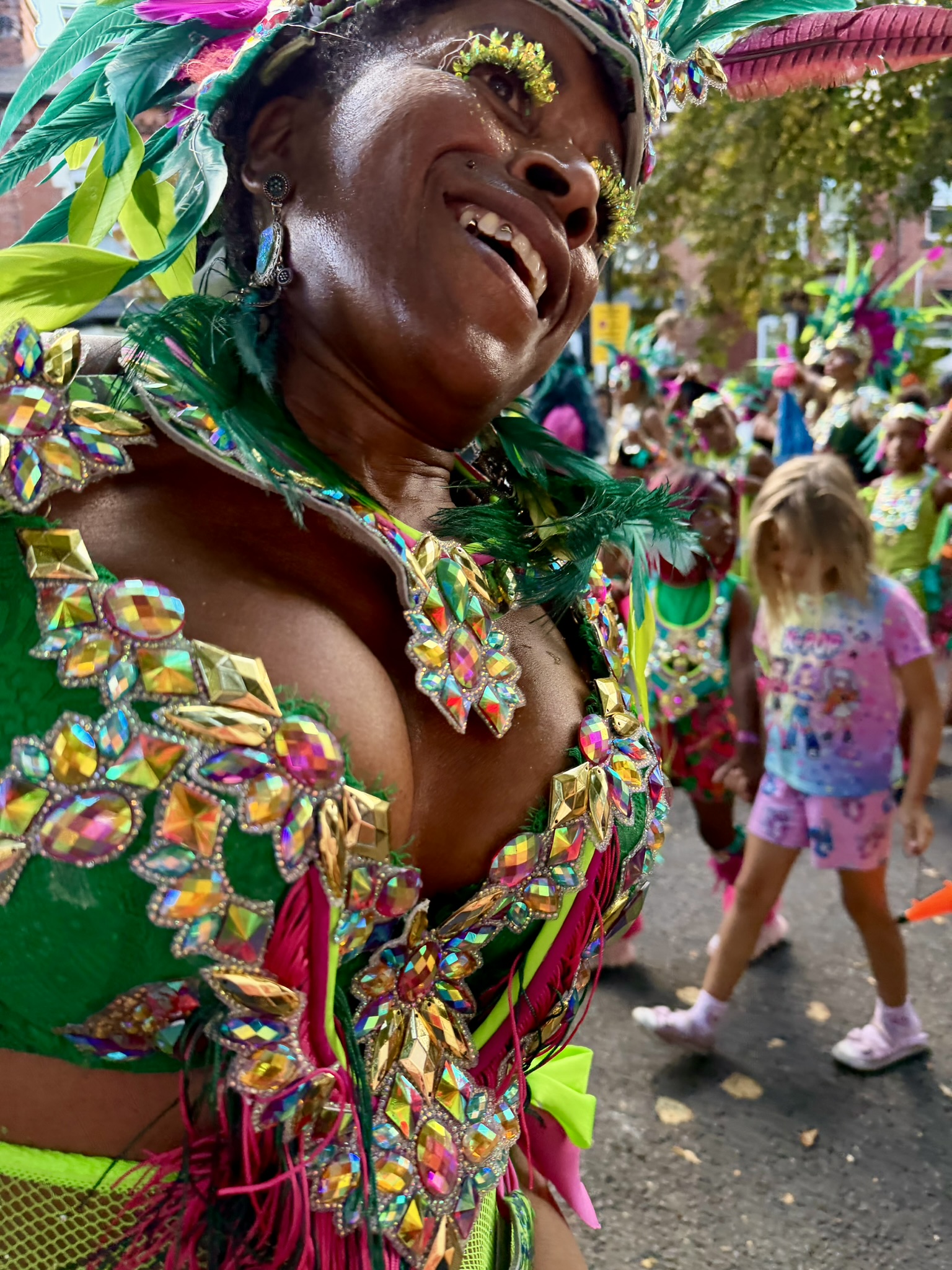
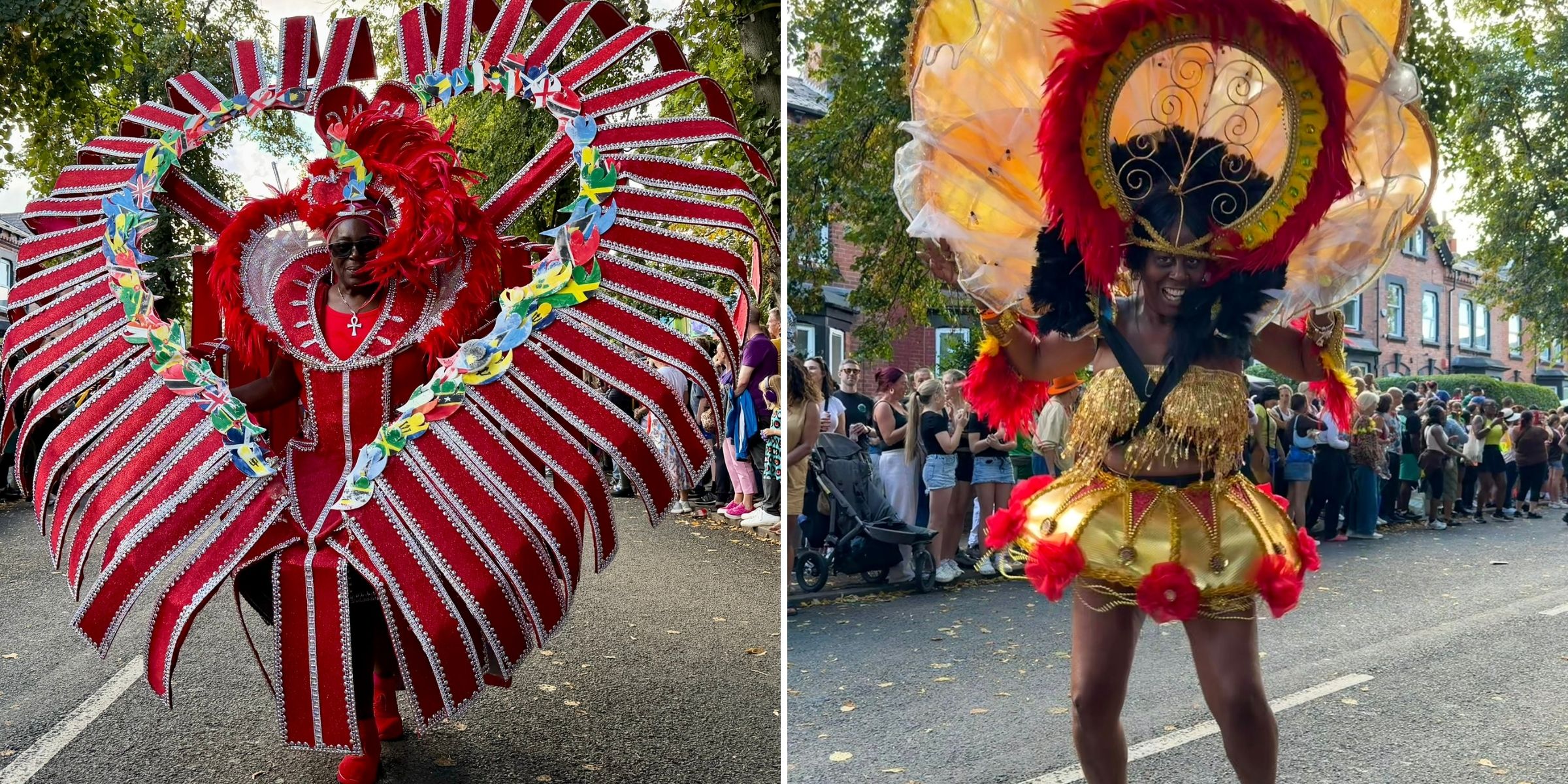
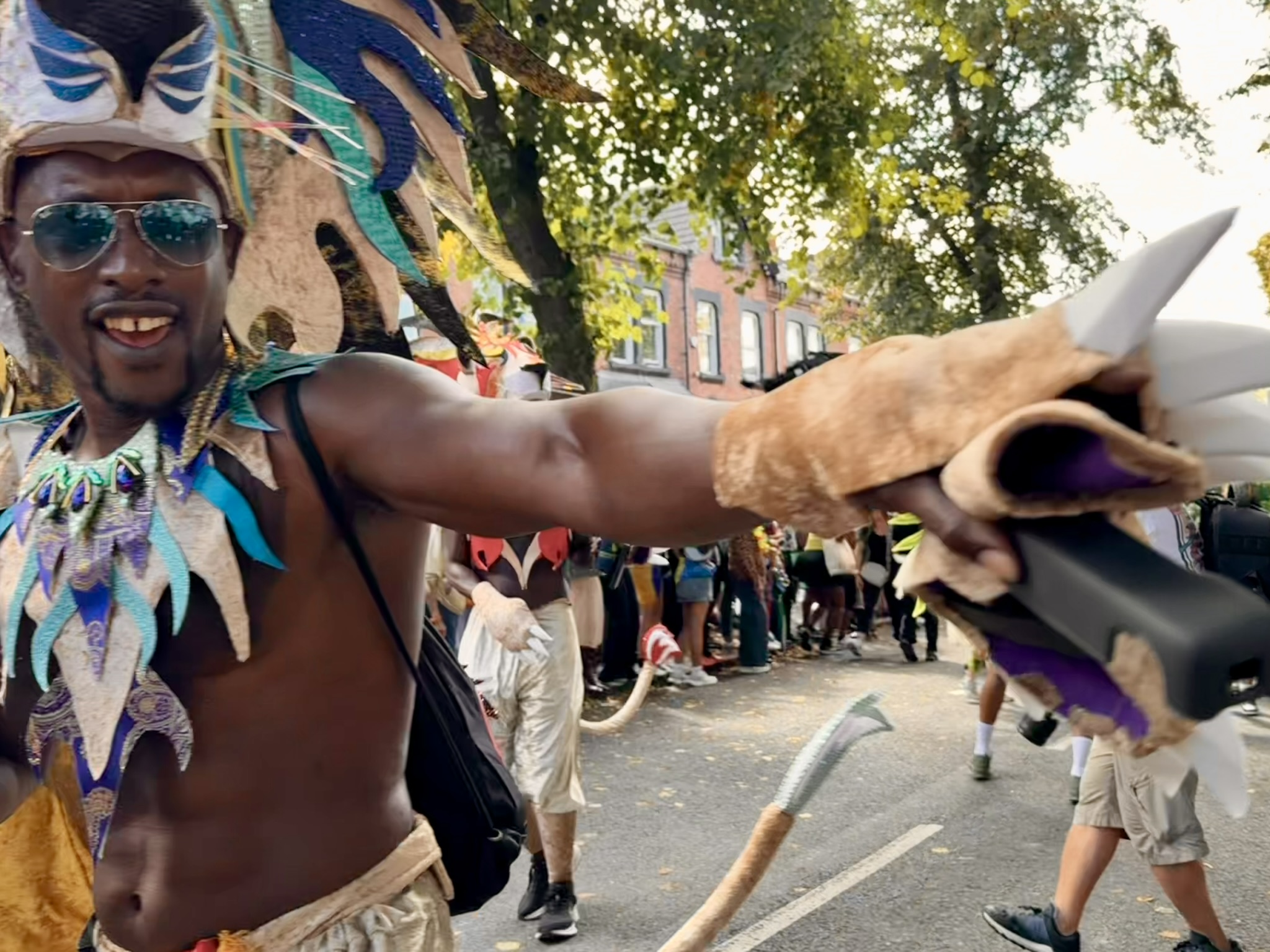
There were wings and crowns, masks and sequins, feathers rising above the heads of the crowd. Gold flashed in the shade. Red, green, blue and yellow moved along Harehills Avenue in waves.
The parade wasn't something passing in front of an audience. The boundary continually collapsed. Performers danced towards the pavement; spectators called back; kids' tried to copy the movements. People posed, laughed and reached towards the camera.
A woman approached carrying an extraordinary arrangement of gold and black above her head. Behind her came another generation wearing the same colours. Elsewhere, a small child walked hand in hand with a woman whose costume was tied with bright ribbons.
Those images say more about Carnival’s survival than any anniversary statistic. Culture endures because somebody brings the kids.
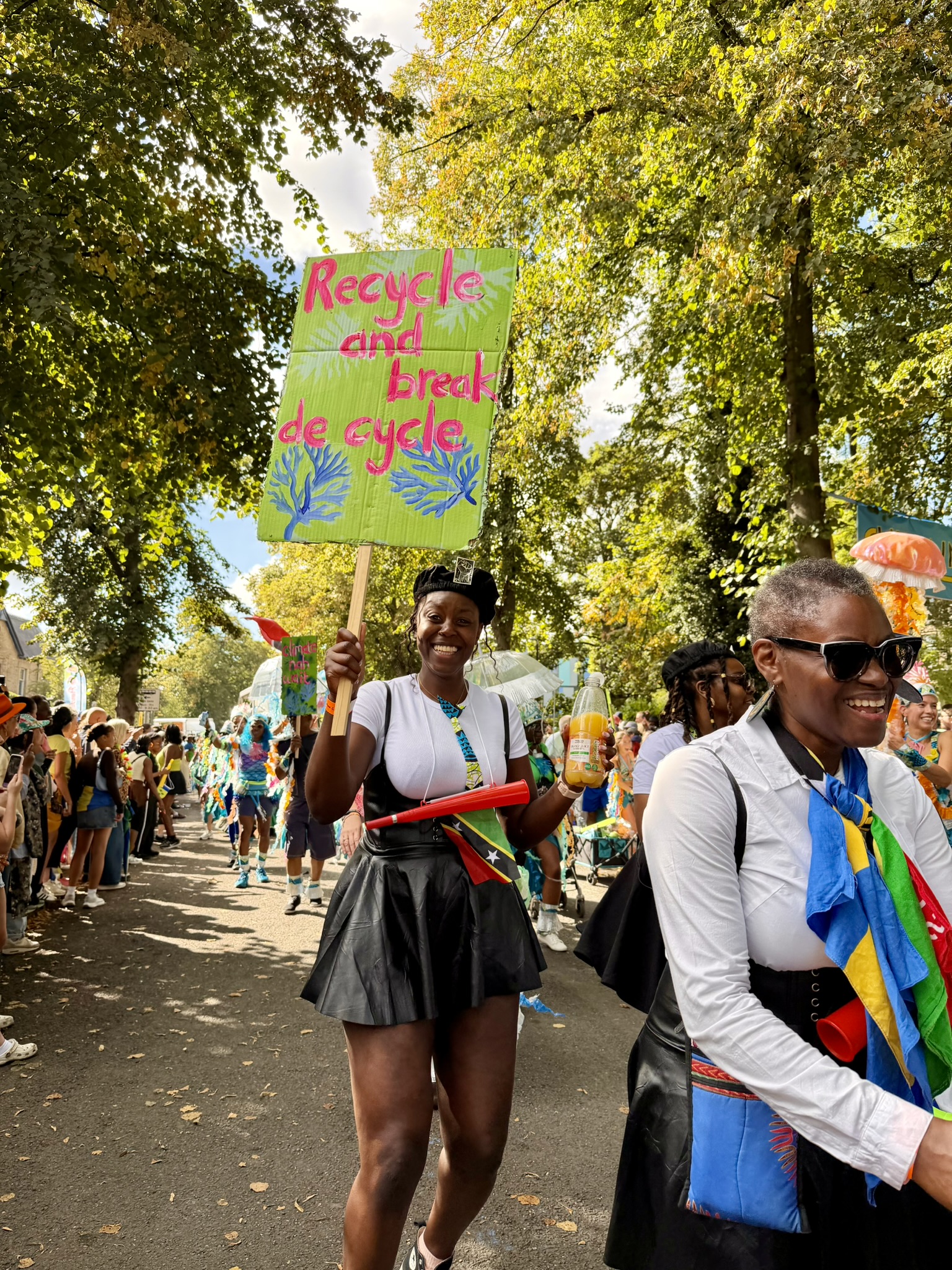
Among the dancers were handwritten messages about recycling and climate change. They didn't feel imported from another occasion. Caribbean communities are tied intimately to places already experiencing rising seas, extreme heat and increasingly violent weather. Here, environmental concern became part of the masquerade: another message carried by bodies through the city.


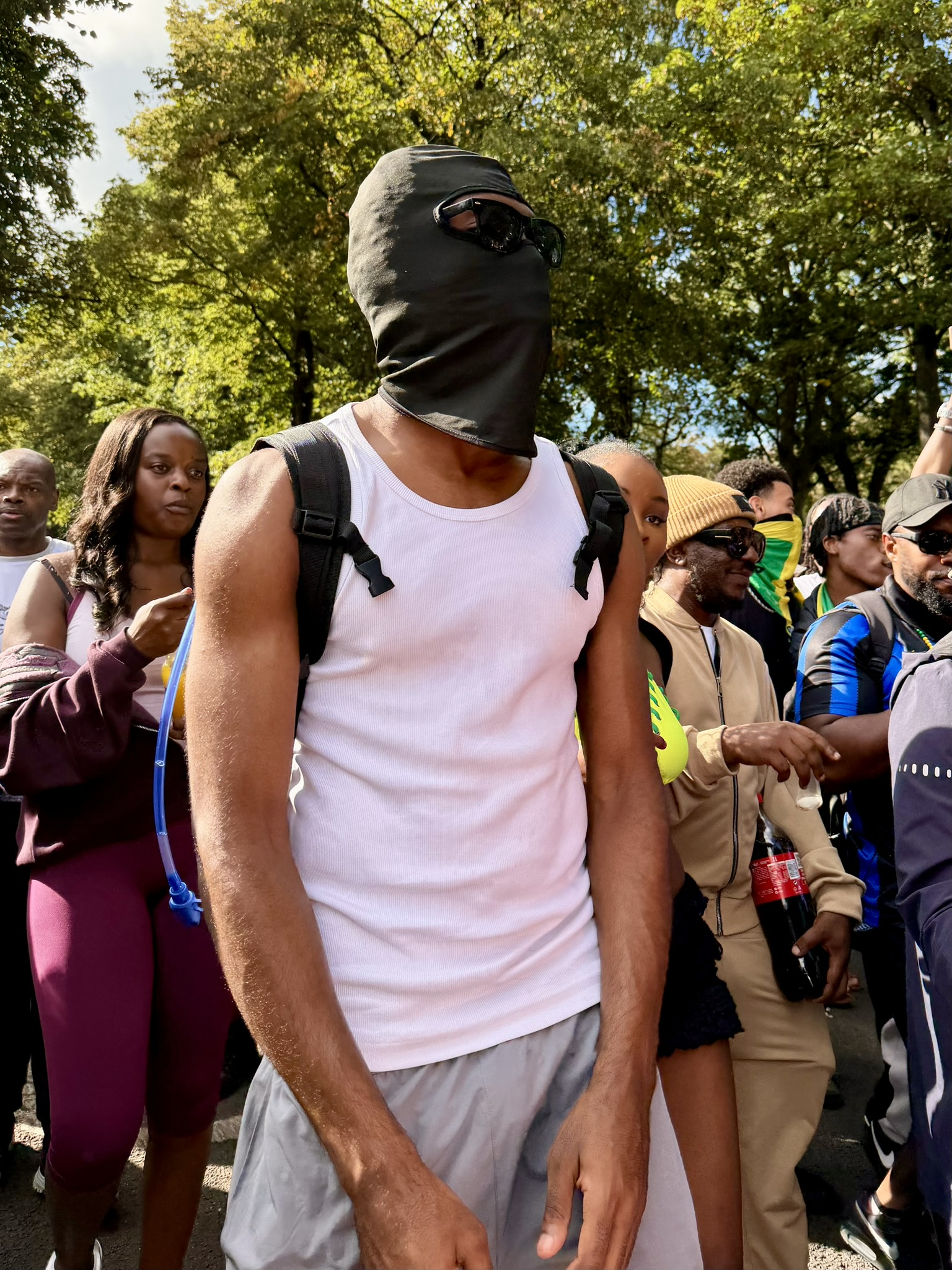
Away from the procession, groups of young men caught our attention. Several had covered their faces.
We asked them why.
“The police want our faces,” one replied. “Are you police?”
It would be easy to place menace into these photographs after the event. That wasn't what we felt - and it would be disingenuous to say otherwise.
These were young people enjoying Carnival who were wary of cameras, facial recognition and the possibility of finding themselves recorded on a police database. Their answer wasn't a threat. It was an expression of mistrust - and perhaps a reminder that the freedom to photograph a public celebration isn't always experienced equally by everybody involved.
We were carrying a camera. They wanted to know who might ultimately be looking through it.
That exchange belongs to the day too.


By the time the procession had passed, the park had become fuller and louder. The ground in front of the stage disappeared beneath people. Security staff watched the crowd. Flags were worn as capes. Friends found one another, lost one another and began the search again.
Carnival can't be contained neatly within its official procession. It is spectacle, for sure, but it's also commerce, reunion, memory, flirtation, suspicion, faith, politics and the simple pleasure of occupying a city together.
It belongs to those carrying immense costumes through Chapeltown, and to the man selling balloons at the edge of the crowd. It belongs to the women who travelled from Birmingham with their fruit punch, to Ricky escaping the human sardine tin of Notting Hill, and to the men who didn't know what they were drinking but were committed to finishing it.
Eventually, we began walking away.
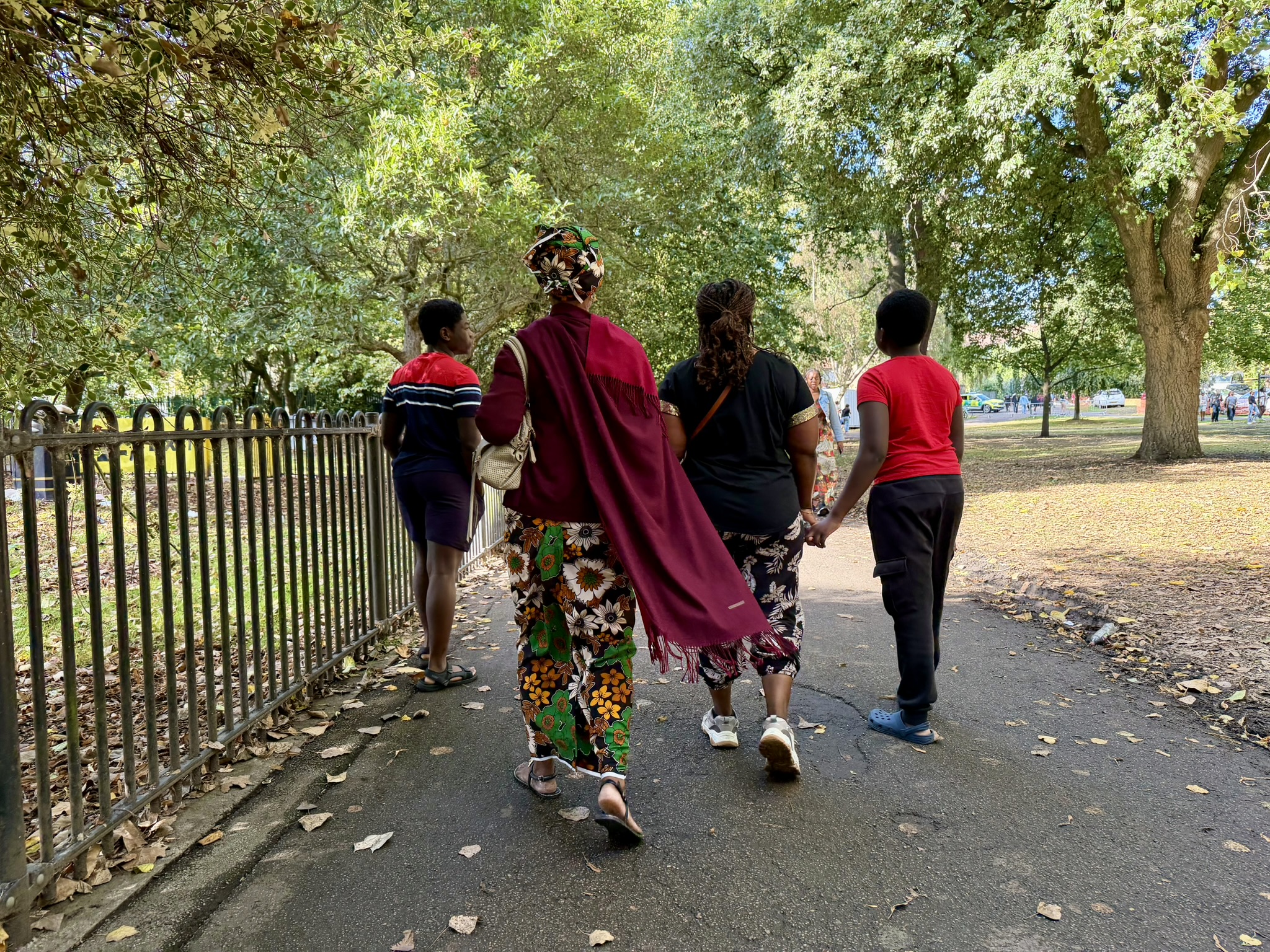
The sun was still warm, but leaves had collected beneath the trees. After the noise and colour of the procession, the quieter edges of the park felt almost autumnal. Carnival had occupied the final great weekend of summer; beyond its gates, September felt like it was waiting.
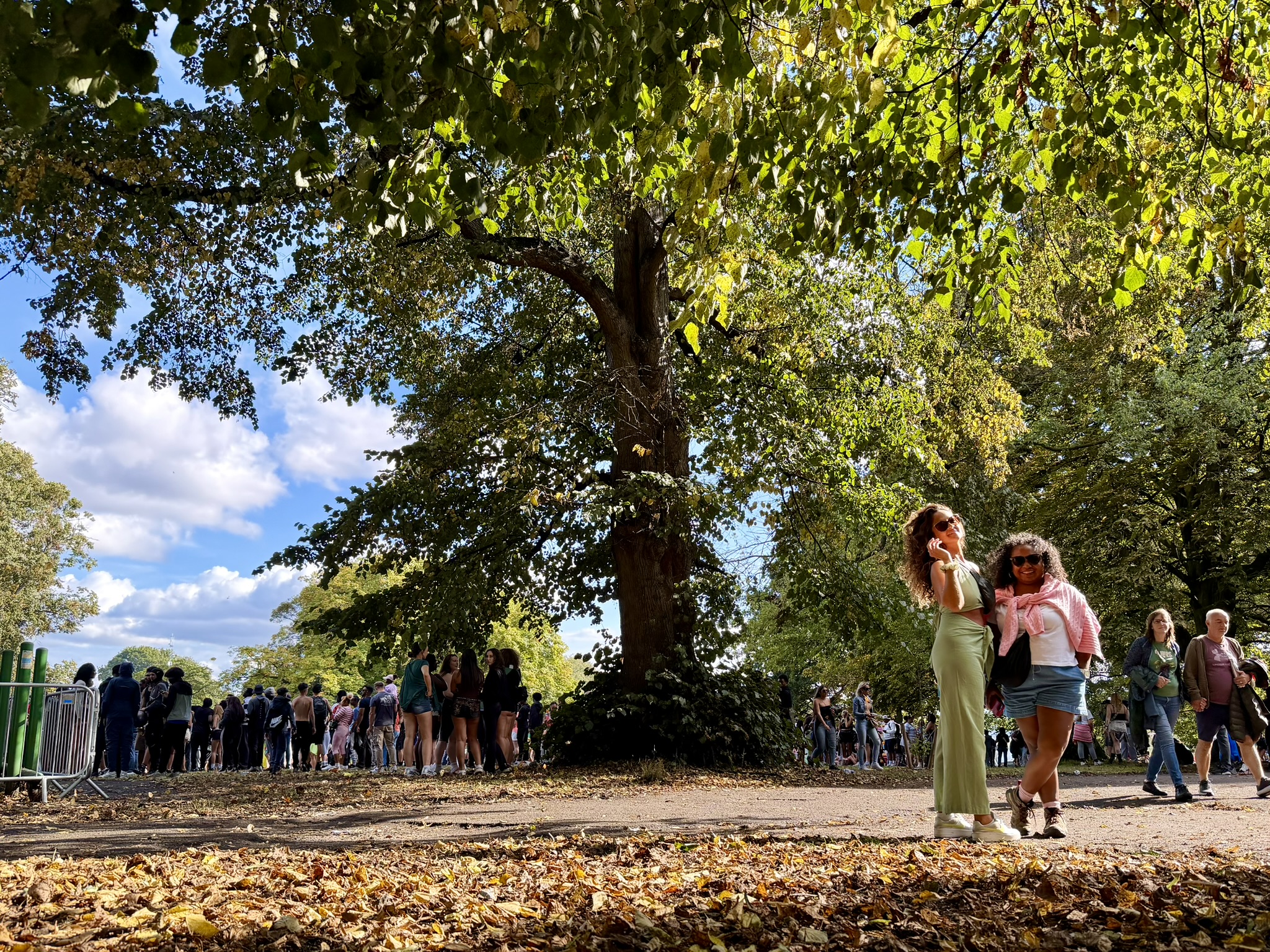
Two women were standing together beneath the branches.
“We’ve had a lovely day,” they explained.
Then they asked: “Will you take our picture, please?”
Of course.
Behind us, the music continued. Ahead of Leeds lies a 60th birthday: an opportunity to celebrate the amazing people who created Carnival in 1967, those who carried it through six decades and the generations now deciding what it will become.
But beneath the trees, none of that needed explaining.
Two friends had shared a lovely day. Summer was ending. They wanted a photograph to remember it.
All images: MagNorth





