



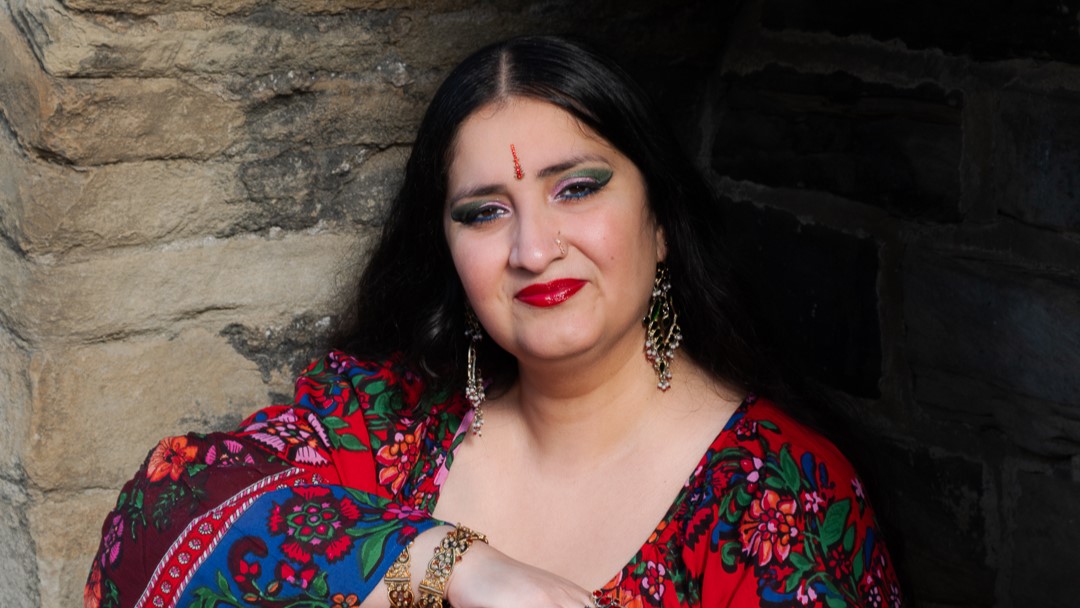
Folk songs have always carried ghosts. Stories passed from voice to voice often preserve emotion long after context has been stripped away - love without consequence, loss without explanation. When Leeds-based singer-songwriter Satnam Galsian first encountered the Irish ballad She Moved Through the Fair, it was the absence at its centre that unsettled her most. The woman reassures her lover that her family will not reject him. Later, she appears as an apparition. No cause. No accountability. Just death.
Dishonour, Galsian’s latest single, begins where that silence has long been allowed to sit. Reimagining the song from the perspective of the woman herself, the track reframes the narrative as one shaped by honour-based abuse - violence that occurs when someone is perceived to have brought shame on their family or community, often through relationships, autonomy or refusal to conform.
Released on 8 March to coincide with International Women’s Day, Dishonour is also a fundraising project. All proceeds from digital sales made between 6 February and 6 April 2026 will be donated to Karma Nirvana, the Leeds-based charity that has spent more than three decades supporting victims and survivors of honour-based abuse across the UK.
Recorded as an intimate acoustic performance with producer Mac Volpe, and mixed and mastered by Phil Snell, the song’s spareness is deliberate. Galsian has been performing Dishonour live for some time, where its impact - and the response from audiences - shaped the decision to record it in this form. There is little distance here between voice and listener, little opportunity to look away.
“Relationships disapproved of by families can be a trigger for honour-based abuse,” Galsian says. “When it’s thought that someone has brought shame or dishonour to themselves, their family or community, the consequences can be devastating.”
Those consequences remain widespread, and often hidden. Karma Nirvana, founded in 1993 by Dame Jasvinder Sanghera CBE after she escaped a forced marriage and lost her sister to honour-based abuse, delivers the UK’s national Honour-Based Abuse Helpline. The charity receives thousands of contacts each year relating to forced marriage, coercive control, threats, and violence. Practitioners consistently stress that official figures - including police-recorded incidents - reflect only a fraction of lived reality, as many victims face immense barriers to seeking help.
That Dishonour is rooted in Leeds is not incidental. The city holds both the creative ecology that has supported Galsian’s work and one of the country’s most important organisations tackling honour-based abuse at a national level. This collaboration is not a symbolic gesture, but a material one - directing funds, attention and listening towards frontline support.
Galsian’s practice has long centred women’s voices and the complexities of living between cultural worlds. Blending Punjabi folk traditions with contemporary feminist storytelling, her work resists the idea that heritage must be preserved uncritically. Instead, it asks what responsibility comes with carrying stories forward.
That approach has seen her recognised as one of Leeds’ most influential South Asian figures by the Asian Standard, which praised her for challenging assumptions about culture, gender and artistic possibility. It is also evident in her wider body of work - from her solo EPs Fragmented Truth and Sahiban, to her cross-genre trio Kinaara, which weaves Punjabi and Celtic traditions into shared musical space.
In Dishonour, folk memory becomes something active rather than archival. By naming what older songs leave unspoken, Galsian treats music not as escape, but as a form of witness - one that acknowledges how stories shape what is considered acceptable, inevitable, or unsayable.

At a moment when conversations around honour-based abuse are still too often marginalised, softened, or sensationalised, Dishonour offers a different mode of engagement. It asks for time. For listening. For attention to what has been normalised through omission.
And in doing so, it reminds us that reflection, when taken seriously, can be a form of action.





