



There are some words that seem simple until life gets hold of them, aren't there? Home is one of them.
For some of us it's a street, a city, a kitchen table, a coastline, a language heard through the wall. For others it might be something less stable: a place remembered, a place left behind, a place that can no longer be returned to, or a place being rebuilt in fragments through food, photographs, family stories, music, faith, friendship and art.
This summer, Liverpool Arab Arts Festival returns to the city with that word - HOME - at the very heart of its 2026 programme. Running from Friday 17 to Sunday 26 July across venues in Liverpool, the festival is once again bringing together artists from across the Arab region and its diaspora, in what is now the UK’s longest-running annual festival of Arab arts and culture.
The newly announced visual arts programme places photography and moving image at the centre of this year’s conversation, with two exhibitions asking what it means to belong when home isn't just a fixed address, but something carried, contested, remembered and remade.
At Liverpool John Moores University’s Exhibition Research Lab Gallery, The Refuge brings together work by Abdulrahman Hassona, Farah Maktari, Houari Bouche, Lydia Saidi, Maya-Ines Touam and Shareef Sarhan. Through contemporary photography, the group exhibition reflects on the idea of home in the context of contemporary Arabness - not as a neat category, but as a shifting set of experiences shaped by displacement, longing, heritage, geography and memory.
The exhibition is asking us to consider home as something paradoxical. It might be rooted in land and territory, but it might also survive in family stories, inherited culture, images, objects and the emotional architecture of memory. For communities whose histories have been shaped by migration, conflict, colonialism or exile, home isn't always one place. It could be plural. It might be wounded. It could well be imaginary and absolutely real at the same time.
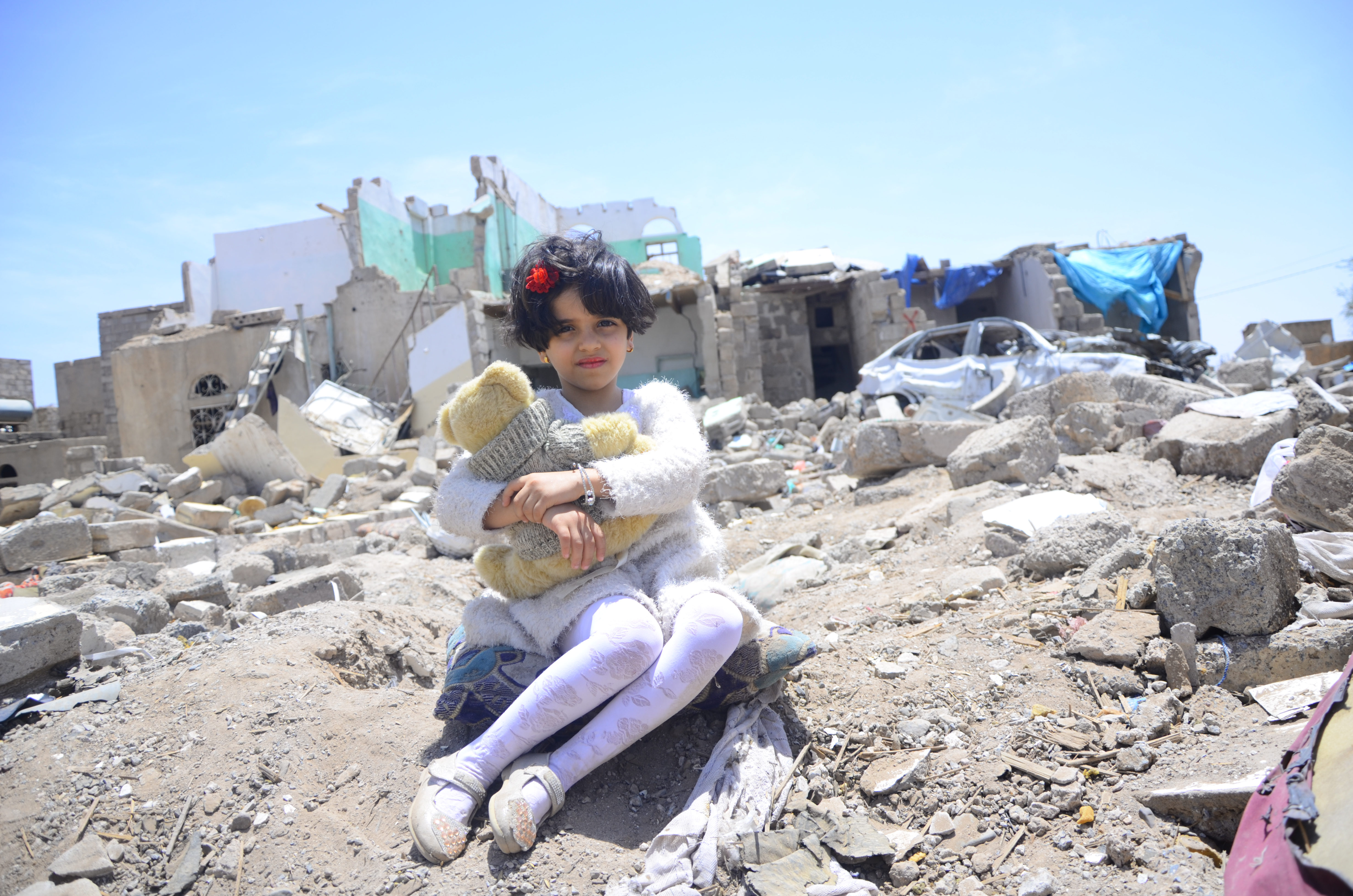
At Open Eye Gallery’s Atrium, The Other Refuge is set to continue that enquiry through the work of UK-based artists of Arab origin whose own experiences are connected to displacement. Featuring Fuad Al-Gaadi, Nasma Aljizawi and Omer Al Tijani, the exhibition explores belonging through documentary, cultural memory and personal archive. Its emphasis isn't simply on loss, but on the ways communities hold themselves together: through food, storytelling, visual record, ritual and the determination to remain visible.
Is there a better place to have this conversation than in Liverpool?
This is a city whose sense of itself has always been shaped by movement. People have arrived here, left here, passed through here, sung from here, traded from here, built lives here and carried grief here. Liverpool’s cultural identity isn't tidy because port cities rarely are. They're made by crossings - voluntary and forced, joyful and traumatic, temporary and permanent. In that context, Liverpool Arab Arts Festival isn't a decorative addition to the city’s summer calendar. It's part of a much deeper conversation about who gets to tell the story of belonging.
The 2026 festival opens on Friday 17 July with the return of LAAF favourites Al-Awhadel Band, performing a Yemeni night at St George’s Hall Concert Room. Across the wider programme, audiences will find music, literature, film, theatre, conversation and family events, including a Sudanese culinary arts and literature event at The Black-E, screenings and talks at Bluecoat, a UK premiere performance from Tamsin Elliott and Tarek Elazhary at Liverpool Philharmonic Music Room, and the ever-popular LAAF Family Day at Sefton Park Palm House.

But the visual arts strand feels especially urgent.
Photography's got a particular power in conversations about home. It records, but it also withholds. It can preserve the face of someone loved, the outline of a street, the texture of a vanished room. It can document injustice, but it can also resist being reduced to evidence. In the hands of these artists, photography becomes more than witness. It becomes a way of making space for complexity - for the private, the political, the inherited and the unfinished.
For Liverpool Arab Arts Festival, the complexity is clearly the point. The festival’s chair, Afrah Qassim, describes home as a place often imagined as sanctuary, safety and identity, while also recognising the painful realities facing many whose homes, families and sense of belonging have been fractured by war, dictatorship, discrimination and injustice.
It would be easy, with a theme like this, to make the work sound solemn. Some of it will be. And it should be. But there's also joy here, and pride, and cultural abundance. Arab art isn't only a response to crisis. It's not only a story of displacement. It's music, humour, craft, food, image-making, argument, memory, glamour, scholarship, performance and family. It's contemporary and ancient, local and global, rooted and restless.
That is why festivals like LAAF need to have a key space in Northern life.
They create public space for stories that are too often flattened elsewhere. They allow artists to speak in their own languages - visually, musically, politically, poetically - and they invite audiences to do something more useful than simply “celebrate diversity”. They invite us to listen properly.
In a moment when migration is too often discussed as a problem to be managed, The Refuge and The Other Refuge offer another way of seeing. They're asking what is lost when people are forced to leave. They ask what survives. They ask how memory can become an archive, how food can become a map, how a photograph can become a form of return.
And, perhaps most importantly, they ask the rest of us to think more carefully about our own easy uses of the word home.
Because home is never just bricks and mortar. It's safety, yes. But it's also recognition. It's the right to remember. The right to belong. The right to be more than a headline, a border category, or a contested presence in someone else’s political argument.
This July, across Liverpool, those questions won't be answered neatly. Good art rarely does that. Instead, Liverpool Arab Arts Festival will open the door to them - and ask us to step inside.

Liverpool Arab Arts Festival 2026
Friday 17 – Sunday 26 July 2026
Various venues, Liverpool
The Refuge
16 – 24 July
Exhibition Research Lab Gallery, Liverpool John Moores University
Launch: Thursday 16 July, 6–8pm
Artist talk: Wednesday 22 July, 2–4pm, Open Eye Gallery
The Other Refuge
16 July – 2 August
Open Eye Gallery Atrium
Launch and artist talk: Monday 20 July, 2–4pm
Tickets and full programme details are available via Liverpool Arab Arts Festival.
Header image: Fouad Al-Gaddi





