




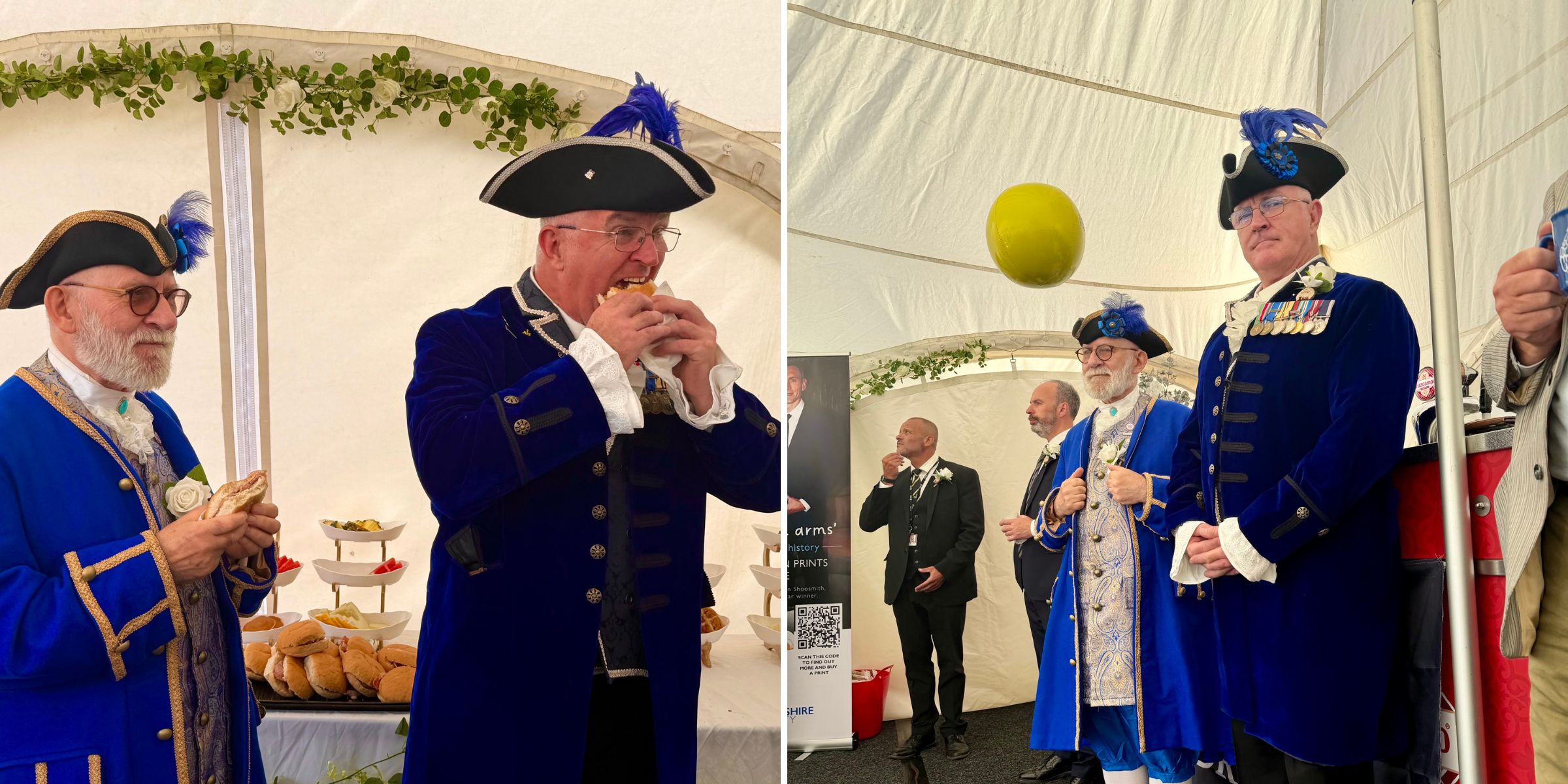
It was held aloft beneath the white canvas of a marquee in Goole, surrounded by mayoral chains, military medals, artificial white roses and the soft clatter of civic hospitality. The man attempting to eat it was David Davis, Conservative MP for Goole and Pocklington, and the bread was not cooperating.
For a few seconds, Yorkshire Day produced its own minor political photograph: a senior public figure, a badly behaving breakfast and a camera conveniently close by.
It was funny. The day was often funny. But it was difficult to decide what, exactly, we were laughing at.
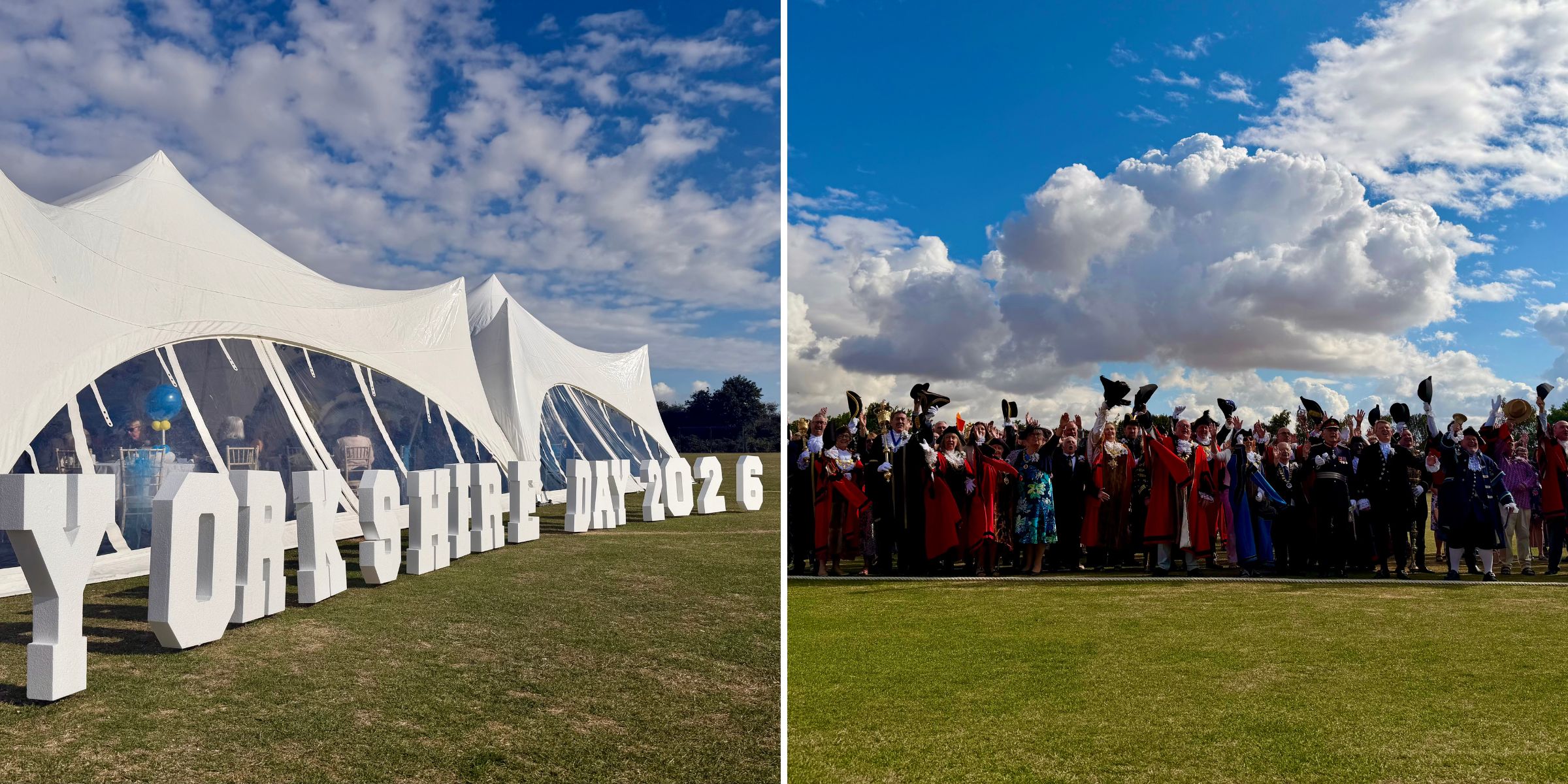
Outside, enormous white letters announced YORKSHIRE DAY 2026 across the edge of Goole Cricket Club. Inside, dignitaries from across the three Ridings greeted one another beneath balloons carrying the names of local sponsors. White roses were distributed. Chains were adjusted. Coffee appeared, cups disappeared, and the people working behind the refreshments table quietly kept the entire production moving.
There were lord mayors and lady mayoresses; consorts, sheriffs and sword-bearers; tricorn hats, lace cuffs, fur trim, military uniforms and enough civic silverware to stock a modest royal household.
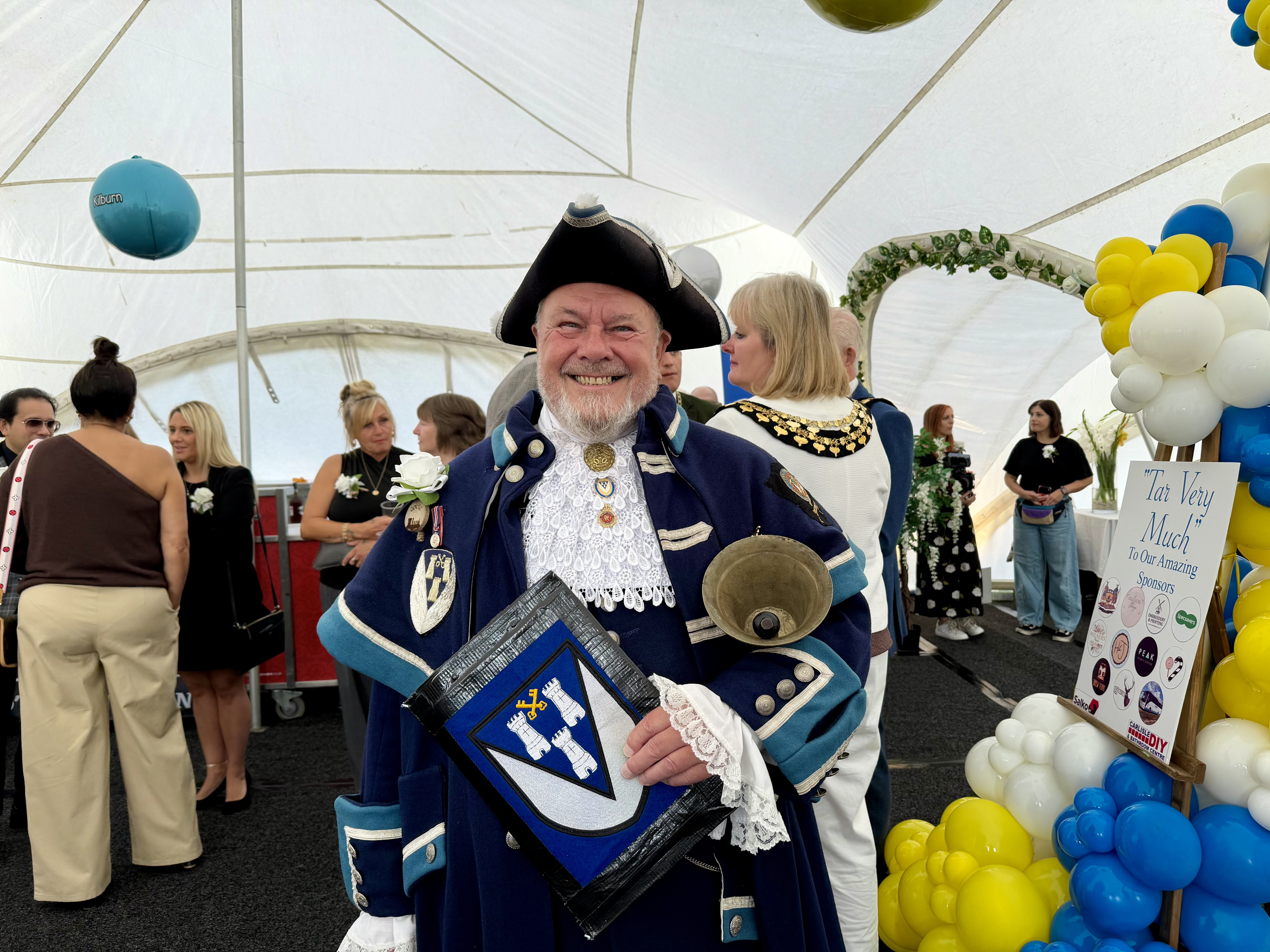
Up close, some of the magnificence was beginning to fray.
There were worn cuffs, tired fur and ceremonial fabrics which had survived rather more civic years than their wearers might have wished to advertise. “Threadbare” was the word my grandmother would have used. The effect was less one of opulence than of a municipal theatre stubbornly continuing with costumes it could no longer afford to replace.
Below the mayors existed another civic order: the attendants, mace-bearers, drivers, escorts and minders who carried the bags, hats, robes, chains and polished objects.

They had hierarchies and costumes of their own. One appeared to have come dressed as an airline captain. Another suggested a pirate who had recently secured a position in local government.

They moved constantly while their principals received greetings and posed for photographs. They guarded the regalia, organised the processions and gathered everything up again when it was time to leave.
Regardless of rank, the party made short work of the lovely complimentary food provided at the cricket club.

Natasha Costello and the team at Goole Town Council had undertaken the formidable task of hosting Yorkshire Day’s annual civic gathering during the town’s bicentenary year. They had not merely accommodated the visiting dignitaries. They had created a generous public celebration which showed Goole at its best - and should act as a benchmark for future years.
Modern Goole grew around the opening of its port in 1826. Two centuries later, the town remains a place of national importance: home to Britain’s most inland port and to the Siemens Mobility rail village assembling most of London’s new Piccadilly line trains. It is a working town, not a heritage backdrop.
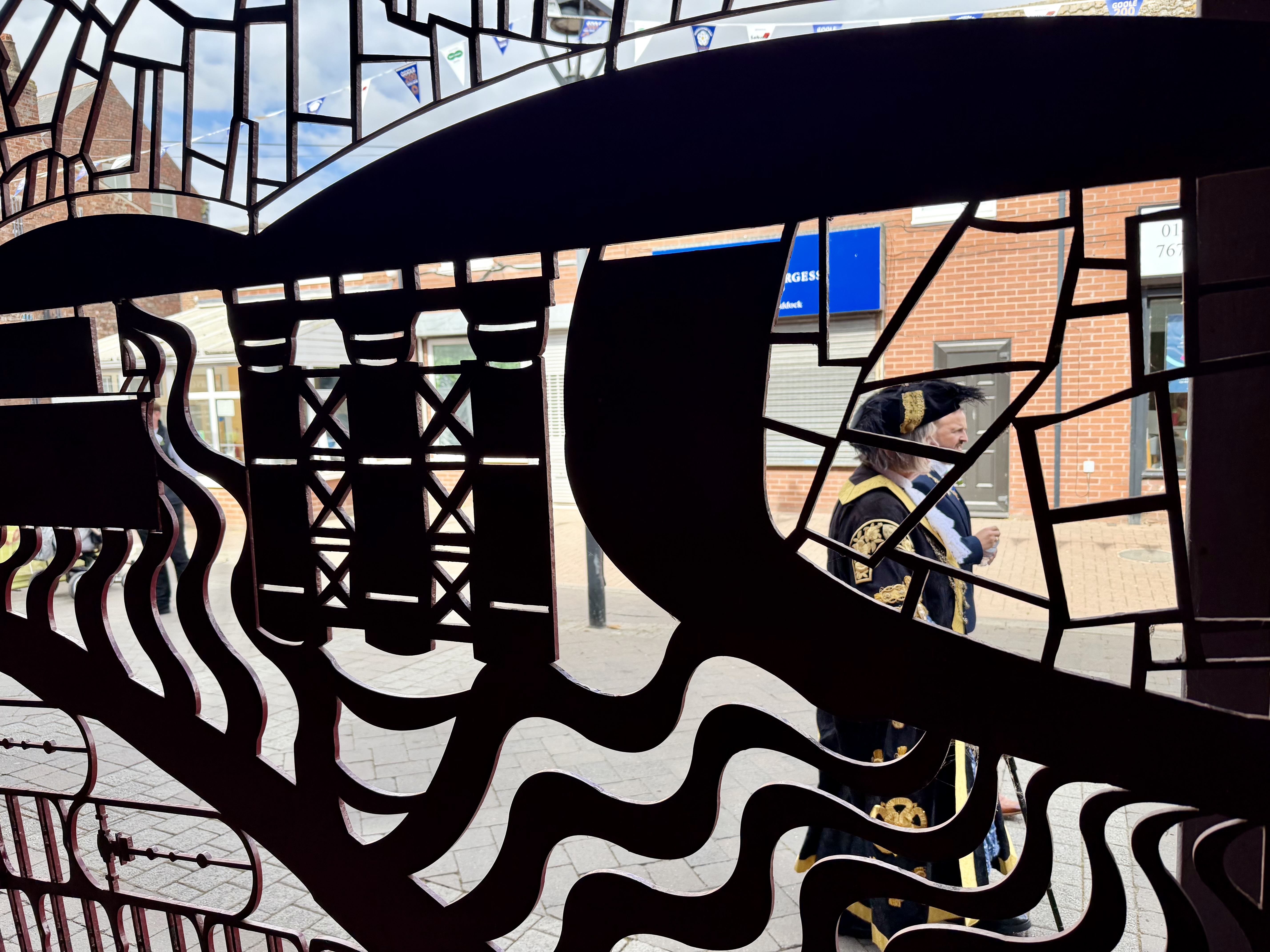
There was music in West Park, a service at St John’s Church, a procession through the town centre and a programme which brought residents outside together. The park filled with folding chairs, picnic blankets, cool boxes, flasks and families. Goole and East Riding Community Concert Band played from the bandstand. People settled beneath the trees and made a day of it.
This was Yorkshire Day doing what such occasions ought to do: providing the opportunity, while local people supplied the life.
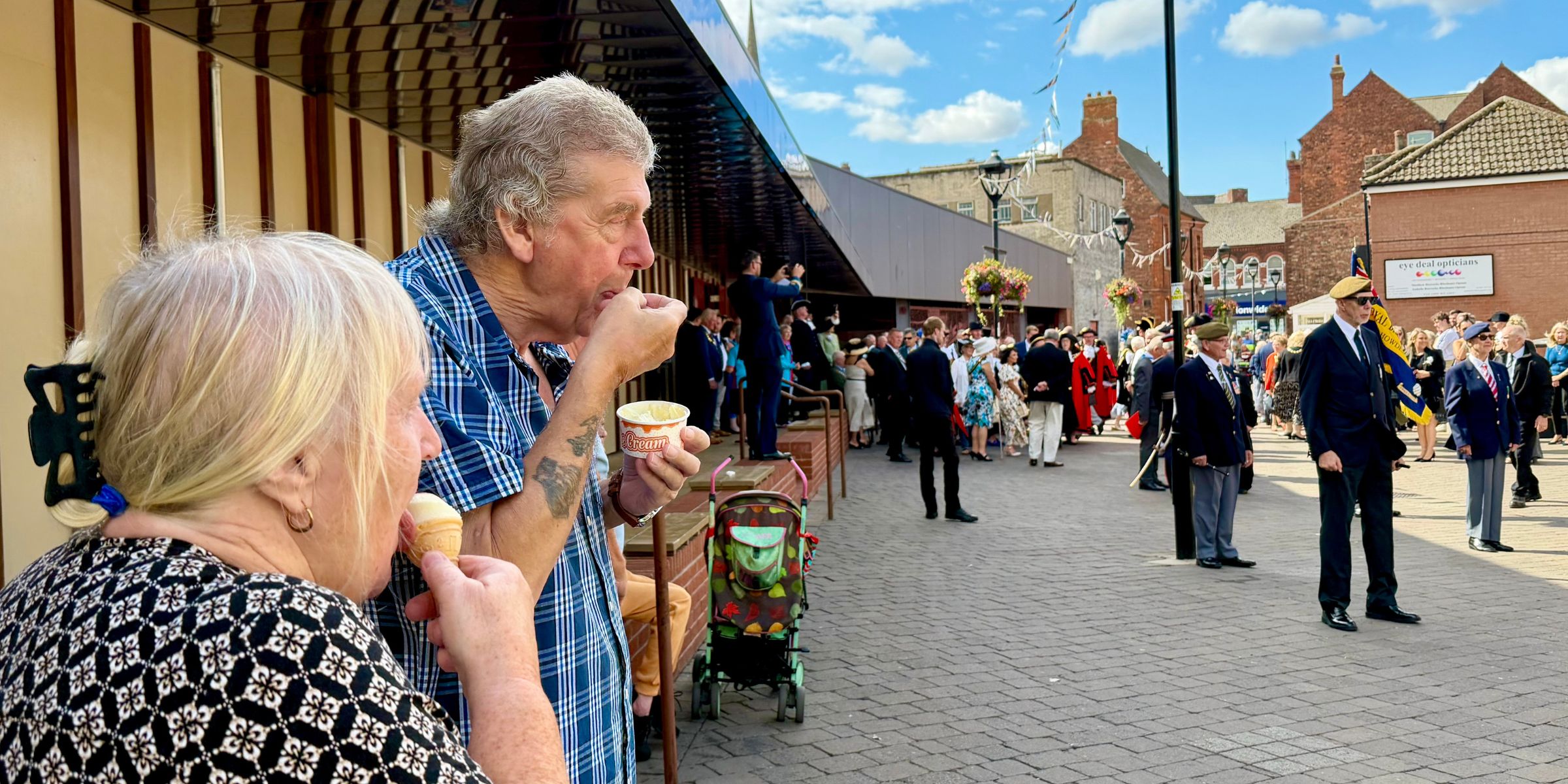
The civic procession brought colour and spectacle. Residents stopped to watch. People held up phones. Boyes staff smiled from the shop entrance. Veterans waited with their drums. A woman beside a well-used child’s buggy recorded the gathering. Another paused with her shopping trolley. A couple ate ice creams while official Yorkshire arranged itself in the background.

Then came Ramsdens.
The sign dominated the high street:
PAWNBROKERS. CHEQUE CASHERS. WE BUY GOLD
Beneath it walked officials wearing heavy gold chains. Behind them, a man carried an enormous gilded mace upon his shoulder.

No caption could improve the image.
It did not mean that everybody watching was poor, or that everybody processing was rich. Goole’s residents cannot be reduced to convenient illustrations of deprivation, and the town is not scenery against which somebody else’s privilege can be displayed.
But the economic landscape was impossible to ignore.
This is the high street produced by modern Britain: a place where gold is not only ceremonial but something which may need to be sold; where a phone becomes security for a short-term loan; where the retreat of banks and independent retailers has left financial vulnerability with some of the most prominent signage in town.
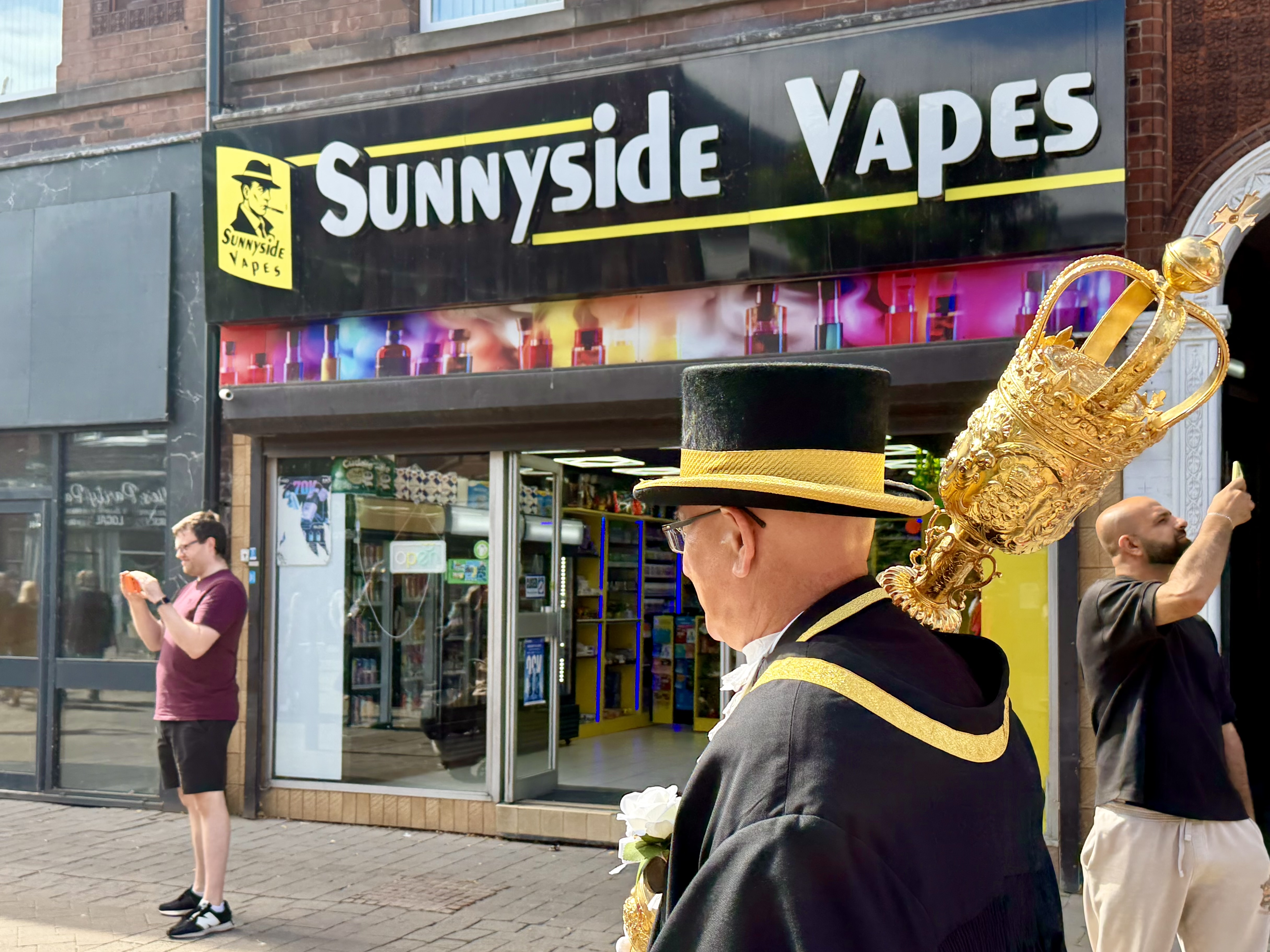
Through it came the civic party, carrying gold which could never be cashed.
Yet the scene was more melancholy than cruel. These were not oligarchs flaunting new wealth. Many of the robes were worn, the traditions fragile and the offices themselves increasingly difficult to explain. It felt like an old municipal order travelling through a country which had stopped understanding its language.

There remains value in civic tradition. Many of those present will have devoted years to public service. Mayors attend moments of celebration and grief, raise money for local organisations and recognise work which might otherwise remain invisible. Town criers, military associations, civic services and ceremonial oddities give places continuity and texture.
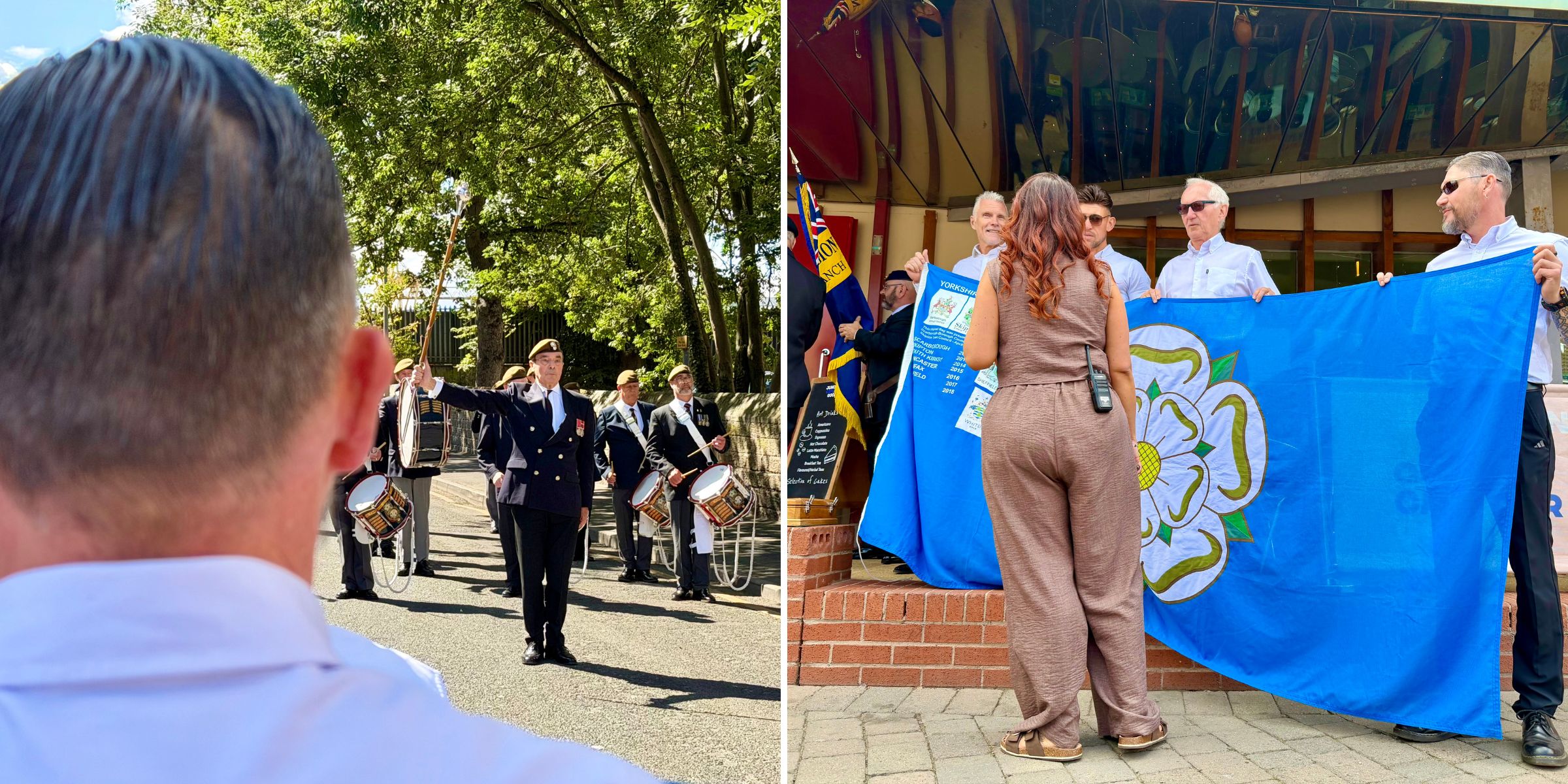

But gathered together, separated from the public by coaches, private hospitality and layers of attendants, the institution began to resemble a club principally performing for itself.
The sharpest expression of that distance came in West Park.
Goole was already there. The band was playing and residents had filled the space beneath the trees. They had brought chairs, picnics, drinks and one another. Nobody required a chain of office to validate the occasion.

Then the coaches arrived and began disgorging mayors.
For around ten minutes, the civic visitors entered the park and assembled for a photograph. A family in deckchairs looked across at the sudden appearance of robes, hats and ceremonial gold.
“Who’s this lot?”
The mayors were explained.
“We don’t do mayors.”
It was not hostile. It was not a manifesto for constitutional reform. It was simply a statement of fact, delivered from a deckchair.
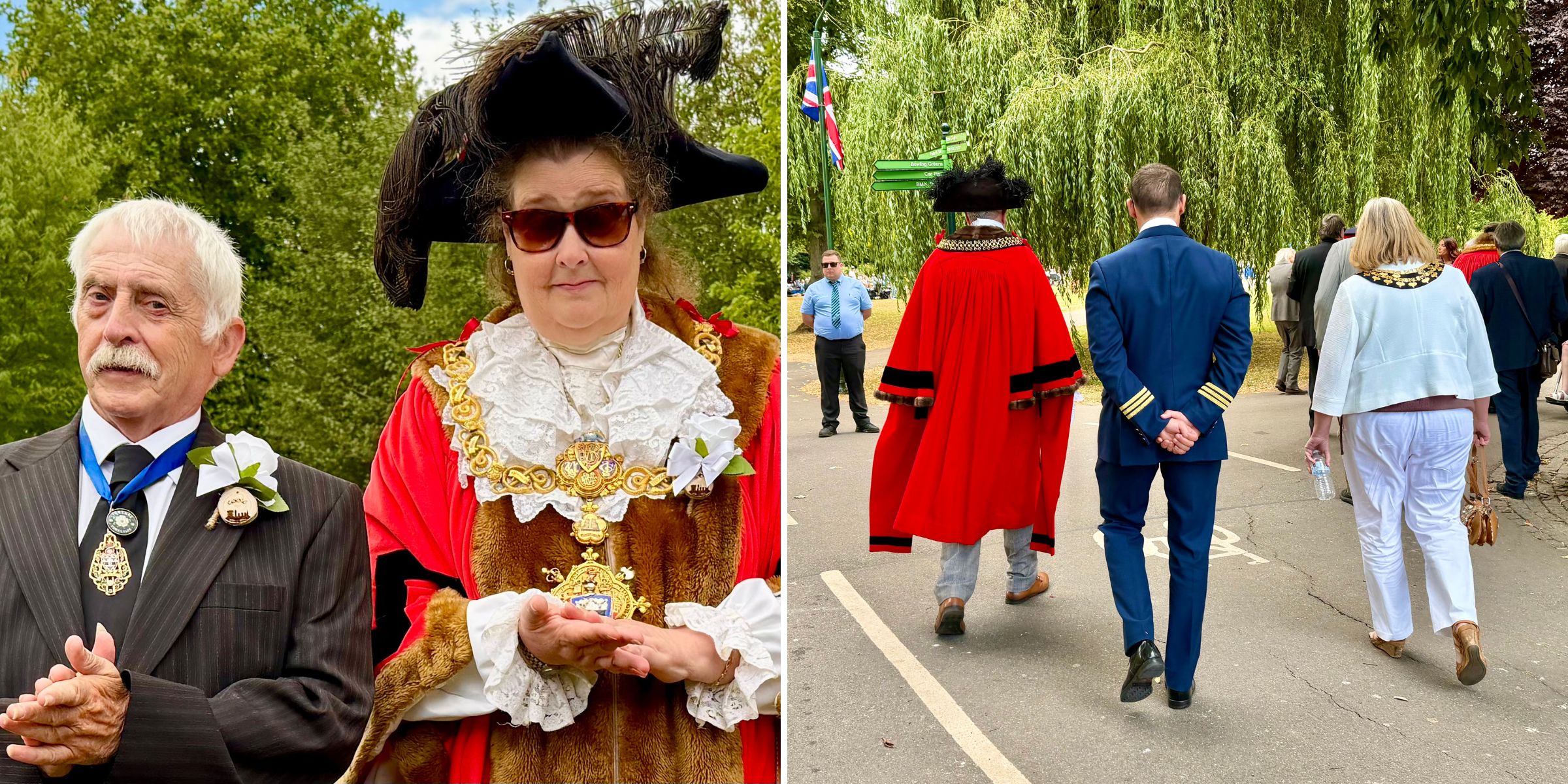
Later, back on the coach and nearing the end of the day, thoughts among some of the civic party turned again towards food.
“Ready for me dinner.”
“Have they got roast beef?”
The phrase gravy train arrived in my head uninvited.
That temptation must be resisted, at least partly. Most of these offices carry little real power, and much of the splendour proved decidedly second-hand at close quarters. The scene was less one of well-fed rulers than of a fading hierarchy carefully reenacting its own importance.
But it remains reasonable to ask who benefits from the performance.
Tradition cannot survive indefinitely as something conducted by office-holders for other office-holders. If civic life is to retain meaning, it must occasionally step out from behind its robes, put down the complimentary sandwich and speak to the people looking on.
Natasha Costello and her colleagues gave Goole a day worth celebrating. They showed visitors a town with a remarkable history and a credible future. They filled the park, brought music to the bandstand and persuaded people to occupy public space together.
That is the Yorkshire worth defending: generous, communal, unpretentious and already present.
The visitors did not bring Yorkshire to Goole.
They arrived to find it waiting beneath the trees.





