



There are no castle walls at Yeavering.
No monumental stone gateway. No surviving royal chamber. No battlements waiting conveniently against the Northumberland sky.
There is, for the most part, a field.
And yet underneath that grass, close to the northern edge of the Cheviots, lies one of the most consequential places in the history of early Britain: a royal centre of the Northumbrian kings and queens; a place of ceremony, feasting, political authority and religious change; and one of the archaeological sites that transformed our understanding of how Anglo-Saxon society actually lived.
This summer, that landscape will become the setting for a two-day Festival of Archaeology, before the celebrations continue four miles away at Ad Gefrin in Wooler with the return of the Lammas Gaderung - a modern harvest gathering of food, music, makers, storytelling and, this being Ad Gefrin, whisky.
Taken together, the events offer something more meaningful than a themed weekend. They reconnect the contemporary North East with a period when Northumbria was not a distant provincial territory, but one of the principal political and cultural powers of early medieval Europe.
Yeavering is often described as the site of an Anglo-Saxon royal palace. That description is accurate, but perhaps misleading to modern ears.
This was not a palace in the later medieval sense: no stone keep or crenellated fortress. It was an extensive and evolving complex of timber halls, enclosures and ceremonial structures, built and rebuilt across generations.
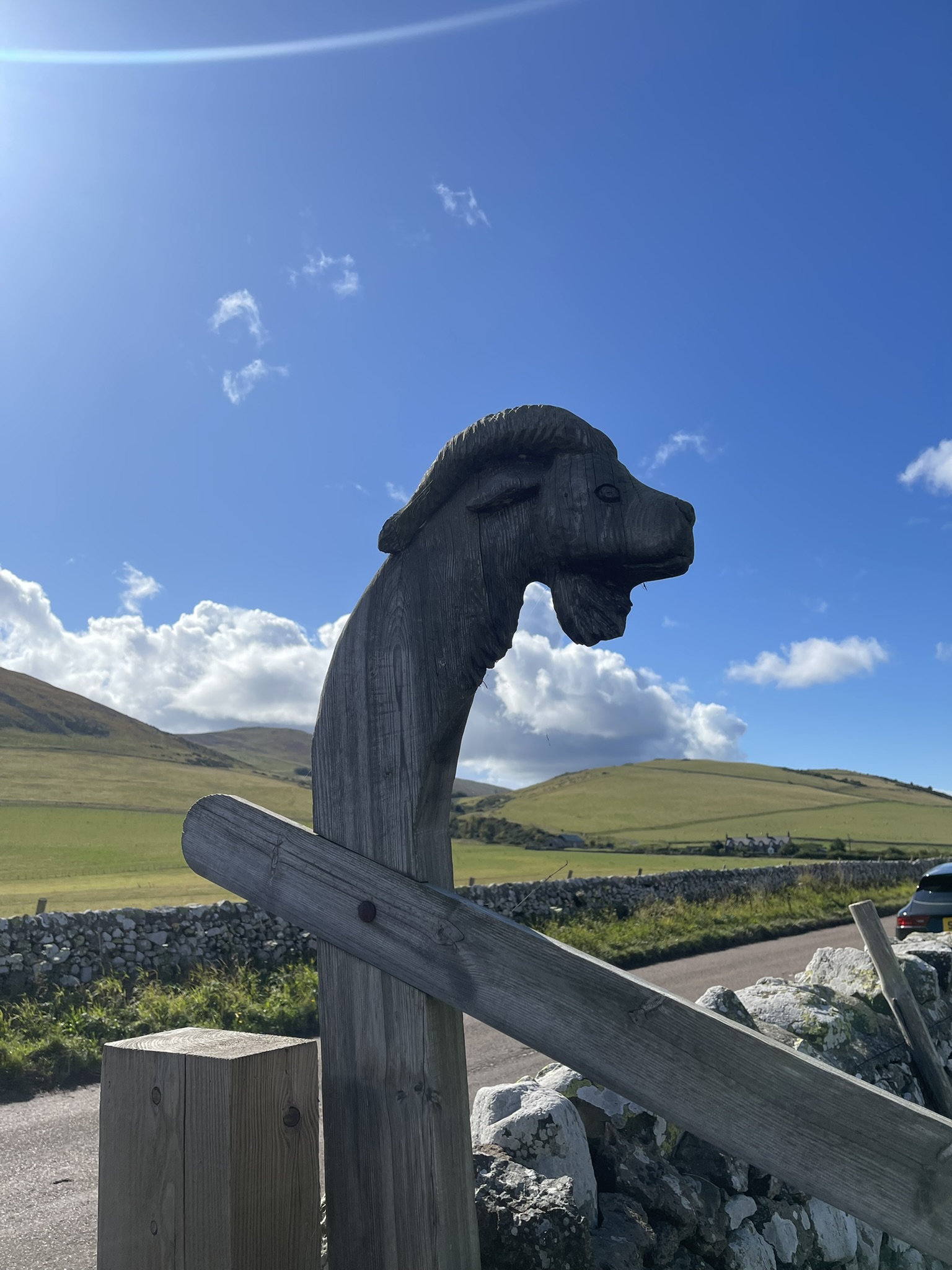
The place was known as Ad Gefrin - generally translated as “by the hill of the goats” - and stood beneath Yeavering Bell in the valley of the River Glen. It became a seasonal royal centre for Northumbrian rulers including Æthelfrith, Edwin, Oswald and Oswy.
Kingship in this period was mobile. Power did not necessarily sit permanently behind walls. A royal court travelled through its territories, occupying centres where tribute could be collected, justice administered, alliances strengthened and enormous quantities of food and drink consumed.
At Gefrin, the architecture itself spoke of authority. Excavations revealed a complex of large timber halls and supporting buildings, together with a remarkable wooden structure often described as a theatre or grandstand. It appears to have been designed for formal assemblies: a place where a ruler might be seen, heard and surrounded by the machinery of public power.
The people who gathered here were not living at the obscure edge of history. They inhabited a connected world of trade, diplomacy, craftsmanship, migration and competing belief systems. Northumbria’s court had relationships extending across Britain and into continental Europe, while the surviving material culture of the period reveals extraordinary skill in metalwork, jewellery, glass, weaponry and decorative art.
The apparent emptiness of Yeavering today is therefore deceptive.
What looks like open pasture was once theatre, council chamber, banqueting hall, royal residence and sacred landscape.
For centuries, knowledge of Gefrin rested largely upon the writings of Bede.
In his Ecclesiastical History of the English People, completed in the eighth century, Bede described King Edwin’s royal residence and the missionary Paulinus baptising converts in the nearby River Glen.
It is one of the defining stories in the Christianisation of northern England. Yet Yeavering’s history cannot be reduced to a simple tale of pagan darkness giving way to Christian light.
The archaeological evidence suggests a landscape shaped by belief and ritual for thousands of years before Edwin arrived. Historic England’s account of the excavations traces activity at the site back to a prehistoric cremation cemetery, followed by later enclosures, burials, a possible pagan temple, the wooden assembly structure and successive royal halls.
That long continuity reminds us that historic landscapes are rarely wiped clean when a new ruler, religion or political order arrives. Places retain memory. New power often establishes itself precisely where older meanings already exist.
Yeavering was identified from aerial photographs in 1949 by the young archaeologist Brian Hope-Taylor. Between 1953 and 1962, his excavations uncovered the stains and postholes left by buildings whose timber had disappeared centuries earlier.
It was pioneering work. Archaeologists had long studied Anglo-Saxon graves and their contents, but far less was understood about the places in which the living assembled, governed, worshipped, worked and ate.
At Yeavering, absence became evidence.
Subtle changes in the soil revealed walls, halls and structures on a remarkable scale. Hope-Taylor’s excavations helped demonstrate that timber architecture - despite leaving almost nothing standing above ground - could preserve an intricate record of political and social life below it.
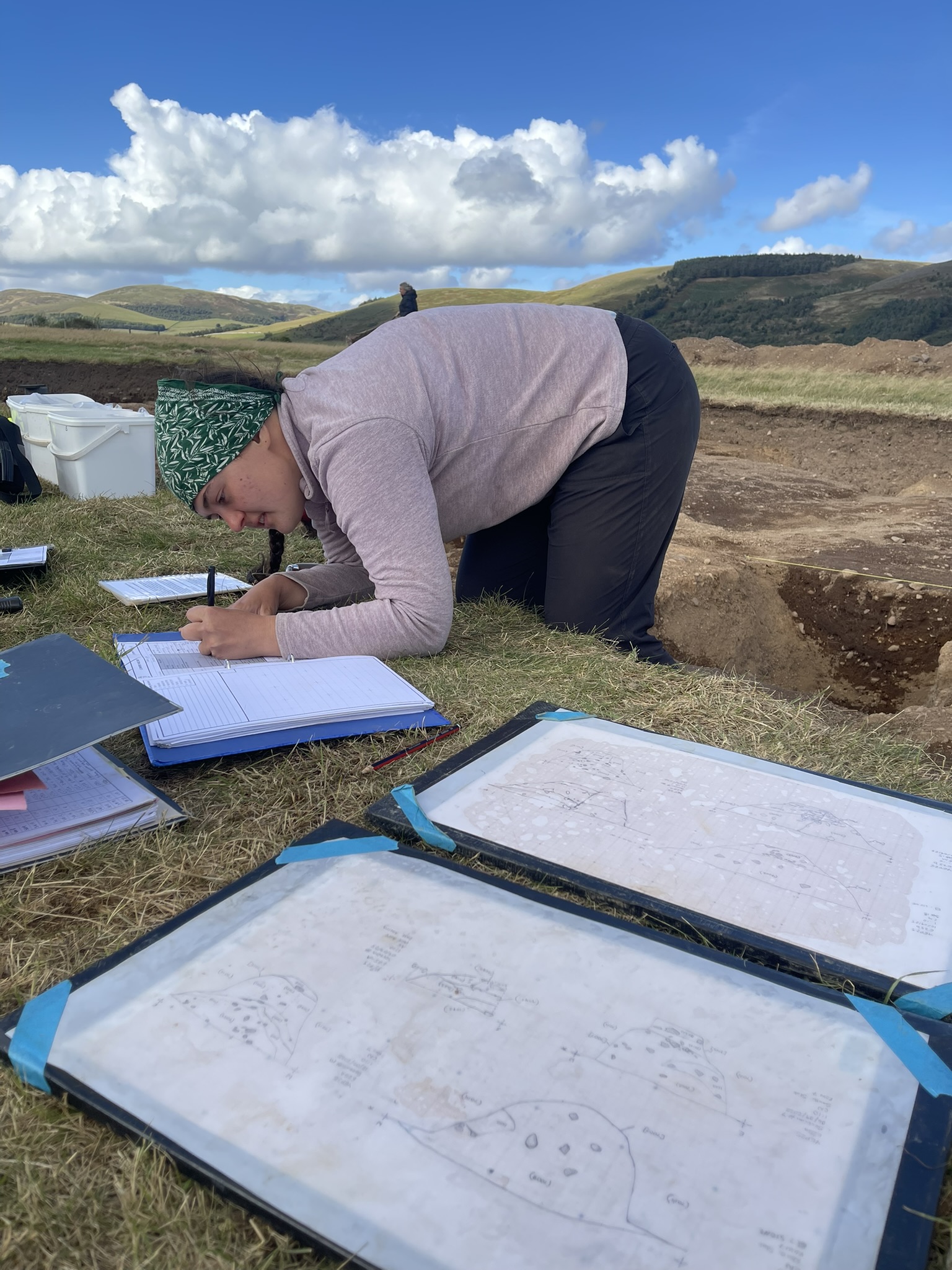
Recent research continues to question and refine his interpretation. Durham University and the Gefrin Trust have returned to the site, using modern excavation and geophysical techniques to investigate its development from prehistory through to the early medieval royal complex. Work in 2025 focused particularly upon the so-called grandstand and the Great Enclosure, adding new evidence to a story that remains far from complete.
That continuing uncertainty is part of archaeology’s appeal. The past is not a finished account waiting to be recited. It is an argument conducted through fragments.
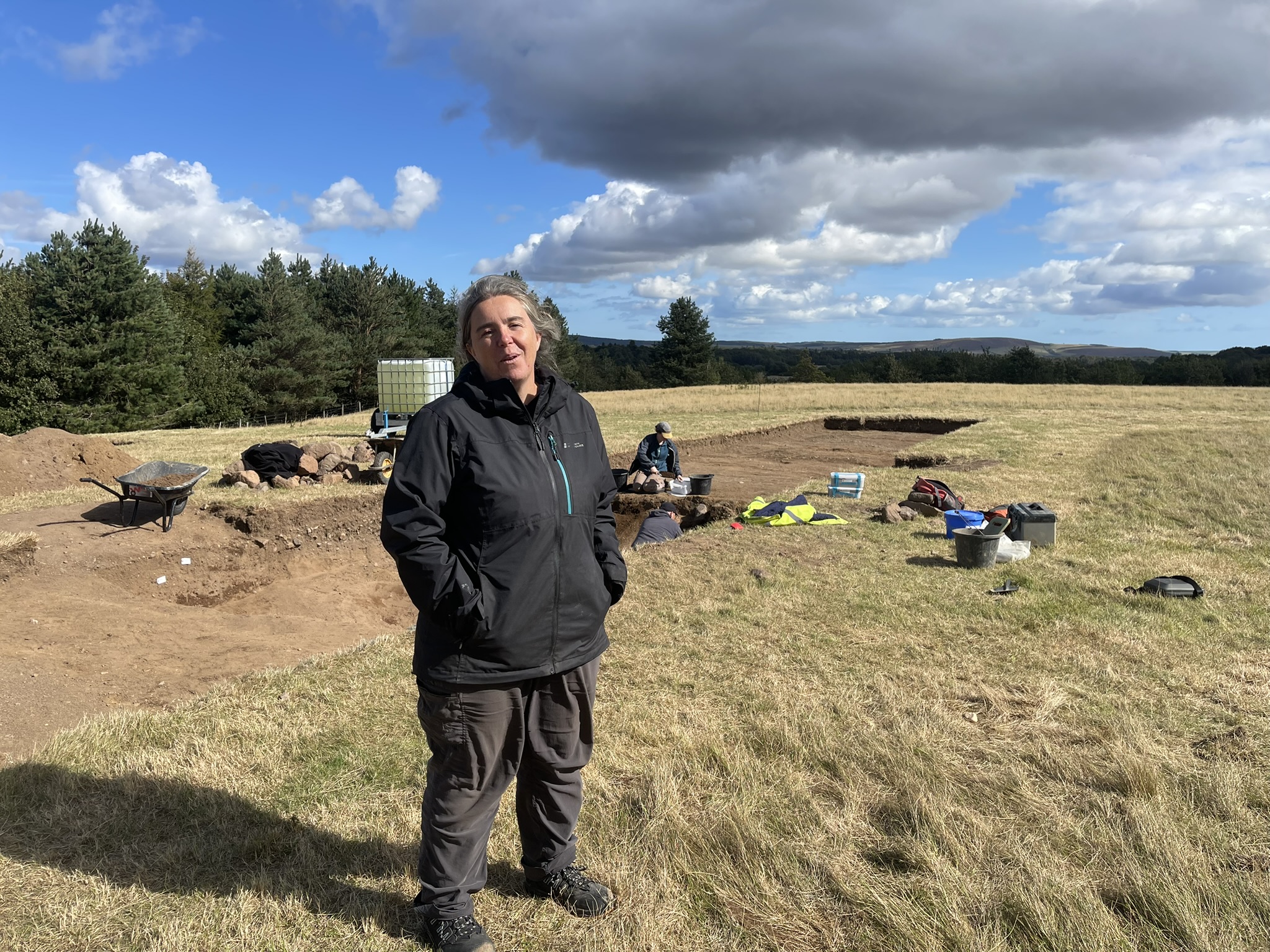
On Friday 31 July and Saturday 1 August, the Festival of Archaeology will return to Yeavering in collaboration with Durham University and the Gefrin Trust.
The free programme will include live archaeological talks, geophysical survey demonstrations, artefact displays and a working early medieval encampment. Visitors will also be able to take finds discovered while gardening, walking or metal detecting to specialists from the Portable Antiquities Scheme.
The mixture of scholarly research and public participation feels appropriate to the place.
Archaeology is sometimes presented as a discipline conducted elsewhere: behind museum glass, inside universities or at excavations closed to everyone except specialists. At Yeavering, visitors will be able to watch experts exploring what survives beneath the land and learn how apparently featureless ground can be read.
Dr Chris Ferguson and the Ad Gefrin museum team will take archaeological objects back onto the site, temporarily reuniting material evidence with the landscape from which the story emerged.
Professor Sarah Semple of Durham University will discuss Yeavering’s importance to early medieval Britain, while live demonstrations will show how geophysical surveying allows archaeologists to identify buried features without stripping away the soil.
On the Friday evening, a light and theatre presentation will attempt something more imaginative: restoring the lost royal complex through storytelling across the landscape.
Purists may occasionally become nervous when spectacle enters archaeology. But there is a serious purpose here.
A posthole plan is intellectually revealing; it is not always emotionally legible. To understand Yeavering fully, visitors must somehow picture buildings filled with smoke, voices, animals, weapons, textiles, food, diplomatic visitors and the controlled performance of royal generosity.
The palace has vanished. Imagination, responsibly grounded in evidence, is one of the tools required to rebuild it.
The following day, the emphasis moves from excavation to gathering.
At Ad Gefrin in Wooler, the Lammas Gaderung will bring together food producers, craftspeople, musicians, performers and storytellers for a contemporary celebration rooted in the old harvest season.
Lammas traditionally marked the gathering of the first grain: a moment of gratitude, relief and preparation for the winter ahead. The modern Gaderung consciously draws upon that history through communal food, music and hospitality.
There is an obvious temptation to regard feasting as the decorative part of history - the colourful interval between battles, conversions and successions.
In reality, hospitality was politics. An early medieval ruler was judged not only by the territory he controlled, but by his ability to distribute wealth, provide food, reward loyalty and maintain a household capable of receiving large numbers of people. The great hall was both domestic space and public stage.
Who sat near the king mattered. Who received gifts mattered. Who ate, drank and was welcomed into the circle mattered.
Communal feasting helped turn political authority into something visible and tangible. It transformed harvested grain, livestock, skilled labour and imported goods into allegiance.
The Gaderung’s food stalls, music and shared celebration are not an attempt to reproduce an Anglo-Saxon banquet with absolute historical fidelity. They offer something more useful: a recognition that culture grows from land, work, exchange and collective ritual.
The weekend’s new whisky festival, Capture the Spirit, adds a distinctly modern form of northern hospitality. It will also mark the release of Ad Gefrin’s Crǣft Series of individual single malt casks - part of the distillery’s attempt to revive legal whisky production in Northumberland after an absence of more than two centuries.
There may be no archaeological evidence that King Edwin was comparing tasting notes beside the River Glen. Even so, the connection between grain, craftsmanship, place and ceremonial drinking is hardly an invention of the modern visitor economy.
Yeavering is often placed within the story of “the Anglo-Saxons”, a familiar label that can make the period appear more culturally settled than it was.
This was a frontier society shaped by British, Anglian, Roman and continental influences. Identities were being negotiated rather than simply inherited. Christianity was advancing, but older ritual landscapes endured. Rulers competed across territories whose borders bore little resemblance to those of modern England or Scotland.
Even “Northumbria” was larger and less stable than the region implied by the word today. At its height, the kingdom extended from the Humber towards the Firth of Forth and faced westward into British kingdoms as much as south towards the emerging English states.
Yeavering’s importance lies partly in this complexity. It resists the lazy idea that national history began somewhere in the South and gradually travelled north. The North was one of the places in which Britain’s political, religious and cultural future was being made.
The conversion of Edwin’s court was not a minor provincial episode. It formed part of a profound reordering of power and belief across the islands. The artistic and intellectual culture later associated with Northumbria - with centres including Lindisfarne, Wearmouth and Jarrow - would become internationally significant.
None of this means the period should be romanticised as an uncomplicated golden age. Royal power could be violent. Dynasties rose through warfare and were destroyed by it. Gefrin itself was burned and rebuilt.
But the complexity is precisely what makes the site so compelling. It was a place where communities met, authority was performed, faith was contested and the wider world arrived in the North.
Ad Gefrin’s archaeological festival and Lammas gathering sit at an interesting meeting point between heritage, commerce and place-making.
A museum and whisky distillery is not an obvious combination. Yet the underlying idea - that landscape, archaeology, making and hospitality belong within the same regional story - has considerable force.
The danger for any heritage attraction is that history becomes branding: kings, warriors and ancient symbols stripped of uncertainty and repackaged as atmosphere.
The opportunity is the opposite.
Done intelligently, a festival can lead people back towards the evidence: towards the excavation, the artefacts, the unresolved questions and the physical landscape itself.
At Yeavering, this is key because there is so little above ground to tell visitors what they are seeing.
The site asks for attention.
It requires us to look beyond monuments and understand that some of the North’s most important heritage survives as pattern, memory and disturbance beneath apparently ordinary land.
For one weekend, lights, voices, archaeologists and performers will help the palace rise again.
Then the encampment will be taken down. The music will stop. The glasses will be cleared and the visitors will leave.
Yeavering will return to being a field beneath the Cheviots.
But once its history has been understood, it can never look empty again.
Header image: The festival of Archaeology at Yeavering, Northumberland (Ad Gefrin)





